ROB WARZYNIAK wades knee deep through a pile of ‘dead canaries’ of Trumpist policies which exacerbated the horrors of US capitalism domestically


 Latest editorial

An electoral earthquake is looming in Wales
Morning Star Wales reporter DAVID NICHOLSON analyses polling for the Senedd election — and it’s bad news for Welsh Labour
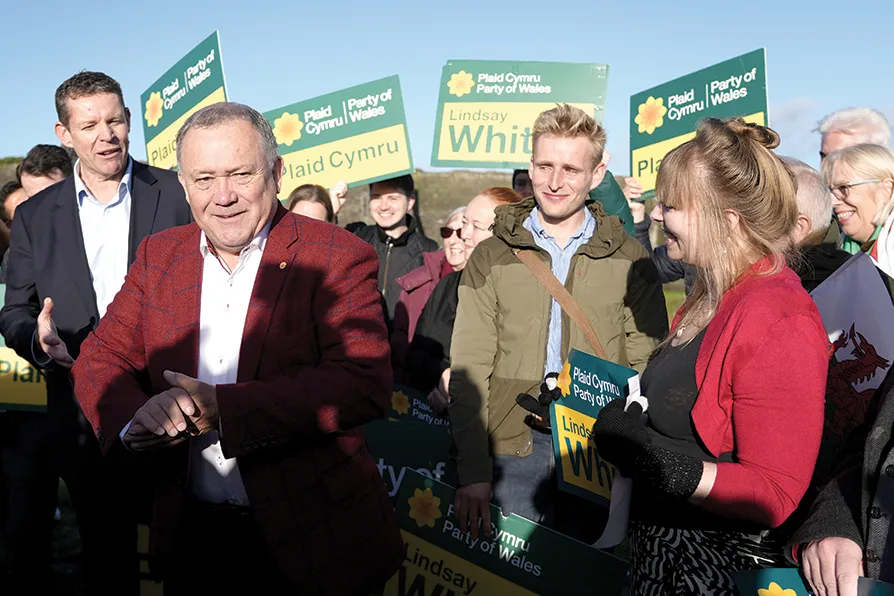 WELSH SHIFT: Plaid Cymru Leader Rhun ap Iorwerth (left) and Deputy Leader Delyth Jewell (right) with newly elected Senedd member Lindsay Whittle at a rally after victory in the Caerphilly Senedd by-election on October 24 2025

Without evidence or Nato consultations Berlin’s answer to the Leipzig incident is a rupture of relations. SEVIM DAGDELEN examines why
FRANCISCO DOMINGUEZ introduces the background to a conference on defending Latin America’s sovereignty
The glacier collapse in Nepal is yet another warning that a warming planet is making Himalayan disasters more frequent and destructive – but the countries facing the greatest risks are often those least responsible, says LI YANG
Nick Blair is set to benefit from a hugely lucrative contract to ‘virtually’ train the British army for its next war. Like father, like son, writes SOLOMON HUGHES
Even when tragedy strikes, Western media cannot resist the opportunity to turn it into a sordid propaganda opportunity, as the Nepal-China border tragedy shows, writes CARLOS MARTINEZ
Trade unions should be at the heart of the anti-racist push for reparations for the historic legacy and continuing impact of slavery, writes ROGER McKENZIE





WALES is on the brink of an electoral earthquake as Welsh Labour is set for a disaster and Plaid is on the verge of government and an improbable majority.
A recent poll conducted by YouGov for ITV Cymru Wales and Cardiff University has revealed that Plaid Cymru’s predicted vote share for the Senedd is now at its highest at 37 per cent. YouGov’s total sample size for the Senedd Voting Intentions MPR Model was 1,220 adults (16+). Fieldwork was undertaken between January 5-12 2026.
This poll shows a substantial 14-point gap between Plaid Cymru and Reform UK in Senedd voting intention — a significant shift from the two parties appearing to be neck and neck.
While any single poll should come with a health warning, and this may be something of an outlier, it continues broader trends in Welsh polling, where Plaid Cymru have enjoyed a modest boost, and trends in England, where Reform support appears to be plateauing while the Greens have surged.
Two patterns are particularly noteworthy. First, the gains for both the Greens and Plaid Cymru appear to be drawing from voters who were previously undecided, rather than coming from other parties. Second, Plaid Cymru seem to be consolidating their position as the party best placed to challenge Reform UK — 57 per cent of respondents identified them as such.
Most of Plaid’s increase was based on former Labour voters switching to Plaid Cymru.
However, the data now seems to suggest that, as the election nears, switching between parties has largely stopped. Instead the increase in votes for Plaid and the Greens is now being driven by those people who had previously responded “don’t know” going over to them.
Labour had been hoping that the large number of “don’t knows” would break their way, but it doesn’t seem to be happening. Welsh Labour has slipped even further behind than the last ITV/Cardiff University poll in September with 10 per cent, suggesting the lowest popularity the party has had in Wales since devolution began.
Plaid on 45 seats are very close to an overall majority (49 in a total of 96 seats), which is an achievement in a proportional system designed to prevent majority government.
If Plaid win they will need to get votes from other parties to pass their budget and legislation, but could govern as a minority government as the SNP has in Scotland.
The poll outlines that Reform UK’s rise in Wales is faltering, with a drop in their vote share by 6 per cent. While Reform had gone down to 23 per cent from 29 per cent in the previous poll, this doesn’t mean that people are leaving them.
What is actually happening here is that because the number of people answering “don’t know” is declining (and fewer of those previous “don’t knows” are switching to Reform), the overall share of the vote Nigel Farage’s party is getting is declining.
But what is significant is the poll follows the Caerphilly by-election where Plaid easily won the seat with traditional Labour voters switching to them to keep Reform out. The turnout was above 50 per cent for the first time in a Senedd election. It is possible that the wide coverage that campaign received has boosted Plaid’s appeal as a potential government.
The poll also sees a significant increase in the Green Party’s support in Wales, which sees them in third place with 13 per cent of the vote share. This means that parties favouring independence will have a majority of seats in the new Senedd, the first time this has happened.
The rise in the Green vote can also be seen in the context of the party’s growth in members since Zack Polanski won the leadership. The debacle surrounding Your Party’s difficult birth has also been of benefit to the Greens, with leftists joining them instead of Your Party.
Former Labour mayor Jamie Driscoll opted to join the Greens, rather than the Corbyn/Sultana group.
In Wales, Beth Winter has exhorted Your Party to be a community campaign force rather than seek election to the Senedd. But there is talk within the party of contesting one or two Senedd seats so that they are on the ballot paper and to test support. There seems to be internal concern that standing more candidates could see a demoralising defeat, as well as stretching finances and party constituency resources.
Vote share % Seat Share
Plaid 37 (+7) Plaid Cymru - 45
Reform 23 (-6) Reform - 23
Green 13 (+7) Green - 11
Labour 10 (-4) Labour - 8
Conservatives 10 (-1) Conservatives - 6
Lib Dem 5 (-1) Lib Dems - 3
Other 2 (-2)
One of the most interesting parts of the data is that Reform was overwhelmingly seen by voters (61.5 per cent) as being the “biggest nightmare” if they were to get into government in the Senedd.
The really bad news for Welsh Labour is they are seen by 47.5 per cent of voters as their second biggest nightmare.
Due to the De Hondt electoral system, once a party starts to get towards single figures in terms of vote share, they can end up with no seats. The Welsh Conservatives, who are currently the official opposition in Wales, could end up with no seats in a 96-seat Senedd.
Welsh Labour is teetering on a knife-edge at 10 per cent and its projected seat share of eight would see First Minister Eluned Morgan lose her seat. Equally, the current government could also see a complete wipeout of seats as well, although this is less likely as its support is spread more evenly across Wales, unlike the Tories.
David Nicholson is Morning Star Wales reporter.

Similar stories

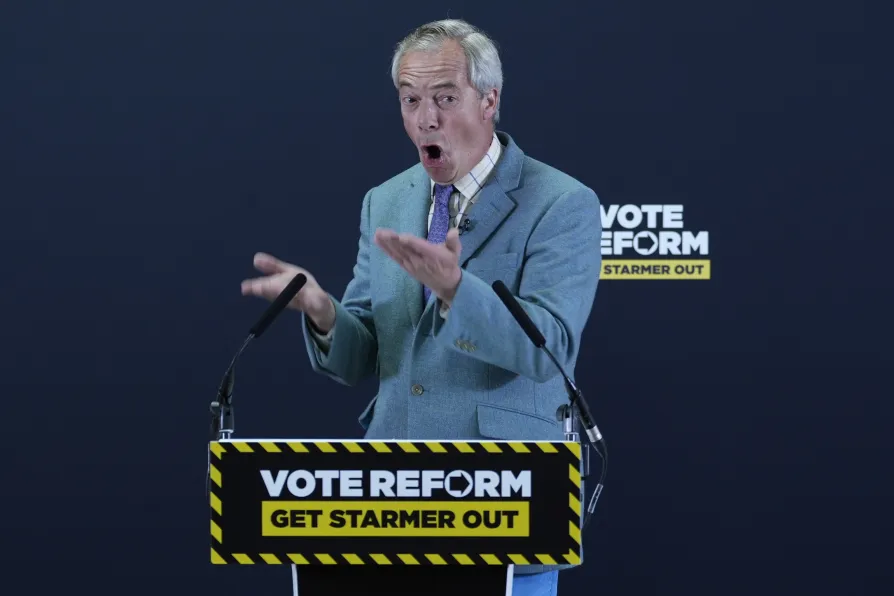
CHARLEY ALLAN reports from Clacton on Farage’s fears his by-election stunt has backfired
Plaid Cymru’s Caerffili by-election win raised hopes on the left — but the complex realities of Wales suggest the Senedd election may be far less predictable, argues CATRIN ASHTON
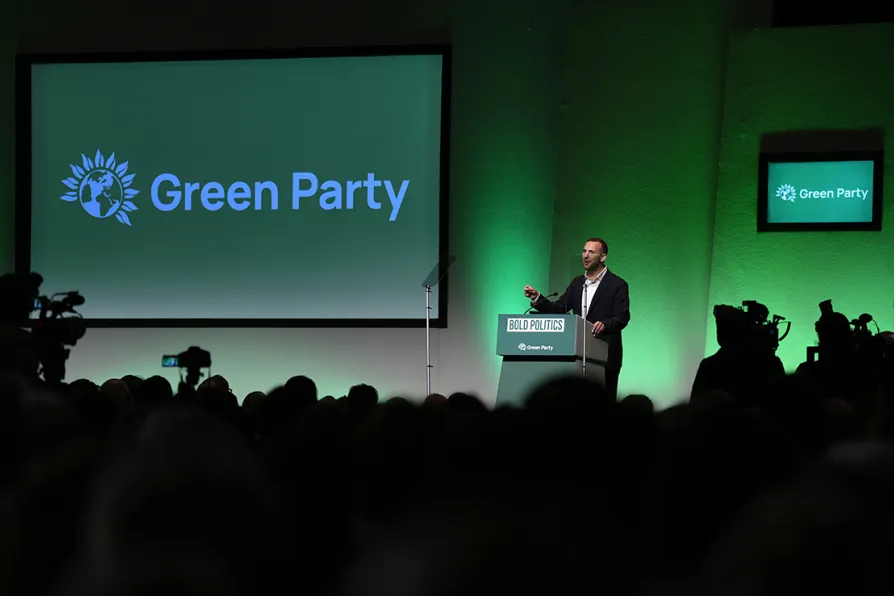
Now at 115,000 members and in some polls level with Labour in terms of public support, CHRIS JARVIS looks at the factors behind the rapid rise of the Greens, internal and external