
Washington’s inability to subjugate Iran is an example of how it is trying to preserve a regional order that no longer exists, argues RAMZY BAROUD


From the Caribbean to Africa and Iran, US policy is about world domination
Morning Star international editor ROGER McKENZIE says Trump’s ceaseless belligerence is a desperate effort to prevent the emergence of a multilateral world
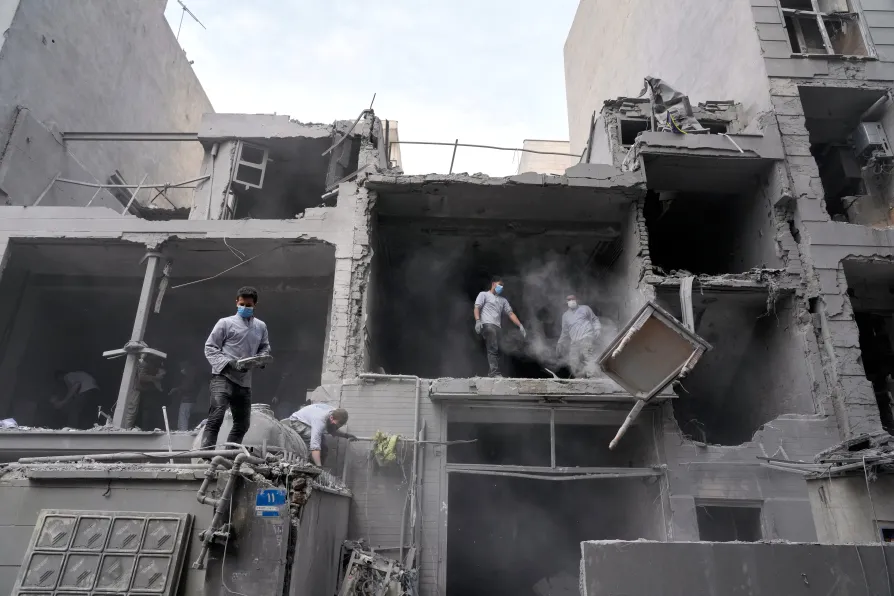
 Volunteers clean debris from a residential building damaged when a nearby police station was hit Friday in a U.S.-Israeli strike in Tehran, Iran, March 15, 2026
US financial instability is exposing the limits of a dollar-dominated global economy — and giving the Global South a historic chance to build an alternative, says MURAD QURESHI
DOUG NICHOLLS says the parasitic finance markets must be challenged or another British government could be toppled
The late country singer’s Imagination Library has put hundreds of millions of books into children’s hands. We should build on that legacy by defending the libraries at the heart of our communities, says BRENDA AITCHISON
Deprivation is a fundamental factor in criminal behaviour that must be addressed but, KENNY MacASKILL argues, there needs to a major rethink in sentencing to tackle overcrowding
MML director MEIRIAN JUMP outlines the recently refreshed library’s busy autumn schedule that ranges from book sales, archival exploration, community work with online education and the ever popular site tours
TONY BURKE surveys the shifting political landscape and the challenges Labour needs to address if it is to prevail in the 2028 federal elections





THE US empire has virtually complete control of the Caribbean region and has had it for some considerable time.
This, of course, is no surprise. The huge military power of the US has nothing to fear from any country in the Caribbean. That said, the US is clear that it will exert full-spectrum dominance over the Caribbean and, indeed, the rest of the western hemisphere.
For centuries, the peoples of the Caribbean region have had to face the consequences of the ambitions of, firstly, European colonial powers and then US capitalist elites.
Since the 16th century Spain, France, Britain and to a lesser extent Holland disputed control of the islands and coasts of the Caribbean. Their aim was to plunder the riches and natural resources of the region.
Often lost in this analysis is the strategic military and commercial importance of the region.
The almost overnight collapse of the world economy because of the illegal and unprovoked war being waged by the US and Israel against Iran is instructive. Of course the uncertainty caused by the war has raised oil prices but the closing of the Straits of Hormuz has also had a devastating impact on world trade.
The US will use all its full-spectrum dominance to ensure that the Panama Canal does not suffer a similar fate.
The construction of the Panama Canal was actually initiated by France in 1881 but completed by the US in 1914.
With this, commercial and military control of the region by the US was sealed. At the end of World War II, the US government consolidated its regional and world dominance. In the process it quickly relegated the still existing colonial powers to mere vassals.
All of these colonial powers already behaved in a sickly kind of subservient way towards the US anyway so could pretty much always be relied on to do their new masters’ bidding.
For these countries the subservient role was a new one but, as uncomfortable and against their nationalistic grain as it may have gone, they played the servant role willingly.
Aside from the US territory of Puerto Rico, there were the important British colonies of Belize, Guyana, Jamaica, Trinidad & Tobago and Barbados. The Turks and Caicos Islands to the north of Cuba, and the island of Bermuda further north, still remain British territories.
The French ruled over French Guyana, Martinique and Guadeloupe whilst the Dutch bossed it over Surinam, Curacao and Aruba.
Independence in the US “backyard” is simply not tolerated. That is why US economic and military might has been focused on countries that have generally failed in recent decades to remain under US “manners.”
An independent pathway being pursued by Cuba, Haiti, the Dominican Republic and, in Central America, Venezuela and Nicaragua, cannot be allowed by the US empire.
The Dominican Republic and, after several coups and military interventions, Haiti have largely fallen under the toxic influence of the US. But the others mentioned have remained fiercely independent of the empire.
It is essentially revolutionary governments that have managed to survive against the odds despite the pressure of brutal and sadistic sanctions enforced by the US — and the support of the much missed Soviet Union, as well as now major powers such as China and Russia, has been key.
But why the current upsurge in violence in the Caribbean by the Empire of Chaos?
This can’t be put solely down to the deranged, egotistical maniac that currently occupies the White House.
There is no doubt though that Trump will be developing an angle for him and his crime syndicate family to make billions of dollars from the soaring violence towards the Caribbean and, indeed, the rest of the global South.
This, as always, is primarily about the projection of US power to compensate for its loss of power and influence in other parts of the globe, notably in Africa, Asia and, in recent years, across Latin America.
It is also about countering the economic growth and influence of China — particularly through its popular Belt and Road Initiative and bilateral trade agreements.
Linked to this is the seemingly endless number of nations that have made it clear they wish to become members of the Brics bloc — a primarily trading and co-operation bloc named for Brazil, Russia, India, China and South Africa.
The US also wants to ensure unfettered access and, indeed, financial control of natural resources such as oil, gas, gold, lithium and rare earth minerals.
Many of these rare earth minerals are critical for the US military-industrial complex. Control over these resources gives the US a key advantage over its perceived adversaries.
Of the 76 US and European (but US-controlled) bases in the region, 50 are located in Central America and the Caribbean.
This is a staggering regional military presence by the US by any measure. The pretence that this is to deter drug trafficking is clearly nonsense.
If it were, any US taxpayer would be entitled to reasonably ask why so many drugs still manage to reach the US (although many seem to have ignored the fact that Trump recently freed former Honduran President Juan Orlando Hernandez from a 45-year prison sentence for helping to traffic more than 400 tons of cocaine into the US).
This while he accuses, without evidence, Venezuelan President Nicolas Maduro of being a major drugs lord and kidnapping him and his wife Cilia Flores. Ms Flores is also accused of aiding the alleged crime.
Increasingly, control over access to fresh water will become an important factor as the climate emergency, which the US denies exists, begins to bite and water becomes more scarce and precious.
The US also wants to control all of the key strategic military and commercial maritime routes such as the Panama Canal and, as the ice continues to melt, Greenland.
The dominant group in the US ruling class believe themselves to be racially superior to anyone who is not white. Racism is, I believe, a key factor in the US relationship to the Caribbean.
What we are witnessing in the Caribbean is part of the same conflict that is taking place in Iran.
It is part of the same proxy war that is being waged by Egypt and Saudi Arabia through the military in Sudan against the paramilitary Rapid Support Forces, backed by the United Arab Emirates — each outside nation key allies of the US.
It is part of the same proxy conflict that is taking Congo through the US ally Rwanda’s backing of the M23 militia.
The US backed Israel’s war on the Palestinians in Gaza and the Lebanese are also part of the same fight.
This is a US fightback against the moves to create a new multilateral world.
The US fears its role as the dominant power on Earth is under its biggest threat since the existence of the Soviet Union.
The US does not accept that the world has moved on and that its bullying will no longer be tolerated.
The problem for the rest of us is that many thousands will die as the US continues to lash out to maintain its power.

Similar stories
FRANCISCO DOMINGUEZ introduces the background to a conference on defending Latin America’s sovereignty
Trump’s ‘Peace Council’ is not a peace project, but a war and colonial council that renews Western colonialism, writes SEVIM DAGDELEN
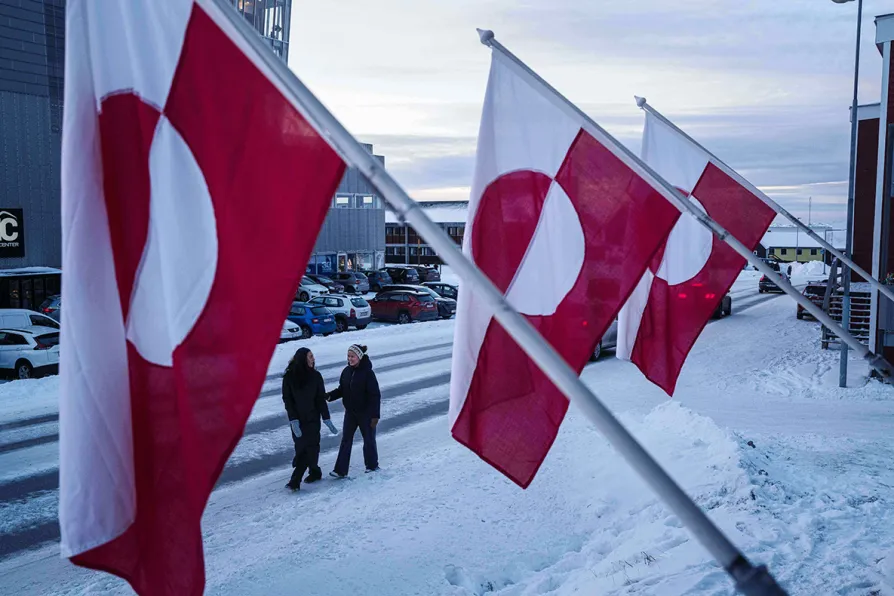
Despite opposition from Greenland’s people and Denmark, Washington intends to control the Arctic territory one way or another. Strategic dominance, mineral wealth and military power are the driving forces at play, writes ROGER McKENZIE
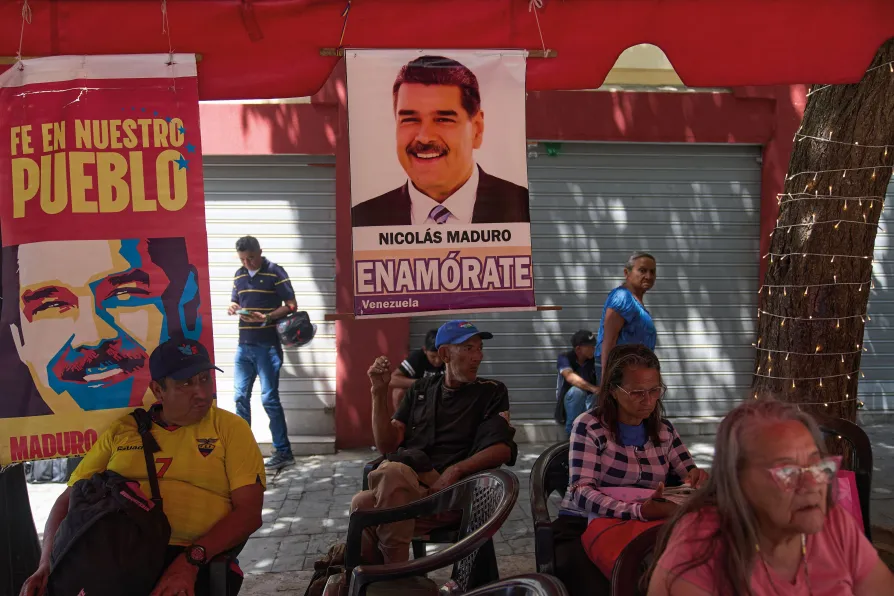
To defend Puerto Rico’s right to peace is to defend Venezuela’s right to exist, argues MICHELLE ELLNER