Cuban trade union federation CTC leader OSNAY MIGUEL COLINA speaks to Ben Chacko about life and work under a crippling US siege


 Latest editorial
Your Party is weaker without the revolutionary left
JOHN REES replies to Claudia Webbe
 BROAD PLURALIST APPROACH: Adopted by nearly all the left parties in Europe including France Insoumise / Pic: France Insoumise/flickr/CC

A part of the British empire’s network of slavery, today the Caribbean island of Nevis faces a new form of exploitation in the form of crypto-colonialism, CLAUDIA WEBBE writes
A new book by Victoria Holmes illuminates the many hidden histories of the oppression experienced by Gypsy/Roma/Traveller community, writes ROGER McKENZIE
Even the oligarchs of the artificial intelligence industries are warning that their creations have the capacity for the ultimate destruction of the planet and its population. ANDREW MURRAY suggests that there might just be other solutions
The Labour government must deliver on its commitment to bring back privatised services into the public sector. This not only saves money but also creates accountability and generates wider social benefits, argues ANDY MCDONALD MP
Public ownership of Great British Railways has enormous potential to improve our railway network, but that can’t happen unless jobs, employee rights and union recognition is at the heart of the transition, argues MARYAM ESLAMDOUST
Challenges from the unscrupulous misuse of AI to steal actors’ voice and physical likenesses is being met with a firm union response, writes LYNDA ROOKE





IT’s a pleasure to read the generous praise for revolutionary Marxists like Rosa Luxemburg, Antonio Gramsci, and Claudia Jones in Claudia Webbe’s defence of Your Party, although the pleasure is a little diminished as the acclaim for dead Marxists serves to justify excluding living Marxists from Your Party.
It is also an account that involves considerable misrepresentation of, and important omissions from, the historical record.
In an effort to explain away the exclusion of the revolutionary left it is argued that Rosa Luxemburg criticised Lenin’s idea of democratic centralism in the name of a more spontaneous notion of working-class self-activity. It concludes that Lenin’s model would result in the party substituting itself for the class.
Now, it is true that in 1904 Luxemburg described Lenin’s notion of the vanguard party, as expressed in What is to be Done? in these terms. But it is also true that after the Bolsheviks had proved the effectiveness of their organisation in relating precisely to the spontaneous working-class activity that characterised the 1905 revolution she saw her criticisms of Lenin as irrelevant and obsolete.
Of course debates and differences on a range of issues continued between Luxemburg and Lenin up to and through 1917, but Luxemburg herself later formed the Spartacus League (1916), a revolutionary organisation inside the broader Social Democratic Party, specifically to fight the reformist and electoralist drift of the party leadership.
There is of course another figure from the Marxist tradition who in those debates in the first years of the 20th century was an even more outspoken critic of Lenin’s supposed substitutionism. In Our Political Tasks (1904) Leon Trotsky pursued exactly this argument.
One can see why this is an inconvenient example. For if the anti-substitutionist argument can be found in Trotsky just as much as in Luxemburg what would be the justification for removing organisations which are, for the most part, Trotskyist?
And then there are the difficulties involved in explaining why both Trotsky and Luxemburg became wholehearted supporters of Lenin during the Russian Revolution. The answer is that it became clear that Lenin himself was also an anti-substitutionist, his commitment to creating a revolutionary party notwithstanding.
It was Lenin, after all, who argued: “Propaganda and agitation are not enough for the entire class, the broad masses of working people, those oppressed by capital, to take a stand. For that, the masses must have their own political experience.”
And Lenin was persuaded by Trotsky that the seizure of power in 1917 must be the act of a broad organisation which included many political currents from the working-class movement, the Workers Council, not of the Bolshevik Party alone.
This is precisely the model of organisation that Antonio Gramsci adopted when he helped found the Italian Communist Party, and the model that Claudia Jones understood the US Communist Party and the Communist Party of Great Britain to be when she was a member of those organisations.
None of this is to deny that the problem of substitutionism is genuine. The dangers that political organisations can ossify, that they can fail to learn from the broader experience of the working-class struggle, that they can substitute their own calcified ideology for the consciousness of even the vanguard of workers, all really exist.
But they do not exist only for revolutionary organisations, although no doubt we can all think of examples where this fate has overtaken such parties. The danger of substitutionism exists for all political parties, and perhaps especially for electoral parties.
There is an inherent substitutionism involved in electoral politics which aims to win representation in capitalist parliamentary institutions. Electoral politics assumes a relatively passive electorate whose task is to vote in representatives who act on their behalf. After the election it is not the mass of workers who determine their fate by political activity on a day to day basis, it is their representatives.
Such a system has substitutionism inscribed in its very operation. This is not to deny the importance of the left contesting elections, merely to underline that electoral politics more than movement building politics, are pray to substitutionism.
Indeed, it has involved outright betrayal on many, many occasions, from the General Strike to the miners’ strike to the Iraq war.
The traditional response to this by left reformists has to been to argue that the struggle inside Parliament has to be matched with commitment to the struggle outside Parliament. This was a view repeated many times very effectively by Tony Benn.
But Your Party has seemingly rejected this view by requiring, in the same resolution that excludes the far left, that members have to commit to electoral politics as the primary arena of activity.
Your Party will lose a vital counter-weight to electoral substitutionism by removing the revolutionary left. After all, whatever its short comings, it is the far left that has played a key organising role in some of the most effective united front campaigns of the modern era, staring with the Anti-Nazi League of the 1970s and ’80s, and continuing with the miners’ support groups that provided essential solidarity in the great strike of 1984–85, the successful anti-poll tax movement, and the Stop the War Coalition, the largest mass movement Britain has seen, and the People’s Assembly Against Austerity, initiated as the main labour movement response to the banking crash of 2008, and the Palestine solidarity movement.
This broad pluralist approach which includes the far left has also been adopted by nearly all the left parties in Europe, irrespective of their success or failure in broader terms: France Insoumise, Die Linke, Podemos, Syriza. And you might argue that these formations have been most successful where the radical left has been most influential.
Your Party has now adopted an exclusionary approach with internal processes which would be unacceptable in a revolutionary organisation: refusing to reveal even to CEC members themselves who has voted for which resolution at the CEC, or even what the votes for and against were, is not a practice which gives you the high ground where transparency is concerned.
The attack on the radical left is not a good beginning, nor will it end internal arguments since these have been at least as much between groupings with Labour Party backgrounds as they have been with the revolutionary left.
Nevertheless we hope, of course, that Your Party becomes the radical, insurgent, mass party the working class needs. And we will no doubt still be working with many Your Party members in the struggles ahead, the only real proving ground of left politics.

Similar stories
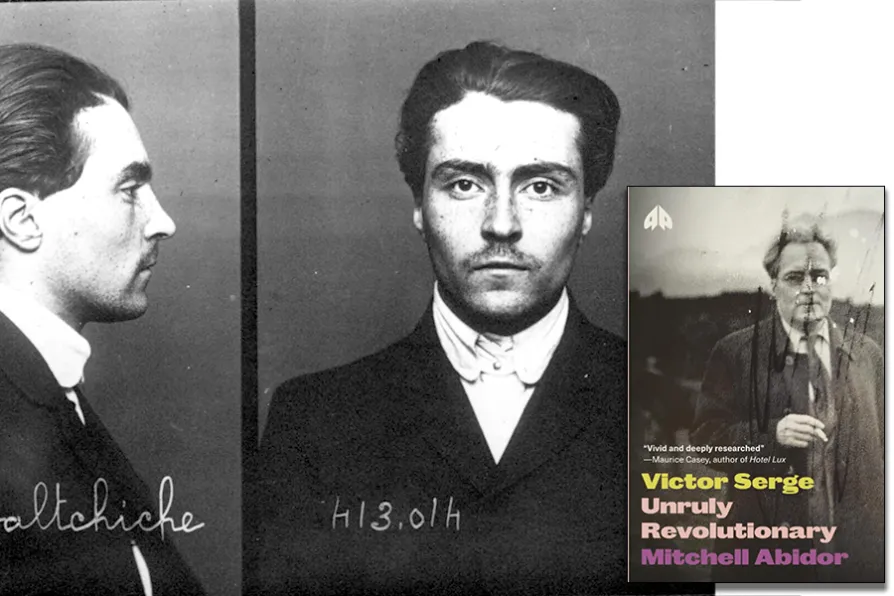
HENRY BELL salutes a fine portrait of a revolutionary who remains a deeply significant and provocative figure
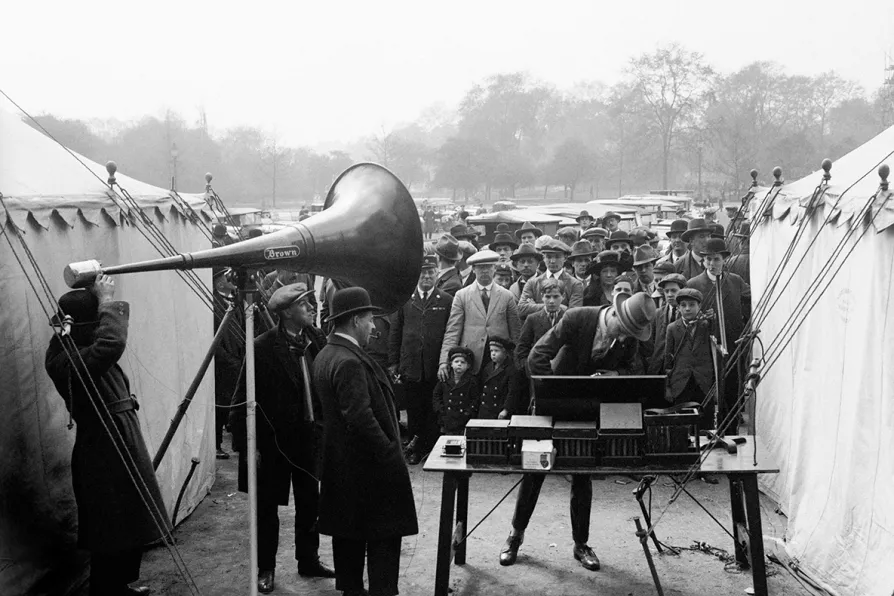
The General Strike exposed the power of the working class — and the limits of its leadership, writes Dr DYLAN MURPHY
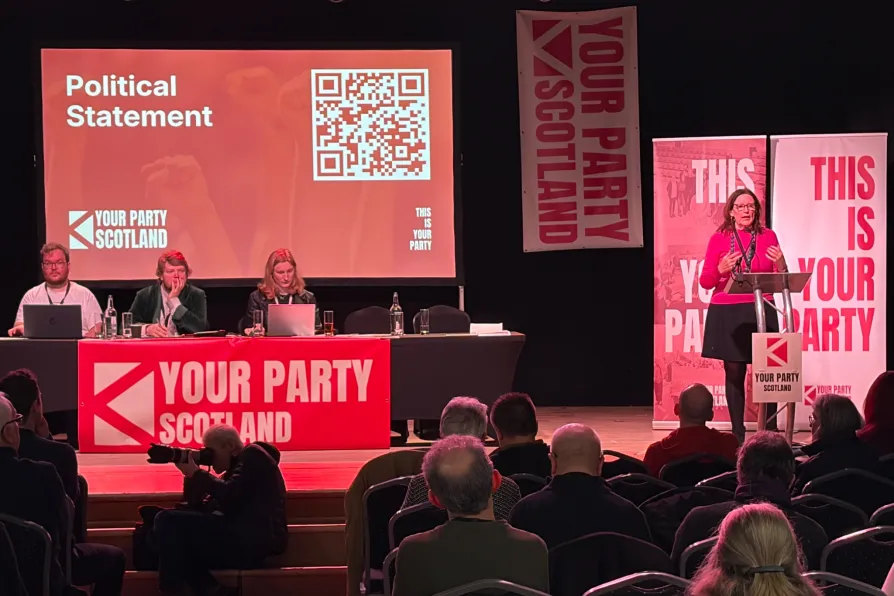
Last weekend’s inaugural conference mixed warmth, unity and ambition with the unmistakable echo of old arguments. MATT KERR wonders whether the fledgling party’s difficulties can be overcome

With ‘Your Party’ holding its founding conference in Liverpool this weekend, JEREMY CORBYN speaks to Morning Star editor Ben Chacko about its potential, its priorities — and a few of its controversies too