CLAUDIA WEBBE speaks out against the lethal mechanics of Britain’s culture-war press


 Latest editorial

The spectre of 1926
Why a defeat of the miners still haunts Britain’s rulers, says PHIL KATZ
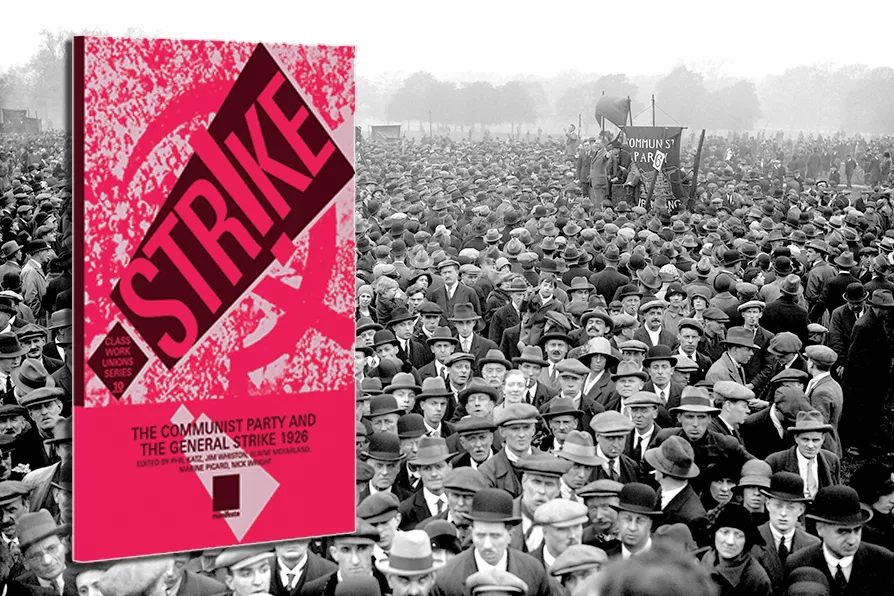 BETRAYED: A massive gathers in Hyde Park for a meeting during the General Strike, Communist Party banner visible middle right / Pic: Public domain

Powerful agribusiness interests are trying to overturn efforts by the Lula government to protect the environment and indigenous peoples of the Amazon region, writes GABRIELA SA PESSOA
Trade unions and community groups are mobilising to push back against Trump’s racist raids after new revelations of spying on legal protesters. MARK GRUENBERG reports from the US state of Minnesota
The best wildfire service may begin with the community, argues KOMAL RAJ ARYAL
The evolution of the Scottish nationalist leadership into cheerleaders for Nato has led the party to betray its pledges on Palestine and social spending, writes COLL McCAIL
While riding the No 3 bus in Glasgow MATT KERR has ample time to dissect the moribund Scottish Labour decline into near oblivion and watch intriguing bus passenger dynamics





IN MAY 2026, Britain will mark the centenary of the General Strike. Yet, as a new compendium volume from Manifesto Press reminds us, this is not a celebration. It is a commemoration of a time in which workers stood up to capital, but their leaders were found lacking.
For nine days in May 1926, millions of workers brought the country to a standstill. Then, the TUC General Council capitulated, abandoning the miners to a brutal lockout that lasted many months.
Strike! The Communist Party and the General Strike 1926, which ships next week and is available at pre-order discount from the Morning Star shop, tells the story of the heroic miners who fought following WWI against government and employers and met them on the battlefield with the slogan: “Not a penny off the pay, not a minute on the day.”
This is no dry historical textbook. It is a reprint of five explosive contemporary texts by the Communist Party of Great Britain (CPGB) then the acknowledged left leadership of the workers’ movement, written in the cauldron of the event itself.
The book’s power lies in its authenticity and raw proximity. As the introduction by myself and Nick Wright notes, the editors have preserved the original capitalisation, punctuation, and even the dreaded “em-dash” to retain immediacy. This is theory as war correspondence. Each piece selected was authored by leaders who went to prison for their beliefs.
The villains of the piece are drawn in contrasting relief JH “Jimmy” Thomas, the Labour MP who thanked God the strike was in the “hands of those who would be able to exercise some control,” and other TUC leaders who feared the workers more than the mine owners.
Tom Wintringham, one of the 12 communists imprisoned in 1925 to decapitate the movement, famously wrote that the end was “not so much a call off as a crawl off.”
The analysis argues that the defeat was engineered by a reformist leadership terrified of repeating the 1920 “Councils of Action,” when grassroots pressure forced the Labour Party to threaten solidarity with the Soviet republic. During the strike, the TUC even returned a cheque from Soviet workers, preferring defeat to internationalist solidarity.
Giants of the class struggle
The genius of this compendium is its cast. Readers get the unvarnished voice of Tom Mann, the veteran who secured a donation of a day’s wages from every Soviet miner and was sentenced to prison in absentia (a sentence the government quietly dropped, fearing his public standing).
There is JT Murphy, the Sheffield engineers’ leader and political theoretician, and Tom Wintringham, who would go on to command the British Battalion in the Spanish civil war, and later equip the home guard with 18,000 machine guns privately imported from the US.
Harry Pollitt, the boilermaker who later became CPGB general secretary, writes with the urgency of a man who organised the fight despite harassment and police raids. And then there is the mysterious “PB” whom the editors speculate is Rajani Palme Dutt, the editor of the broad labour movement journal, Labour Monthly. The pseudonym speaks to the repression of the era, where seditious libel was a real threat.
A warning for today
Strike! is not merely a relic. Alex Gordon, newly elected general secretary of the Communist Party, frames the 1926 defeat as a direct prequel to the present.
The 1927 Disputes and Trade Union Act, which banned sympathetic strikes and mass picketing, has been effectively resurrected by recent Conservative governments and kept on statute books by Labour.
Gordon states: “The role played by communists during the General Strike has many enduring aspects, from the rigorous application of class analysis to the application of the united front of the working class in the concrete reality of trades council meetings and building organisational capacity for the fight ahead.”
The text argues that the ruling class used the myth of “King and Empire” to blunt the movement, finding willing allies in Labour leaders steeped in liberalism. Today, the lesson remains and parliament is certainly not a neutral arena.
As the recent strike waves of 2022–23 showed, trade unionists desire co-ordinated action, but TUC leaders remain reluctant to organise it.
Strike! is a key text with which to mark the anniversary. It tells the important story from the workers point of view.
In Strike! readers can find a detailed account of the “Nine Days” that shook Britain — as they happened — that will not be found elsewhere. But they will also find a “how to” that is invaluable to those wishing to continue the struggle against capitalist austerity and retrenchment today.
Strike! argues the miners lost not because they lacked militancy, but because their leaders failed them. Today, organised labour faces foreign energy giants, war profiteers, big pharma, price-gouging supermarkets, and restrictive union laws.
The book offers a timely lesson that solidarity can hold the line. But without a revolutionary strategy, our power to prevail and overcome is limited.
Pre-order Strike! from the Morning Star shop with a discount by entering the code MSSTRIKE20 (shop.morningstaronline.co.uk). Shipping from Friday.
