by Her Excellency Ismara Mercedes Vargas Walter, Ambassador of the Republic of Cuba to the United Kingdom


 Latest editorial

The fight for safe work
ANDREA BRADLEY highlights how a City of Glasgow College health and safety dispute is the subject of an STUC Congress emergency motion
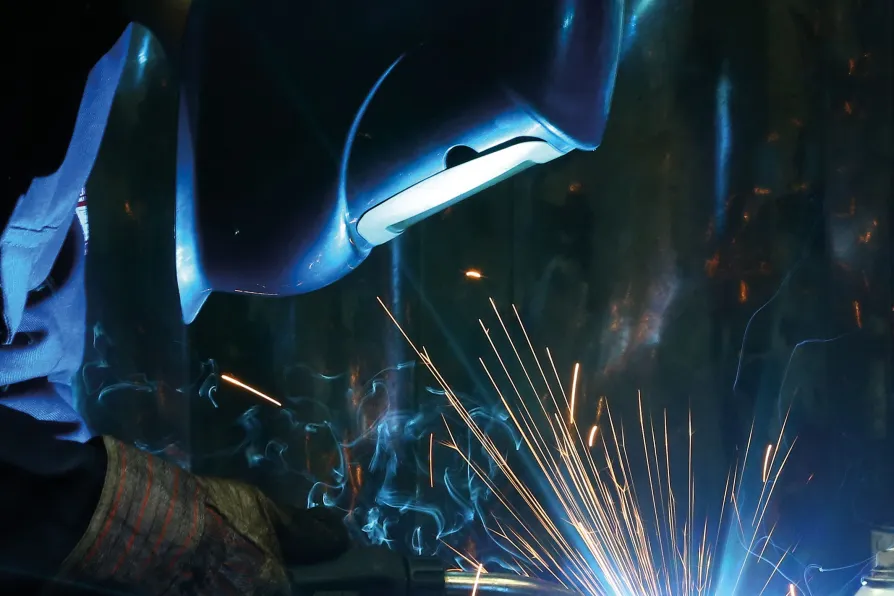 SAFETY FIRST: A file photo of a welder wearing protective equipment

DR STEPHEN WILKINSON assesses the life and legacy of a revolutionary giant
On the centenary of Fidel Castro’s birth, Communist Party international secretary KEVAN NELSON salutes the ongoing example of a revolutionary people facing a brutal US siege
ALEX GORDON and LORRAINE DOUGLAS report from Havana, Cuba, where they represented the Communist Party of Britain at the 24th International Meeting of Communist and Workers’ Parties on August 7-8
The best tribute to Fidel is to stand with the Cuban Revolution today as the Trump regime tries to starve it to death, argues Cuba Solidarity Campaign communications manager NATASHA HICKMAN
JOE DWYER of Sinn Fein reflects on the links between the Irish and Cuban struggles for independence and on Castro’s personal engagement with the cause of Irish freedom





THE theme of this year’s Scottish Trades Union Congress is “Workers United, Demanding Better.”
This is an important reminder of the collective strength of workers through the trade union movement, at a time when the rise of anti-worker, anti-trade union and anti-unity politics continues to threaten the rights and living standards of workers across the country.
The Educational Institute of Scotland (EIS) is proud to play a prominent role in the work of the STUC, and to bring a sizeable delegation to Congress as one of the larger STUC affiliates.
EIS representatives have moved or seconded four motions during this year’s Congress, calling for proper funding of education and action to tackle childhood poverty, reductions in staff workload and improvements to staff wellbeing, and action to tackle the crisis in post-16 education.
Significantly, the EIS will also, today, bring an emergency motion to Congress on a critical issue which does, quite literally, represent an emergency situation for those involved.
The EIS is currently in dispute with City of Glasgow College, and carrying out strike action, over a serious health and safety issue at the college’s Riverside campus.
Lecturers in the welding and fabrication department are extremely worried about the lack of adequate protections for staff and students when welding activities are being undertaken.
Fumes from welding are known to be carcinogenic and present a critical health risk, where adequate safety precautions are not in place.
Currently, the college refuses to provide its welding lecturers with respiratory protective equipment (RPE) to minimise the real risks to their health.
Significantly, many of the students that the lecturers teach are apprentices from commercial organisations, who provide their apprentices with RPE to use in class. Yet the employer of lecturers, City of Glasgow College, continues to refuse to provide this vital safety measure to its own employees.
There are also issues over the use of the ventilation system within the college, concerns over the sweeping of welding dust and residue to minimise the risk to staff and students alike, and failure to undertake essential risk assessments.
The EIS-Further Education Lecturers Association (EIS-Fela) branch within the college has consistently raised these issues with college management, and made repeated attempts to resolve the issue through discussion and negotiation. These appeals have largely fallen on deaf ears.
Far from engaging constructively and seeking to work collaboratively to address the legitimate health and safety concerns of its employees, college management has instead inflamed tensions through adopting a belligerent attitude, seeking to minimise the concerns of staff, refusing to take the straightforward steps to protect the health and wellbeing of its employees and students, and seeking to deflect attention from the key issues.
This has led not only to a formal dispute, but to a continuing programme of industrial action by welding lecturers who feel that they have been left with no choice but to strike in the face of continuing intransigence from a belligerent and apparently uncaring senior management.
Incredibly, despite the abundantly clear health and safety basis for the current action, an official statement from the college recently tried to claim that the dispute was “political” and was only being organised to put pressure on the college ahead of the Scottish Parliament election.
Such a nonsensical claim only serves to further highlight the head-in-the-sand attitude of college management. Protecting the health and safety of college employees is not a political issue, but one of common decency which any respectable employer would take far more seriously.
The EIS recently wrote to CoGC principal, Paul Little, to call for a resolution to the dispute, and reaffirming that the EIS stands fully behind its members in the welding and fabrication department in their ongoing struggle to secure adequate health and safety protections within their workplace.
The letter said: “It is simply incredible that CoGC — a publicly funded institution — is refusing to take the very sensible steps to protect the health and wellbeing of lecturers and students undertaking welding activities within the college. Instead, the college has only inflamed the dispute with its hard-line and managerialist approach to members’ safety worries.”
The EIS is now paying full strike pay to the lecturers involved in this dispute, as a sign of our ongoing commitment to our members. We continue to urge the college management to cease their belligerent attitude towards staff members who are only seeking a safe place in which to work and to study, and to call on the college to work with the EIS to agree a swift resolution to this dispute.
Protecting the health and safety of staff must always be a top priority for any employer, and this is particularly the case in a place of learning where students of all ages, including many of school age, could potentially be placed at risk.
The emergency motion that the EIS is bringing to Congress today shines a light on the inaction by CoGC management, and rightly aims to increase the pressure on them to work with EIS representatives and prioritise the protection of the health and safety of college staff and students undertaking welding.
Welding lecturers from CoGC, who are on strike this week, will join the EIS delegation at the STUC in Dundee today.
We believe that Congress as a whole will want to show support for our fellow trade union colleagues, and send a very strong and very clear message that even the principal and senior management of City of Glasgow College will be unable to ignore — that the whole of Scotland’s trade union movement believes it’s time to take health and safety within the fabrication and welding department far more seriously, and to commit to providing lecturers and their students with the protections that they both need and deserve.
Andrea Bradley is general secretary of the EIS.
