EWAN CAMERON picks out two fascinating music shows, fusing the Korean, and the Celtic, with the modern



Essential viewing on the anniversary of the 1926 General Strike
MARY DAVIS welcomes a remarkable documentary about the general strike — politically spot on, and featuring accounts from the strikers themselves — that is available for screenings
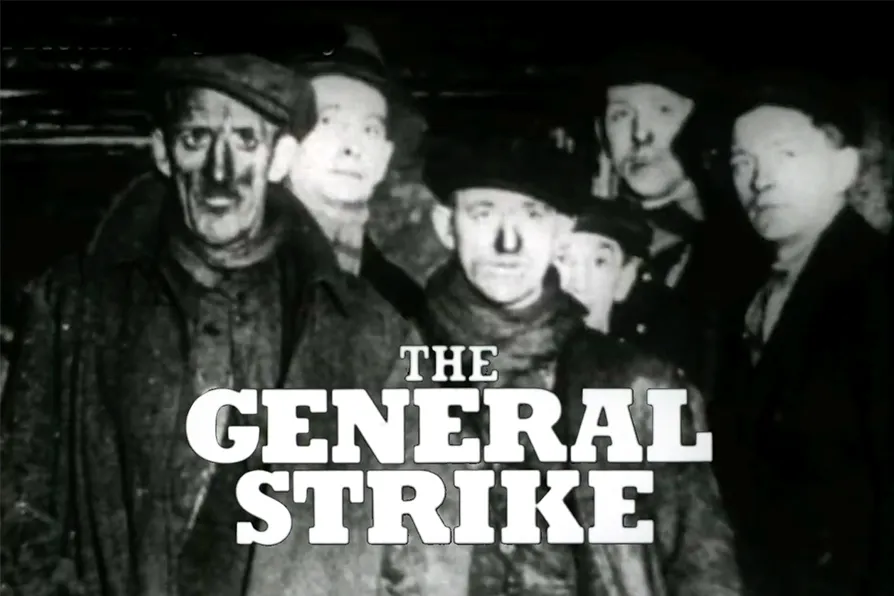
 Pic: Courtesy of Platform Films

BENJAMIN POTHIER suggests that Palaeolithic cave paintings in Spain point to the ceremonial use of hallucinogenic flora
The bard confirms that the right has a humour bypass, and replays the English Revolution on period instruments
MARIA DUARTE and ANDY HEDGECOCK review Sunny Dancer, Tony, Songs of Forgotten Trees, and The End of Oak Street
JOHN GREEN relishes a powerful and moving drama that explores the lived realities of west London’s Punjabi community
MARTIN HALL welcomes a plea for greater compassion between believer and non-believer via the framework of philosophical enquiry





THIS recently (re)discovered film is a gem. Unfortunately, its provenance is unknown, at least to me. It clearly wasn’t produced for the 50th anniversary of the General Strike, but it might have been made to coincide with the 1972 miners’ strike since this was the first time since 1926 that British miners had been on official strike. However, this is pure speculation on my part. I can only hope that the mystery of the film’s commissioning, production and authorship can be solved – it deserves fulsome accreditation.
This film is of great value for three main reasons. Firstly, it is a unique oral history featuring the testimonies and analyses of trade union activists and miners who participated in the strike. The sharpness of their recall almost 50 years on provides us with an unparalleled insight into the lived reality of class struggle at its most intense. Unfortunately, all of the interviewees are unnamed.
Secondly, the film provides us with a graphic insight into the appalling working conditions that British miners were forced to endure. The coal industry employed well over 1 million miners and was at the centre of all industrial struggles from 1919-1926, all brought about by the rapacious greed of the owners who sought to augment their profits by cutting pay and extending working hours.
The film cleverly illustrates coal owners’ greed by contrasting miners’ average pay of 11/- per week with, for example, the Duke of Northumberland’s £200 a day profit from the mines on his estate.
Thirdly, and most importantly, the politics of the film are spot on. Whoever wrote and/or narrated the script must have been a Marxist and very possibly a communist. Aside from its impeccable analysis, it provides much little-cited historical evidence to back up the contention that the General Strike, a momentous and successful mass mobilisation, was betrayed by the collusion of the TUC leadership and the British state.
The film covers the government’s preparations — repression in the form of the Organisation for the Maintenance of Supplies (OMS) a right-wing British organisation established in 1925, the brutality of the augmented “specials” (reinforced by a fascist element), the arrest of the 12 communists – and all of this accompanied by a vicious ideological onslaught.
The government paper The British Gazette was, of course, printed by scab labour, but distribution was a problem. Oral evidence in the film captures this. It shows how the government tried to solve the distribution problem with the use of air-drops to be picked up by locals and then distributed. One woman (unnamed) tells how the locals did retrieve the bundle and then burned it!
The film draws attention to Lord John Simon’s declaration on May 6 1926 that the strike was illegal and this, coupled with Cardinal Francis Bourne’s (Roman Catholic Archbishop of Westminster) declaration that the strike was a sin, had a great impact on the already timid and wavering TUC.
This wavering was in evidence throughout the nine days of the strike and is skilfully recorded in the film. Secret meetings with the employers took place during the strike involving, in particular, JH Thomas, NUR (National Union of Railwaymen). Thomas held secret meetings with Lord Samuel, author of the Samuel Commission report of March 1926, which was proffered as a formula for stabilising industrial relations in the coal industry.
Unwilling to answer PM Baldwin’s rhetorical question “Who Rules Britain?”, the TUC, anxious to curb communist influence and working-class militancy, seized upon the Samuel memorandum as the formula to end the strike, and it did so by agreement of the General Council on May 12, despite the fact that the “formula” was rejected by the miners. In a rare recording of Walter Citrine (TUC general secretary 1926-46) when he was 83, he said that the General Strike “marked a turning point and not a defeat.”
The film concludes by testing the veracity of that statement. It records the seven months of continued strike by the miners – left to fight alone and starved back to work on reduced pay and worse conditions. It records the mass victimisations of the strikers and the punitive 1927 Trades Disputes Act, which among other things, declared general and sympathy strikes illegal and restricted picketing.
But it saves its most stinging criticism for the TUC and the Labour Party. It castigates the former as now being “the essential part of the bureaucracy of government,” and the latter as having reached “the pinnacle of reformism” by 1931 when it formed the National Government, consisting of such well known class enemies as Stanley Baldwin and Herbert Samuel.
This film deserves to be seen. It packs an enormous amount into its 73 minutes — a unique oral history and a remarkably incisive lesson in the struggle between capital and labour. It has now been made available for screenings and viewings by Platform Films. You can buy a copy of the film on a memory stick, DVD or via an online link. The cost to institutions including trades councils is £60, to individuals and union branches the cost is £20.
To use this film at your own event contact: Norman Thomas, norm6344@gmail.com ; if you want a memory stick or DVD, please add £3 for postage and packing and the address you want it sent to.

Similar stories

by the Greater Manchester Workers’ and Tenants’ Association
The General Strike exposed the power of the working class — and the limits of its leadership, writes Dr DYLAN MURPHY
One hundred years after 1.7m workers shut the country down in defence of the miners, the struggles that sparked the 1926 General Strike are still with us – and will be honoured on London’s May Day march this year, writes MARY ADOSSIDES

Corbyn and Sultana’s ‘Your Party’ represents the first attempt at mass socialist organisation since the CPGB’s formation in 1921, argues DYLAN MURPHY