KEN COCKBURN traces the one original language – that of the Yamnaya pastoral nomads – from which all European and Indian languages derive


 Latest editorial
The legacy of slavery deserves a great play, but this isn’t it
MARY CONWAY is disappointed by a three-hander that broaches big themes, but doesn’t transcend dry academia
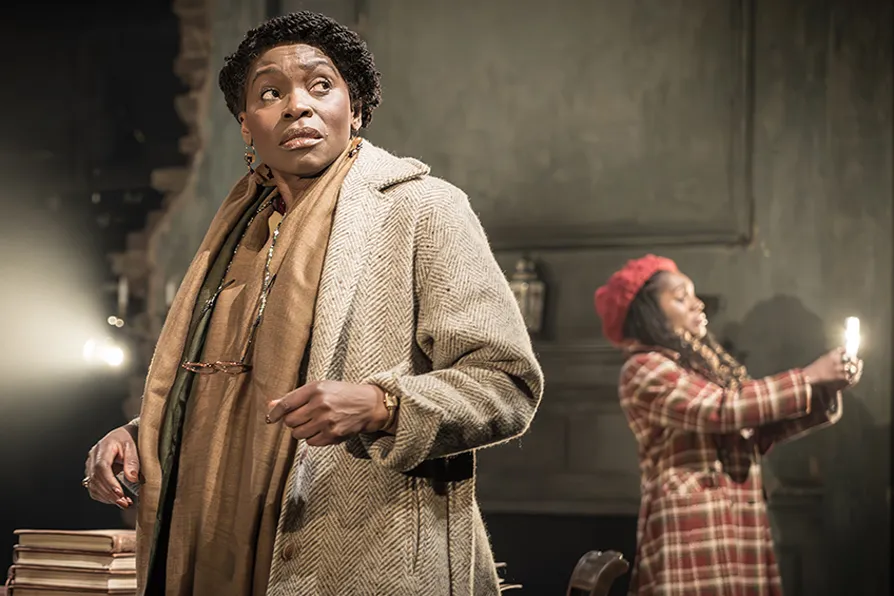 CEREBRAL: Rakie Ayola and Cherrelle Skeete in The Authenticator [Pic: Marc Brenner]
PAUL DONOVAN is fascinated by the debunking of the iconic British war hero
ALEX HALL recommends a searing panorama of our global predicament
Comics are not just superheroes and spandex – it can be public art, telling public stories, suggests HARRIET EARLE
ALEXEI SAYLE speaks to Angus Reid about a lifetime of protest, how to hone political art – and what to do now
The bard serenades the Diggers of Wigan and their festive followers





The Authenticator
National Theatre, London
⭑⭑☆☆☆
CELEBRATED playwright Winsome Pinnock is famed for her insightful depictions of the real lives and legacies of ordinary black people in this country. Here, at the National Theatre, she brings us a brand new three-hander that explores the iniquities of slavery and its personal toll on those living in Britain today.
It’s a subject of immense importance.
The three characters in question are Fen (Sylvestra Le Touzel) who has inherited a quirky, traditional, English stately home, Abi (Rokie Ayola) who is an academic, and Morvo (Chenelle Skeete), her sidekick. Fen has discovered an impressive heap of tomes that turn out to be the detailed diaries of a man from the 18th century and wants them authenticated by experts. Abi and Morvo turn up for the job, end up staying as house guests, and unearth some unexpected details.
Significantly, Fen identifies as white and Abi and Morvo both as black, the latter two having different progeny: Abi descending from high-class Ghanaians who themselves traded slaves, Morvo whose ancestors were all slaves.
The stately home in question — like so many of its type in the country — dates back to the colonial era. Its original owner, we learn, while renowned as a philanthropist, built his wealth and reputation not only from his own merciless slave trading, but from the huge financial compensation he received following slave emancipation.
Jon Bousor’s ingenious set works like another character in the show, its spookiness and all-round artistic pretentiousness capturing exactly the elitism (heavy family portraits swinging in the darkness) and brutality (a creepy “dungeon” with secret cubbyholes) that typifies all such period establishments. The use of space — whereby staircases rise from the floor, and ceilings lift and descend — is particularly impressive.
Miranda Cromwell deftly directs and brings out moments of unexpected, if sometimes awkward, humour. But energetic direction and a skilful cast combined, sadly, can’t force this play into a shape that gathers pace and gels. While the themes are powerful and intelligently explored (the long shadow of slavery; ancestry and its impact; antiquated attitudes and patriarchy, an abiding black/white social divide), the characters are superficial, the main drama focusing, not so much on the interactive present as on a reported past.
The situations, too, feel contrived. That Morvo not only stumbles on her own family history in this house, but also unearths something important of Abi’s, seems too neat for comfort. And when Abi also reveals not only that she and Fen were at Oxford together but that Fen was then a cockney, foul-mouthed punk, we laugh but lose grip on reality. This is not only unbelievable, but a pointless detail that confuses genres and irreparably shifts the focus of the play.
The ideas and themes in this work – as we would expect from Pinnock – are immensely relevant. They will attract appreciative audiences and generate laughter. But the play favours cerebral ideas over character development, quick laughs over dramatic structure and diverse themes over focused emotional engagement.
What feels like an early draft of the great play this could be, doesn’t yet transcend the dry academia that is at its core.
Runs until May 9. Box office: (020) 3989-5455, nationaltheatre.org.uk.
