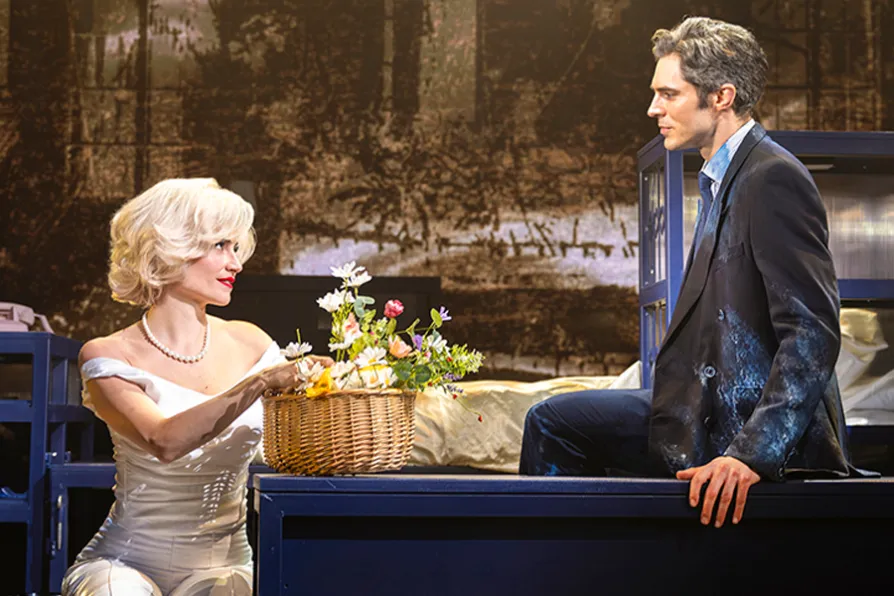
PAUL DONOVAN applauds an intriguing multi-layered depiction, dominated by a stunning impersonation of Marilyn herself


 Latest editorial

When silence speaks volumes
JONATHAN TAYLOR reviews a collection of short stories wherein news - and the absence of news - changes lives
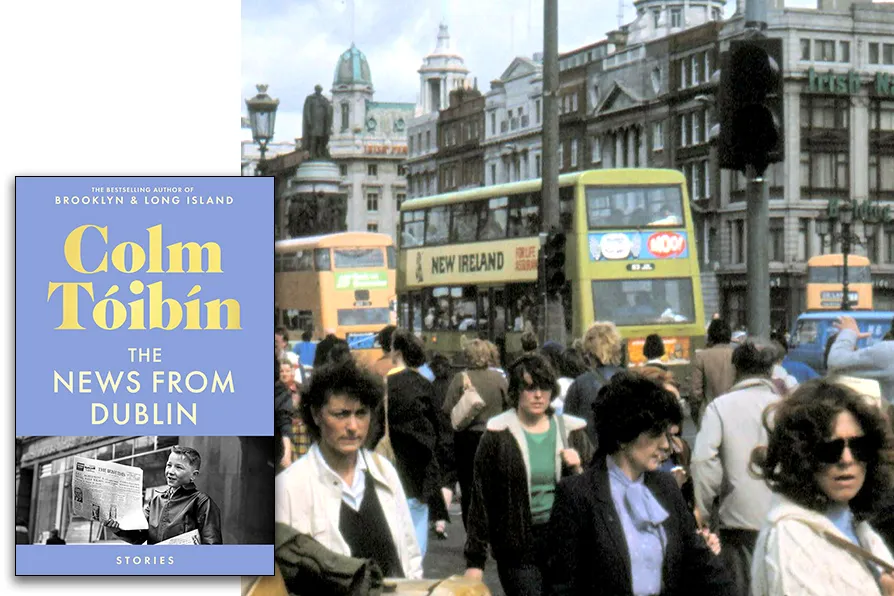 Dublin, 1982 [Pic: Helmut Zozmann/CC]
LEO BOIX applauds an audacious, self-questioning film about grief, friendship and film-making
MARY CONWAY admires a brave and topical study of Armageddon that is, unfortunately, unable to come to a conclusion
ANDY HEDGECOCK, JAMES WALSH and JAMIE BRITTON review Hanging by a Wire, I Want Your Sex, The Pout-Pout Fish, and Rise of the Foot Soldier: Retribution
Chris Searle speaks to US pianist RAN BLAKE
The Bard hands out medals for his Edinburgh campaign and urges us to support The Men They Couldn’t Hang





The News from Dublin: Stories
Colm Toibin, Picador, £20
FOR the varied and fascinating characters populating Colm Toibin’s beautiful new book of stories, The News from Dublin, there seems to be no such thing as good news.
In the opening story, The Journey to Galway, a mother receives news of her son’s death as a fighter-pilot in the second world war, and then has to carry that news to his now-widow in Galway. The mother’s life, of course, will never be the same again, such that “there was a line between the time before she heard of her son’s death and the time after.”
Yet this life-changing trauma is communicated in a few blunt words on a slip of paper: “the texture of what happened,” writes Toibin, “was reduced to a telegram, the telegram that she still held in her hand.”
Throughout the stories, bad news works in this way, the full “texture of what happened” reduced to “a brutal single fact” in telegrams, newspaper headlines, solicitors’ letters. Bad news may have a devastating impact on those directly affected, but it’s all too often conveyed in stark, strangely inhuman terms.
In the title story, The News from Dublin, bad news is conveyed by silence, belying the old cliche “no news is good news.” The main character visits the government health minister in Dublin, to beg that the new drug streptomycin, currently being tested for use on tuberculosis, be given to his dying brother.
He returns home empty-handed, and decides he cannot face his family, cannot tell them the bad news that there is no news. Instead, he will “let them realise as time passed that he had not come to them because he had no reason to come… that there was no news from Dublin and that there was nothing that could be done.” No news, in this story, is bad news.
By contrast, in the deeply uncomfortable story A Free Man, the main character Joe wishes that there was no news — or, at least, no news involving himself. He’s an ex-teacher and sex offender who preyed on young pupils.
Released from prison, he’s faced with an angry mob of protestors and reporters. He flees to Barcelona, where he attempts to live incognito, and eventually seems to settle.
Towards the end of the story, though, a group of Irish tourists recognise him: “That’s him, that’s him,” they shout, as one woman scrolls down her phone to find — no doubt — a news article about him, a photo to confirm the group’s suspicions.
For Joe, then, the “news” is not just about the present but also the past: his terrible past pursues him through internet news sites. Something similar might be said of all the “news” in The News from Dublin — namely, that it is strangely achronological or non-linear, concerning not only “now” but also the past as well. Indeed, sometimes it even seems to alter the past. In The Journey to Galway, for example, the main character wonders “if getting the news had not actually changed her memory of the hours that came before.
News, then, revives and potentially transforms memories, pasts, histories. This is particularly clear in the final story of the collection, The Catalan Girls. In this novella-length narrative, the main character Montse receives news of her beloved auntie’s death, and decides to take up residence in her abandoned house in rural Catalonia. Here, ultimately, Montse finds peace and a kind of redemptive isolation, away from her combative sisters, away from failed love affairs, away from all but the distant past, away from any kind of news whatsoever. In her case, no news really is good news.
At the end of The News in Dublin, silence speaks volumes; by the end of The Catalan Girls, silence is on the verge of becoming nothing more than itself, news-less: “Soon, it will be all quiet. Soon, there won’t be a sound.”
Put upon all her life, Montse has finally found a home, “just for one, just for herself.” Like so many of the characters in the collection, she has been pursued for years by “a ghost … hovering in the darkening air … asking … if there was any news, if there was any hope.”
For her, the answer to the latter question seems to be yes.
