A California union’s decision to host a meeting about US policy towards Cuba has prompted a congressional probe and renewed attacks on international solidarity, writes CAMERON HARRISON



When protection becomes persecution: how the law is failing women and children
Legal frameworks designed to safeguard women are too often weaponised against them, reinforcing male power and entrenching injustice. The FiLiA Ending MVAWG Team highlight some of the issues
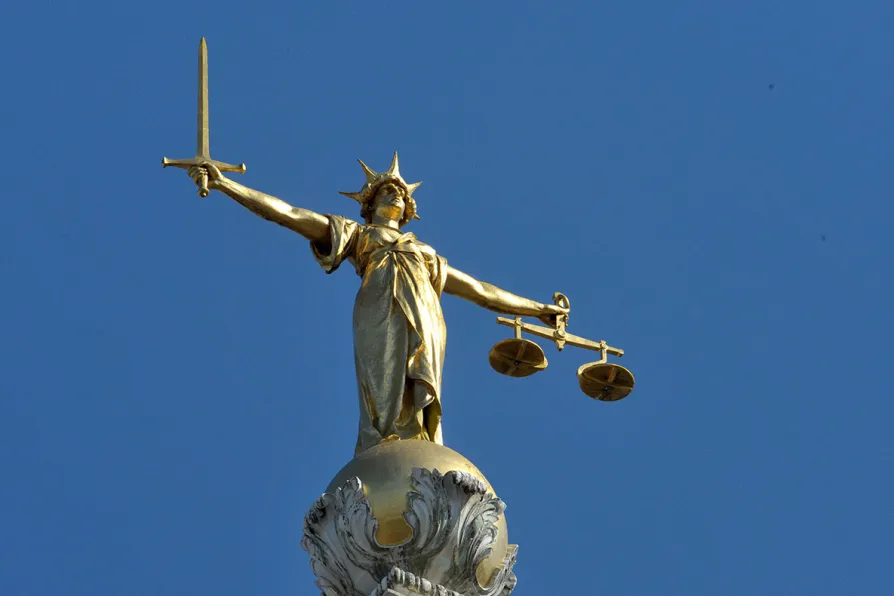
 The Lady Justice statue atop the Central Criminal Court
The Baltic state is set to reverse its constitutional prohibition on nuclear weapons and foreign bases as part of accelerated Nato war preparations, warns TOM UNTERRAINER
Long-term underfunding and state neglect, while simultaneously probation services have been undermined, have intensified the prison crises, argues SOLOMON HUGHES
Holyrood incompetence has cost jobs and put the future of Clydeside’s Ferguson Marine shipyard into jeopardy. Its future should have been assured, argues KENNY MACASKILL
With the agitated debate now raging in the media about the early release schemes, Prison Officers Association general secretary STEVE GILLAN gives the view of those who work in the sector
The hounding of the late Jason Arday is an all too familiar experience for many black people. ROGER McKENZIE calls for collective action to combat what can feel like personal isolation





AT FiLiA we are proud to have a global team committed to ending male violence against women and girls (MVAWG).
Our choice of language is deliberate; we are not the Ending VAWG team, we are the Ending MVAWG team.
We recognise that when it comes to certain crimes, such as domestic abuse or sexual violence offences, women are statistically much more likely to be the victims, with men significantly more likely to be the perpetrators. This is not merely an esoteric matter — after all, how can we hope to combat what we cannot or will not name?
Within the team we have a number of different projects, and it would be easy to consider them as separate, distinct pieces of work.
Take our Hague Mothers’ team. They campaign against the misuse of the Hague Abduction Convention, an international treaty that was originally intended to prevent fathers from abducting their children. However, it is now increasingly used by perpetrators against mothers who have returned to their home country after fleeing domestic abuse — a form of legal abuse supported by the state.
At first glance, you would be forgiven for thinking that this team shares little common ground with one of our other projects, Women First, whose primary focus is to improve the outcomes for women involved in the commercial sex trade.
However, while these issues are often treated as unrelated, it is important to consider them together and to understand the wider context of sex-based oppression, further compounded by both classism and racism.
A key point to note is that, in both cases, the law and legal institutions are failing women.
There is an irony in the fact that the Hague Abduction Convention has become such a powerful weapon, used against the very women (and children) it was intended to protect. A law that was designed to protect women which now enables the abuser. Those implementing the convention — governments, state officers, the judiciary — have access to the same evidence base used by global experts (and experts by experience) who are part of the Hague Mothers’ campaign, including the UN special rapporteur on violence against women and children.
They know that the convention enables further abuse, that it punishes the victim and rewards the perpetrator of that abuse. And yet nothing is done.
Legislation around prostitution has made headlines recently, with Ash Regan’s attempt in Scotland to introduce a new Bill to criminalise the purchase of sex and decriminalise the sale of it. It was defeated at stage one. Advocates for the Bill listed many of the crimes that are perpetrated against women in prostitution. They included rape, torture, assault and many more. They asked the question about who would seek to protect the rights of the perpetrators in such a scenario? Why is it that once again, the law, instead of protecting women, serves to enable the abuser? Who holds the power, and what steps do they take to retain it?
One argument that was used against progressing Regan’s Unbuyable Bill was that of “complexity.” Variations of this theme are used to rebuff the Hague Mothers’ campaign, however, is it really a matter of complexity, or is that simply a convenient excuse to look away and not get involved?
Indeed, across both projects, we have encountered a distinct lack of policy interest, and one must ask why. After all, the harms to women and children in both cases are well documented.
Would the politicians and law-makers who so confidently proclaim that prostitution can be “meaningful and fulfilling” be quite so blasé if it was their daughter or sister entering an industry where your risk of being murdered is 18 times higher than that of the general population? Given that it is predominantly women who are living in poverty that turn to prostitution, because they have no choice, it surely becomes harder to argue that prostitution is “just a job like any other.”
Is it really acceptable that victim-survivors have no legal route that will allow them to return to their home country in order to find safety for themselves and their children? Is it reasonable to insist that a perpetrator has the right to decide where a mother and child are allowed to live, even if they are unmarried, have never lived together, or if the child is born through rape? Or that children are regularly separated from their protective parents as a result of the operation of the convention?
In both cases, women’s human rights are being systematically violated, with the knowledge and, we would argue, the connivance of the state. These include the right to life, to be free from violence, to be free from torture.
The rights that are being upheld are those of the men who perpetrate the violence, as “johns” or pimps, partners or fathers.
It is the patriarchy that enables the continuation of abuse; and misogyny that allows politicians of all hues to ignore the very evident harms to women and children. This oppression becomes systemic through capitalism, turning prostituted women into “sex workers” and prostitution into an industry, and encouraging lawyers to take the easy money and fight for the rights of the perpetrator over those of his victims.
FiLiA is a women-led volunteer organisation and part of the women’s liberation movement with charitable status for its promoting women’s human rights. For more information visit www.filia.org.uk.

Similar stories

ANNA FISHER explores what would it mean for women’s equality and public safety if Britain embraces full commercialisation of the sex trade
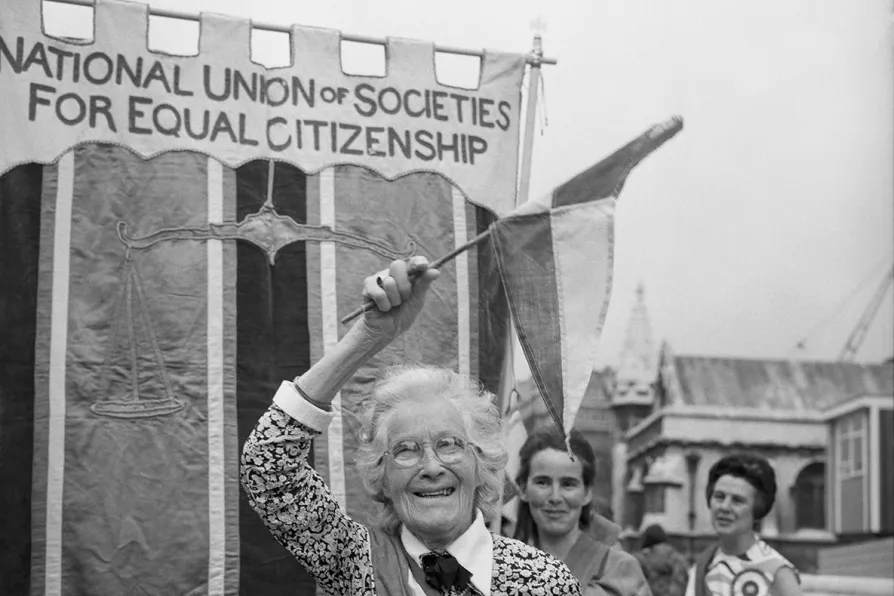
Half a century after transformative laws reshaped Britain, women’s rights are again contested. This International Women’s Day is a call to remember how change was won, and to organise to defend it, says KATE RAMSDEN
The legacy of socialist feminists such as Alexandra Kollontai challenges us today to confront an uncomfortable truth: framing prostitution as empowerment lets the abusers of the Epstein class off the hook, warns HELEN O’CONNOR
The government’s new immigration proposal risks creating a society where rights are earned, not guaranteed, warn feminist groups Project Resist and FiLiA in a joint statement