A California union’s decision to host a meeting about US policy towards Cuba has prompted a congressional probe and renewed attacks on international solidarity, writes CAMERON HARRISON



Full decriminalisation would entrench exploitation, not end it
ANNA FISHER explores what would it mean for women’s equality and public safety if Britain embraces full commercialisation of the sex trade


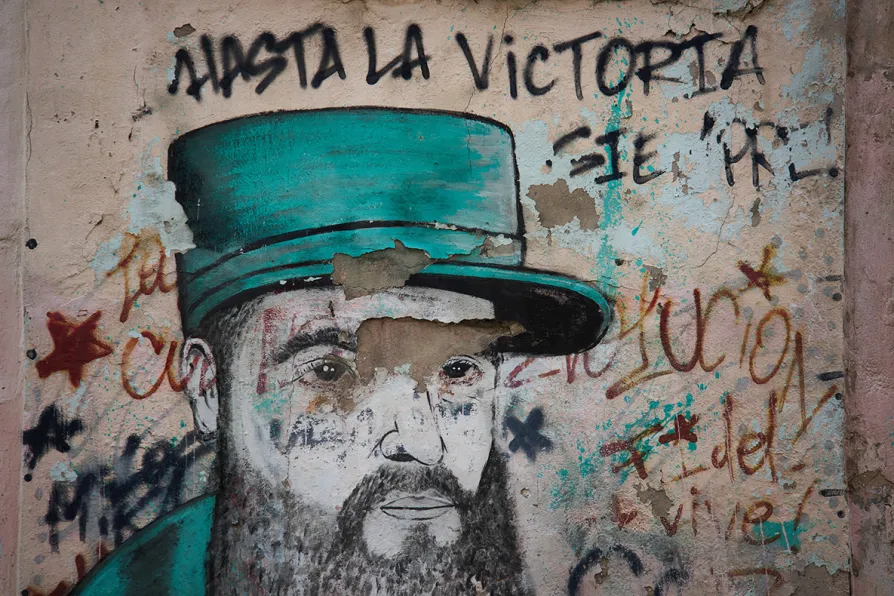
The Baltic state is set to reverse its constitutional prohibition on nuclear weapons and foreign bases as part of accelerated Nato war preparations, warns TOM UNTERRAINER
Long-term underfunding and state neglect, while simultaneously probation services have been undermined, have intensified the prison crises, argues SOLOMON HUGHES
Holyrood incompetence has cost jobs and put the future of Clydeside’s Ferguson Marine shipyard into jeopardy. Its future should have been assured, argues KENNY MACASKILL
With the agitated debate now raging in the media about the early release schemes, Prison Officers Association general secretary STEVE GILLAN gives the view of those who work in the sector
The hounding of the late Jason Arday is an all too familiar experience for many black people. ROGER McKENZIE calls for collective action to combat what can feel like personal isolation





ZACK POLANSKI has been speaking out about his desire to decriminalise prostitution. Most people agree that women involved in prostitution should not be criminalised. So, to the casual observer, decriminalising it might seem like a no-brainer.
But Polanski and most of the others who are pushing this don’t just mean decriminalising selling sex. They mean decriminalising the entire prostitution system — advertising, brothels, pimping, sex buying, the whole caboodle.
They want to open up prostitution to the full fury of modern capitalism — with no holds barred.
When most people really think about this, they begin to hesitate. Do we want jobcentres sending girls just out of school and single mums down to the local brothel? Do we want huge multistorey brothels in every town centre and out of town business park? Do we want those same brothels advertised on the side of buses? Is the culture not already suffering from the impact of industrialised online porn? Do we want to add to that with industrialised brothels full of young women catering to every male desire and fetish? Is that not going to impact all of our intimate relationships and how men and women see each other? How will it affect children?
Those pushing full decriminalisation do all they can to stop you thinking like this. They reduce it to the friendly sounding “decrim” and insist incorrectly that it would be safer for the women, and that any disagreement is “moral panic,” and other thought-terminating cliches. And they have the backing and resources of a multibillion-dollar industry desperate to expand and gain legitimacy.
We urgently need to think about this more deeply.
Male violence against women and girls (VAWG) has increased rapidly over the past 15 years and is now at epidemic levels. Reported rapes in England and Wales have tripled, recorded sexual offences against children have quadrupled, and the sexual harassment of girls and female staff in schools is off the scale.
At the end of last year, the government published its new VAWG strategy, which sets out the annual costs of just some of these offences. It calculates that domestic violence costs £89.3 billion a year; rape costs £6.6bn a year; and other sexual offences cost £10.2bn a year, making a total annual cost of this subset of male violence against adult women of £106.1bn.
Excluding money promised for tackling child sexual abuse and £2.4bn for improved family services, the strategy promises to invest a total of £1.5bn in England and Wales, spread over several years on schemes for prevention, pursuit of offenders and help for victims. This equates to less than 1.5 per cent of what VAWG costs the country every year.
By way of comparison, the government spent £15bn on counterterrorism measures in 2017, even though terrorist attacks in the UK were estimated to have cost the country only £172 million that year.
This suggests that in spite of the self-congratulation oozing from the new strategy, the government is not in fact very serious about bringing about real change for women and girls. You might even say that this suggests that they don’t actually think women and girls matter very much.
They seem curiously uninterested in why there has been such a previously unheard-of rise in VAWG. The strategy emphasises the need to address the root causes but other than vague statements about misogyny and dangerous attitudes, it never really engages with what those root causes might be and why they’re so much worse now.
Without understanding this, they have little hope of reducing it at all, let alone by half.
The rapid increase in VAWG took off in 2014. A time of austerity policies that decimated public services and led to brutal cuts to social security. Undoubtedly this had a massive social impact and led to a widespread increase in poverty. However, it is infeasible that this alone would lead to the tripling of rape and the quadrupling of child sexual abuse in little more than 10 years. There have been many episodes of mass poverty and hardship in the past that haven’t led to men turning on women en masse like this.
It is more likely that something else entirely is implicated. Most likely the revolution enabled by the rollout of broadband, high-speed mobile phone networks and powerful and affordable smartphones that put the internet in everyone’s pocket, along with tube sites that serve up free porn 24/7, and “sugar dating,” webcamming and prostitution advertising websites, and more recently, OnlyFans.
The majority of internet porn features verbal, physical and sexual violence towards women, with a considerable amount constituting behaviour that would be illegal in any other context, much fitting the legal definition of torture.
As survivor and activist Suzzan Blac, eloquently puts it, “These are not sex videos. They are crime-scene videos.” This is a world away from the kind of porn that previous generations had access to.
OnlyFans and the advertising and webcamming sites all present a multitude of interchangeable young women who are apparently sexually available and willing or even desperate to fulfil a man’s every whim. But behind the facade, she doesn’t want sex or intimacy with him. She’s only doing it because she needs the money or is under the control of a third party. The reality is one-sided sex. He pays so he can be in control and not have to think about her needs and pleasure.
Because she appears to consent even while everything in her might be screaming she doesn’t want it, he learns to ignore the signals when someone doesn’t reciprocate his desire, and he comes to think it’s unreasonable if a woman doesn’t let him have his own way. This teaches him that women are objects to be used and discarded; that they are not fully human.
History has shown that dehumanising, degrading and objectifying human beings is always the first step in committing violence against them. When a distinct group of human beings is dehumanised and objectified, treating them with contempt becomes second nature. Which probably explains the lack of ambition in the VAWG strategy.
Women don’t matter.
This all suggests that attempts to significantly reduce VAWG without addressing the sexploitation industry are bound to fail. And that if Polanski gets his way, VAWG will get even worse with women’s second-class status and men’s false right to use and abuse women enshrined in law.
The government’s strategy does mention porn, but almost as a sideline and there is no examination of the impact of our laissez-faire prostitution system. I fear they have fallen under the spell of the lobbyists for the pimps. They urgently need to do better.
Anna Fisher is the co-founder of Nordic Model Now! (nordicmodelnow.org).

Similar stories
Gisele Pelicot said ‘shame must change sides.’ We may think we agree, but, argues LOUISE RAW, society still has some way to go

Legal frameworks designed to safeguard women are too often weaponised against them, reinforcing male power and entrenching injustice. The FiLiA Ending MVAWG Team highlight some of the issues
The legacy of socialist feminists such as Alexandra Kollontai challenges us today to confront an uncomfortable truth: framing prostitution as empowerment lets the abusers of the Epstein class off the hook, warns HELEN O’CONNOR
AMANDA J QUICK warns about the ever-expanding influence of the sex industry – and the harm it unleashes on both the women involved and society collectively, especially the young