WILL STONE samples the 20th anniversary atmosphere of this eclectic end-of-season indie festival


 Latest editorial
A glimpse of greatness in Arcadia
MARY CONWAY becomes impatient with the intellectual self-indulgence of Tom Stoppard in a production that is, nevertheless, total class
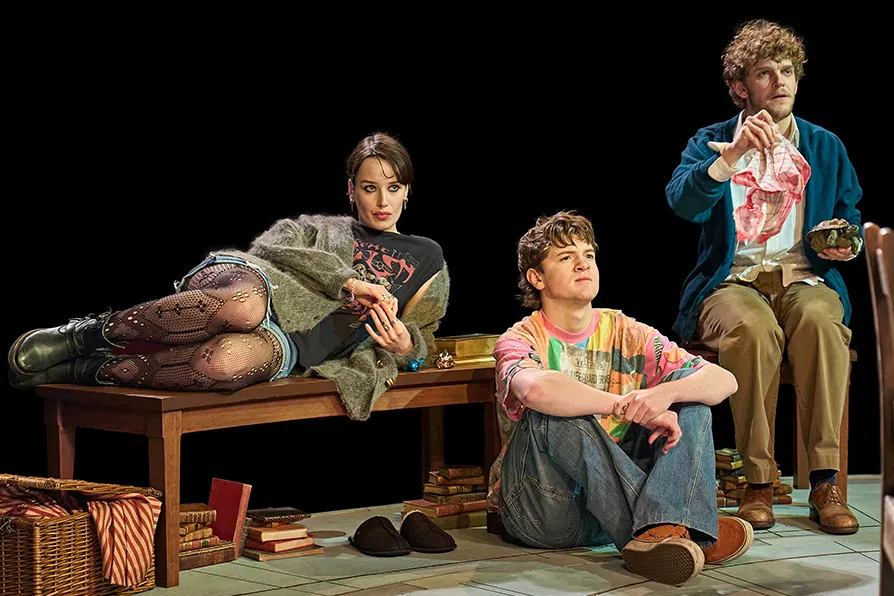 WHAT EXACTLY ARE THEY TALKING ABOUT?: Holly Godliman, William Lawlor and Angus Cooper in Arcadia [Pic: Manuel Harlan]

Comics are not just superheroes and spandex – it can be public art, telling public stories, suggests HARRIET EARLE
The bard serenades the Diggers of Wigan and their festive followers
ALEXEI SAYLE speaks to Angus Reid about a lifetime of protest, how to hone political art – and what to do now
ANDY HEDGECOCK, JAMES WALSH, LEO BOIX and MARIA DUARTE review Just An Illusion, Everybody Digs Bill Evans, Blue Film, Oasis: Don’t Look Back in Anger, and Runner
MARIA DUARTE recommends a nerve-wracking reconstruction of the 72 hours before the Normandy landings





Arcadia
Old Vic, London
⭑⭑⭑⭑☆
TOM STOPPARD’s towering status as a playwright is now virtually sacrosanct. Arcadia – widely regarded as his seminal work and now at the Old Vic – trades heavily on this seemingly unassailable reputation.
The play spans two time periods: the early 1800s and the 1990s. In both, a collection of interesting and quirky characters seem hooked into the life of poet Lord Byron – or at least on those aspects of his life that may or may not have been true. In the early period, Byron (unseen) is staying in the house with the characters; later, his activities are the subject of fierce debate between writers, researchers and academics who disagree not only about the facts, but about how such facts can be proven.
All is dense with argument even as the characters themselves inhabit their own space and play out their love lives, the obsession throughout being how the world works and the relationship of science to conjecture, gardening to algebra, and chaos theory to determinism.
Why jam stirred into rice pudding behaves so inexplicably and whether a new design of the garden represents order or chaos, for example, are two of the lived mysteries that divert the players.
Keeping up with the words is, in itself, a feat of concentration. It feels sometimes as if you’re at a dinner party where Tom Stoppard is pouring out his very considerable and impressive intellect, uninterrupted, and completely oblivious to whether the other guests have the remotest inkling of what he’s talking about.
And this is the criticism: that there’s an elitism at work here that breaks a fundamental rule of theatre which must require that you take your audience with you. There are self-indulgent stretches when the playwright leaves everyone behind.
However… it’s a remarkable feat. And Stoppard has so commandeered the zeitgeist that the obedient audience laugh to order, even before the punch line of many a joke.
Most significantly, this production, directed by Carrie Cracknell, is total class. Set in the round, and with a revolving stage somehow symbolic of the world, the actors perform beneath a floating structure of illuminated circles and globes that could be planets, or atoms, or simply random, undefined features of the universe.
And the casting is inspired. Seamus Dillane, as Septimus Hodge – close friend of Byron and potentially the “hermit” later researched by Leila Farzad’s writer, Hannah Jarvis – is riveting. Isis Hainsworth brings us a superb Thomasina (the girl of 13, tutored by Hodge, whose intellectual brilliance sits easily with simple pubescence). And Prasanna Puwanarajah simply fills the stage with his passionate, 20th century, fluent academic, Bernard Nightingale.
The power of the play, though, ultimately lies in its unfurling of the breathtaking mystery that is the universe. And when Hodge and Thomasina dance together with such eloquent beauty in the finale, the full dramatic impact of the work – and of this production – is revealed. For what we feel, and sense, and share of wonder remains beyond the often over-complex words. And, despite occasional flagging, we glimpse greatness.
Runs until March 21. Box office: 0344 871 7628, oldvictheatre.com

Similar stories
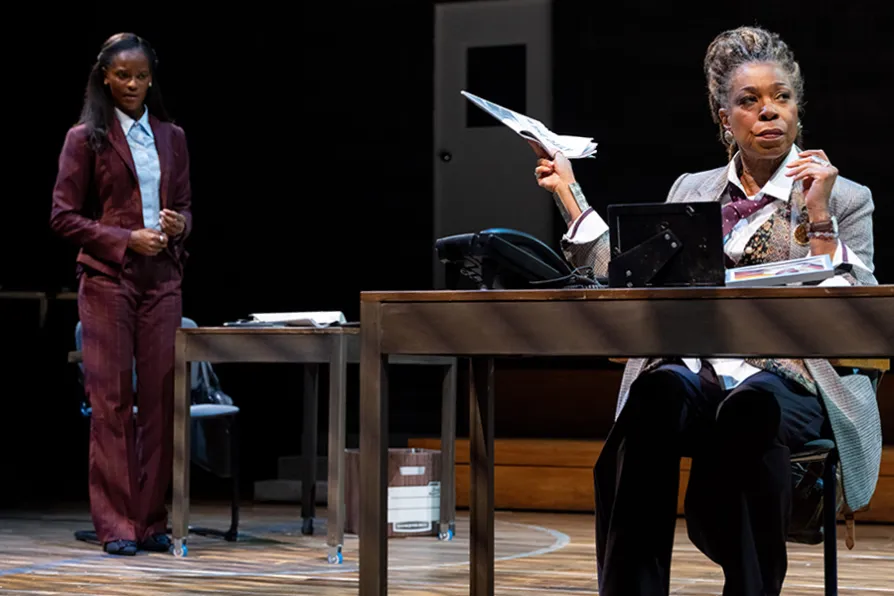
MARY CONWAY keeps up with the sheer pace of a drama about the terrible gap between sanitised reporting and real-life turmoil of race and gender
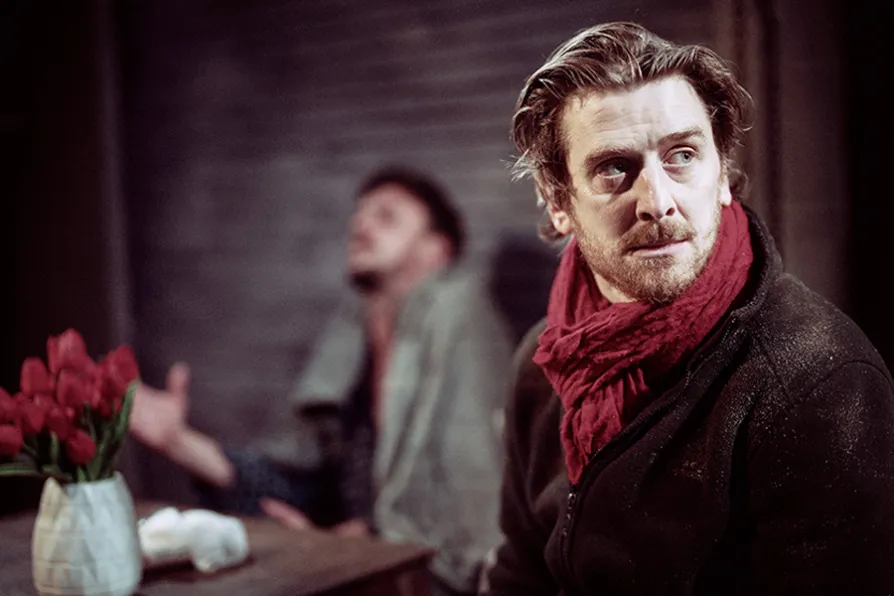
MARY CONWAY admires a brave and topical study of Armageddon that is, unfortunately, unable to come to a conclusion
MARY CONWAY applauds the timely revival of Miller’s study of people fatally deformed by the economics of survival
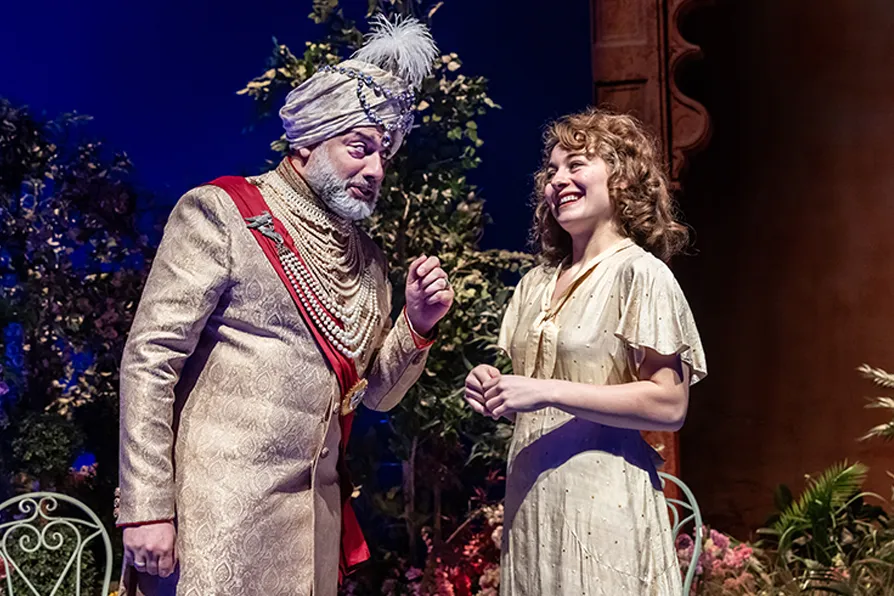
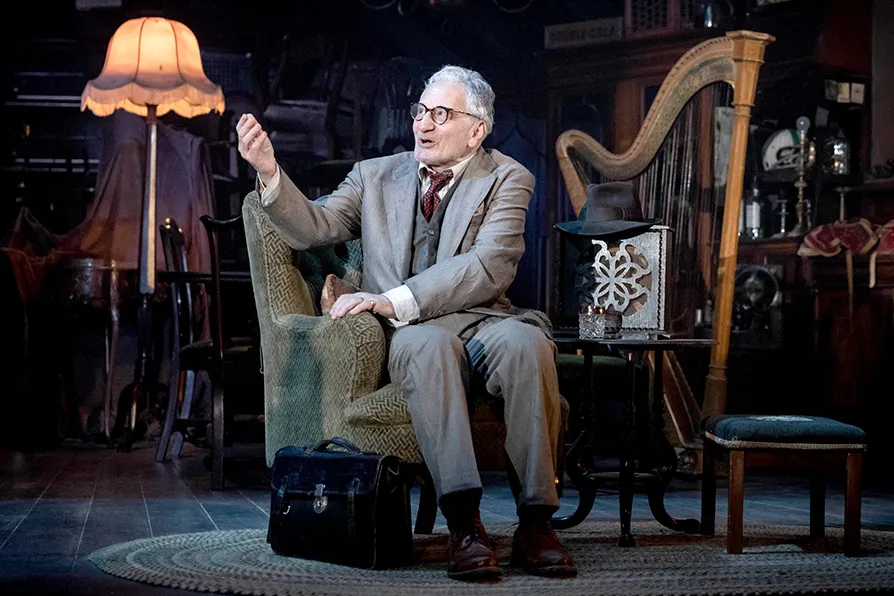
Although this production was in rehearsal before the playwright’s death, it allows us to pay homage to his life, suggests MARY CONWAY