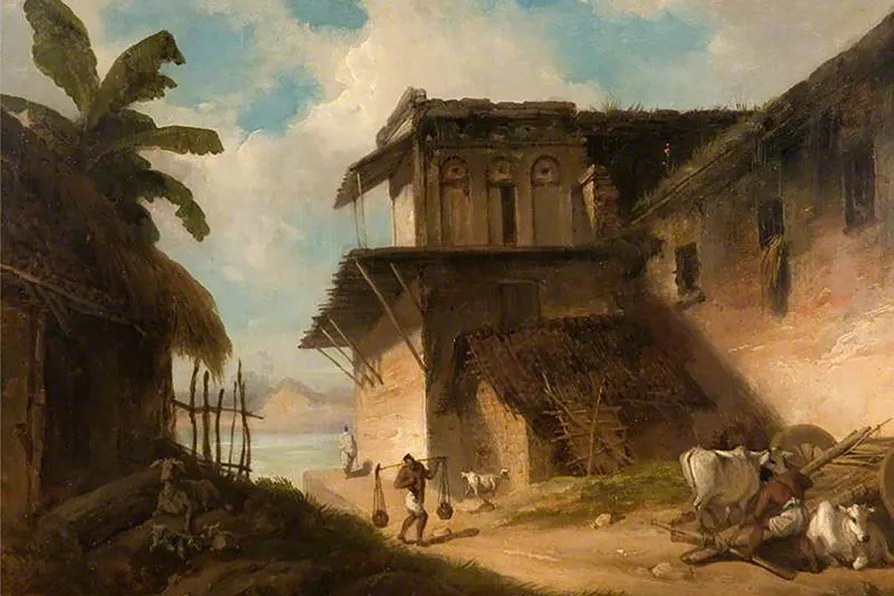
APURBA CHATTERJEE explains how British artists in India used the “picturesque” to reshape colonial landscapes and celebrate imperial power


 Latest editorial

A fitting memorial for Tom Stoppard
Although this production was in rehearsal before the playwright’s death, it allows us to pay homage to his life, suggests MARY CONWAY
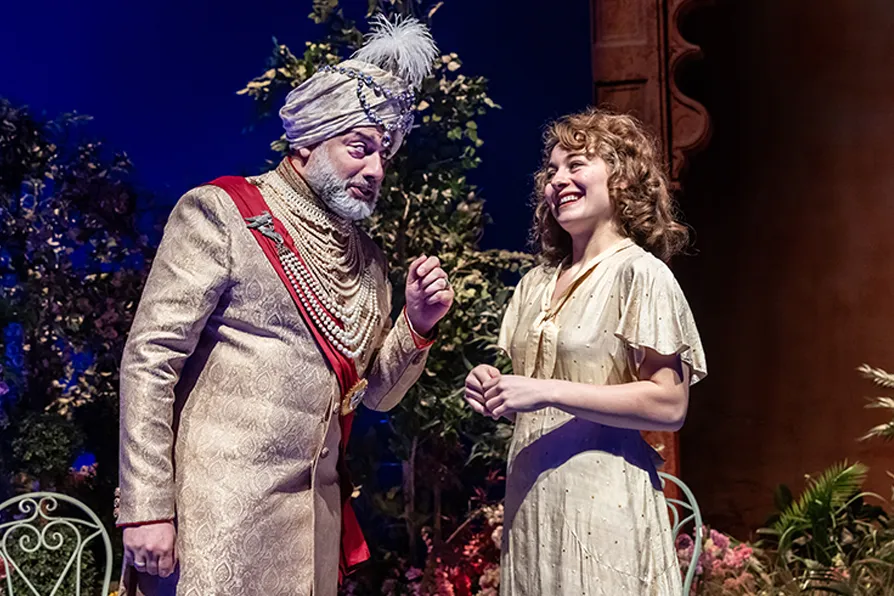 OBSEQUIOUS: Irvine Iqbal as Rajah and Ruby Ashbourne Serkis as Flora Crewe in Tom Stoppard's Indian Ink [Pic: Johan Persson]
PAUL DONOVAN welcomes a revival of Reginald Rose’s classic play that reminds us of the fundamental need for trials with juries
SIMON PARSONS applauds an exceptional performance of Wesker’s little-known play, by the same actor for whom it was written 45 years ago
ANDY HEDGECOCK and MARIA DUARTE review Late Fame, The Death of Robin Hood, Leviticus, and Gail Daughtry and the Celebrity Sex Pass
ANGUS REID recommends a uniquely accomplished documentary collage that contemplates our relation to the natural world
GORDON PARSONS enjoys Kant’s ‘mind-boggling’ theory of human reality: that we create the reality we experience





Indian Ink
Hampstead Theatre, London
⭑⭑⭑⭑☆
WHEN Tom Stoppard died a fortnight ago, his play Indian Ink at Hampstead Theatre was already in rehearsal and ready to roll. Consequently, what was intended merely to commemorate 30 years since the play’s premiere now stands as the playwright’s epitaph, to be viewed with new forensic focus.
One thing is sure: when future generations name great playwrights of our time, Stoppard will be firmly there and unassailable. Why? Because of his swift, tumultuous mind, his rich and dancing language, his fearlessness in irony and wit, but most of all because of his engagement in themes and contexts, philosophy streams and behavioural patterns that wrench us from the commonplace, challenge us to think and transcend British-ness.
Indeed, he has a string of plays that many hold in awe and shape our theatre craft. And while Indian Ink may not be supreme in these, its multi-themes, torrents of thoughts and ideas, and unfettered streams of vivid language take us to places most playwrights never dream of.
This drama, too, holds at its centre the story of a young, socially well-connected writer (albeit a female called Flora Crewe), who travels in 1930 to India (where Stoppard lived for three years). Here and subsequently, her life is viewed, critiqued and remembered by family, critics and others. In the final scene, as family and others stand by her grave, we see how true knowledge of a person — perhaps especially of a writer — is, of necessity, partial and piecemeal and their true essence always a wonder even as they die.
Here, Hampstead Theatre have unwittingly stumbled on a deeply symbolic moment: the showing of a play about how we remember a writer marking the real playwright’s death. Stoppard, himself, would surely find this fitting.
Jonathan Kent directs and generally masterminds the show and it’s a thing of beauty, with Leslie Travers’ exotic, Indian set seeming filled with fragrances and luscious flora. The sitar opens the first act; 1930s schmoozy dance music the second. And the lighting totally captures the exuberant sunshine of day and sudden shadows of night.
The characters effortlessly inhabit the space; the words pour out with limitless eloquence; and we see humanity, caught in time and world events, yet fully in motion, surging on through individual lives with almost supernatural luminosity.
Admittedly, the play has flaws, success having rendered Stoppard often self-indulgent, pouring out a text with such mental twists and turns that he forgets to wait for his audience. Consequently the first half is overlong and it’s hard to hold on to the central theme.
Also, this is India during the Raj where the British characters are sickeningly old school and the Indians likewise obsequious. We expect and hope for a simple condemnation of imperialism but Stoppard never gives us this, writing instead as if he — despite his Czech origins — is bred from the British elite, the authentic Indian characters nevertheless brilliantly exhibiting cultural pride, deep history and greatness against a backdrop of relentless British namedropping.
The cast are effective, despite the occasional jumble of characters. Gavi Singh as Nirad Das, who paints Flora’s portrait, encapsulates all India in his intimate, impassioned exchanges and is outstanding. Ruby Ashbourne Serkis brings an unexpected lightness of touch to the vital but dying Flora.
But Felicity Kendal, who first created the role of Flora and for whom it was written, shines like a beacon in the older part of Flora’s sister Mrs Swan as seen in the 1980s. Embodying the play with her grace and beauty and riveting presence, Kendal’s star appearance here perfectly crowns this fitting memorial.
Runs until January 31. Box office: (020) 7722-9301, www.hampsteadtheatre.com.

Similar stories

MARY CONWAY admires a brave and topical study of Armageddon that is, unfortunately, unable to come to a conclusion

MARY CONWAY applauds the timely revival of Miller’s study of people fatally deformed by the economics of survival
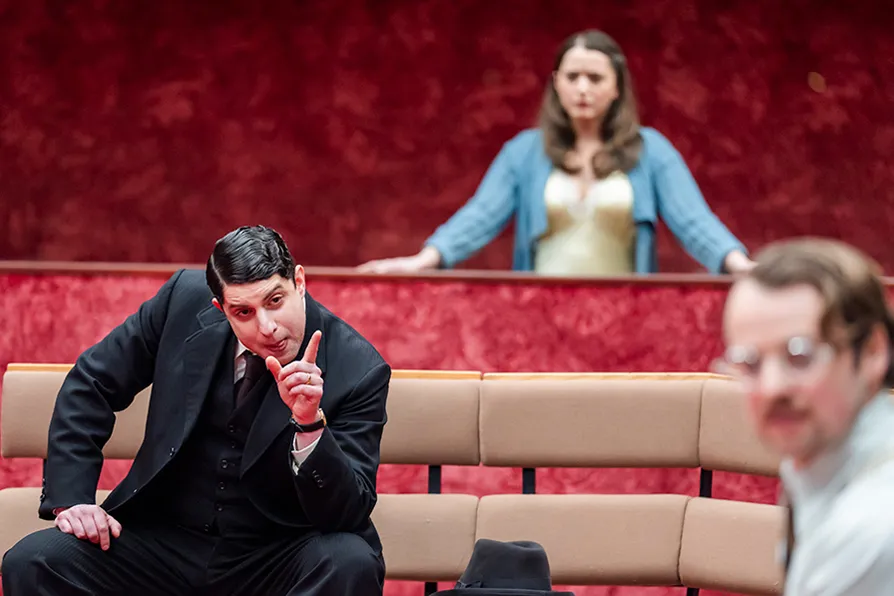
MARY CONWAY is spellbound by superb performances in Arthur Miller’s study of the social and personal stress brought about by Nazi Germany’s Kristallnacht
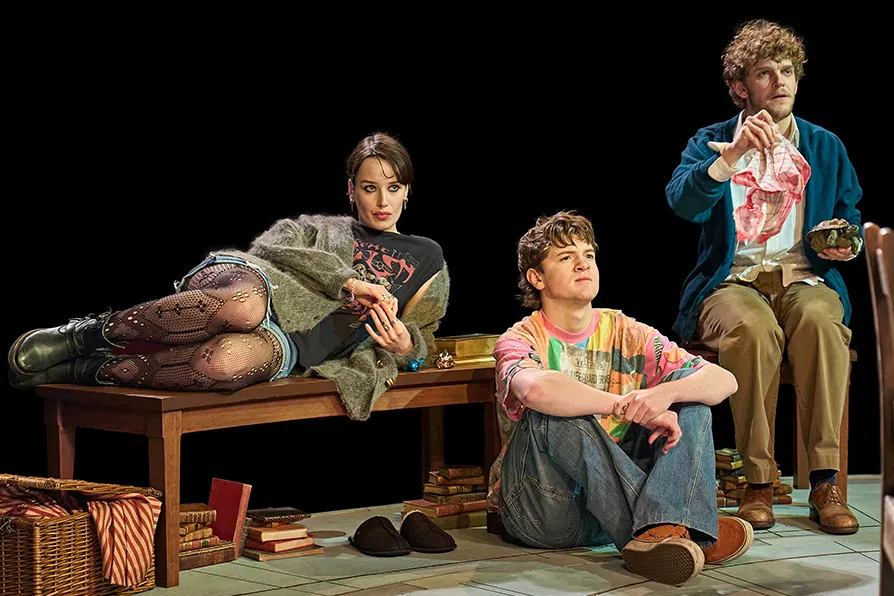
MARY CONWAY becomes impatient with the intellectual self-indulgence of Tom Stoppard in a production that is, nevertheless, total class