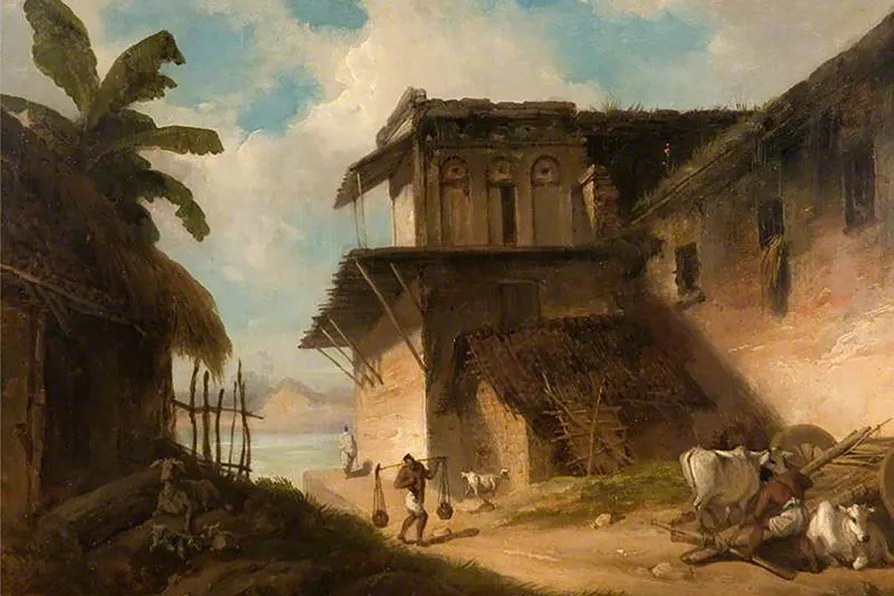
APURBA CHATTERJEE explains how British artists in India used the “picturesque” to reshape colonial landscapes and celebrate imperial power


 Latest editorial

Poetic snapshots of growing up in Tyneside
ALAN MORRISON recommends a consummate, heart-warming collection about a working-class upbringing in the industrial north-east
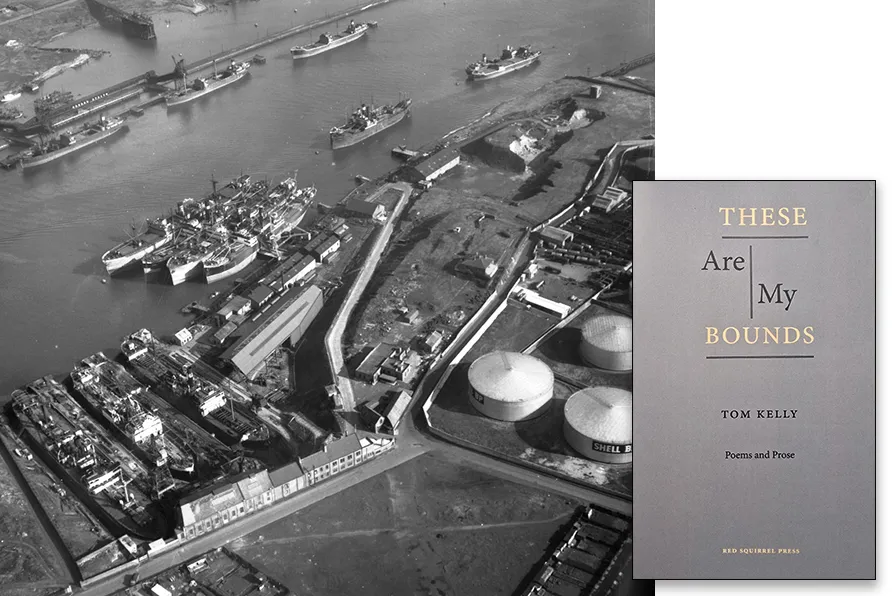 Ship repair yard of Mercantile Dry Dock Co Ltd, Jarrow, March 1950 [Pic: Tyne & Wear Archives & Museums]
PAUL DONOVAN welcomes a revival of Reginald Rose’s classic play that reminds us of the fundamental need for trials with juries
SIMON PARSONS applauds an exceptional performance of Wesker’s little-known play, by the same actor for whom it was written 45 years ago
ANDY HEDGECOCK and MARIA DUARTE review Late Fame, The Death of Robin Hood, Leviticus, and Gail Daughtry and the Celebrity Sex Pass
ANGUS REID recommends a uniquely accomplished documentary collage that contemplates our relation to the natural world
GORDON PARSONS enjoys Kant’s ‘mind-boggling’ theory of human reality: that we create the reality we experience





These Are My Bounds: poems and prose
Tom Kelly, Red Squirrel Press, £12
THESE ARE MY BOUNDS is Tyneside poet Tom Kelly’s 14th publication with Red Squirrel Press, and is among his most assured. Kelly’s poems are snapshot social documents of a working-class upbringing in the industrial north-east, replete with flat caps and whippets, they have a Lowry-like quality, but more pertinently, echo the works of South Shields’ James Mitchell. There are seams of Catholicism and socialism running throughout.
The eponymous opening poem is a ghost-monologue of the poet’s grandmother: “We lived in Albion Street, men waltzed/ into The Albion bar, staggering out, bawling at the sky;// See me, just turned fourteen/ crossing the Tyne to work at Haggie’s Rope Works;// The Borough is our Victorian Gin Palace,/ me husband drank in his neat as a pin navy-blue suit;// I am at Jarrow’s cemetery,/ standing at me unmarked grave;/ These are my bounds”.
A spiritually receptive child, Kelly relates how he was always aware of the presence of his late auntie Bridget (“Dead with TB at fourteen”) accompanying him and his unaware Granny (“lost in some imagined intrigue”) to Mass.
Lomf, an amalgam of the judgemental phrase “Lack of moral fibre,” was attributed to Kelly’s shell-shocked grandfather. Kelly’s words sculpt relatives like gnarled figurines: “Work gave him a death mask and/ invisible haversack pinned to a bent back.”
A similar scenario is depicted in the present day The Last Resort, where a disabled claimant commits suicide after his benefits are arbitrarily cut by the DWP.
The ghosts of industries and bygone working-class communities that formed around them mingle with hauntological nostalgia in The Shipyards Have Gone: “camel backed coats clinging to doors,/ kitchens warm as coal fires allow// The Timekeeper waits to catch the late-comers,/ before crouching over columns of figures”.
The Day I Was Born is rich with sense impression: “I still smell damp, hear mice scuttling in our settee;/ …gas mantles puttering.” Hope Street To Brand New Council House recalls the younger Kelly’s sense of dislocation after his family move from a terrace to an all mod cons council house: “no gas mantles;/ electricity makes everything easy.// The Bakelite switch clicks music/ for anyone but me.” It’s as if he’s been taken not only to a new place but a new time.
The shrine at Lourdes, where Bernadette Soubirous saw visions of the Virgin Mary in a grotto since purported to be a source of miracle cures, is part of the fabric of Catholic consciousness. I Never Went To Lourdes relates how Kelly never had the opportunity to “bring home a bottle of holy water/ in a plastic vase of ‘Our Lady’” like the one “hid behind the ‘Gazette’ calendar.”
Not In is like a scene from a 1960s Kitchen Sink television play: “‘Me Mam’s not in.’// The Provident Man knows she is there,/ shutting his heavy book, giving one long sigh.”
I Am That Boy recounts the young poet working as a clerk at the Mercantile Dry Dock: “I blotted mini-ink bubbles, spreading blue-black blood./ The door beside me shivered draughts.”
Lowry Talks is a poem-monologue channelled through Salford’s famous self-taught painter, composed in rhyming/semi-rhyming couplets mostly in iambic pentameter: “I was painting nights and collecting rent/ and the Pall Mall gave great times which I spent/ laughing like a drain and seeing the Hallé/ and Hindle Wakes.// No wonder I’m lost in scribbles and scraps,/ and you will find me in all the bowed backs.” When at times the end rhymes slip we glimpse how this poem could have been more effective in blank verse, which would have retained the rhythm whilst safeguarding against prosaic lapses.
Me, Laurie And William In October 1972 reminds us Kelly is more at home in short form vignette: “His hat was at an angle, making me recall Laurie Lee,/ heading through his cider world…/ given an evocatively painted Jarrow Slake back-drop.”
I Am My Father’s Son is a pithy lyric: “the stubble on his chin,/ following him, limping to the pub;// We would not vote Tory:/ Nye our hero.”
In I Wouldn’t Throw Me Cap In There, Kelly relates how his proud father “avoided being a ‘General Labourer,’ standing in the Dole/ …where he was always ‘Second Class’/ to the clerk behind the iron-meshed barricaded counter”. In No Abuse, the poet’s father recollects his part in seeing off Mosley’s Blackshirts, later “scattered” by the “Sand Dancers” (the colloquial term for people from South Shields).
Terry, Derek and Me is about a weekly sharing of poems: “sitting around cigarette over-flowing ashtrays/ in the Catholic Club. …photocopied poems;/ we droop over our copies, earnest as watchmakers repairing/ some desperately broken Christmas present watch.”
There is also a section of thought-provoking prose pieces towards the back of the book.
These Are My Bounds is another consummate, heart-warming collection from the talented Tom Kelly.

Similar stories
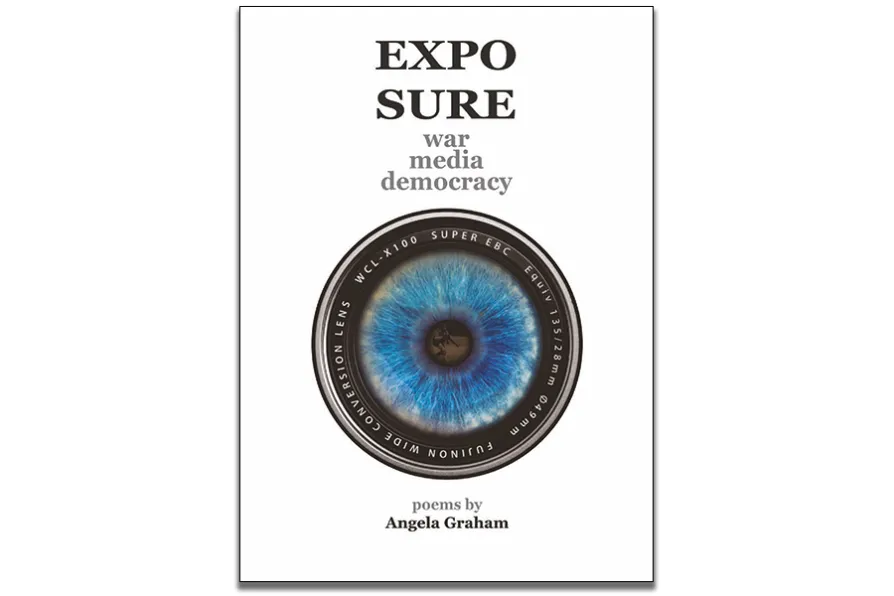
ALAN MORRISON explores, and recommends, a remarkable collection of poems that explore war photography with the moral responsibility of a documentary film-maker
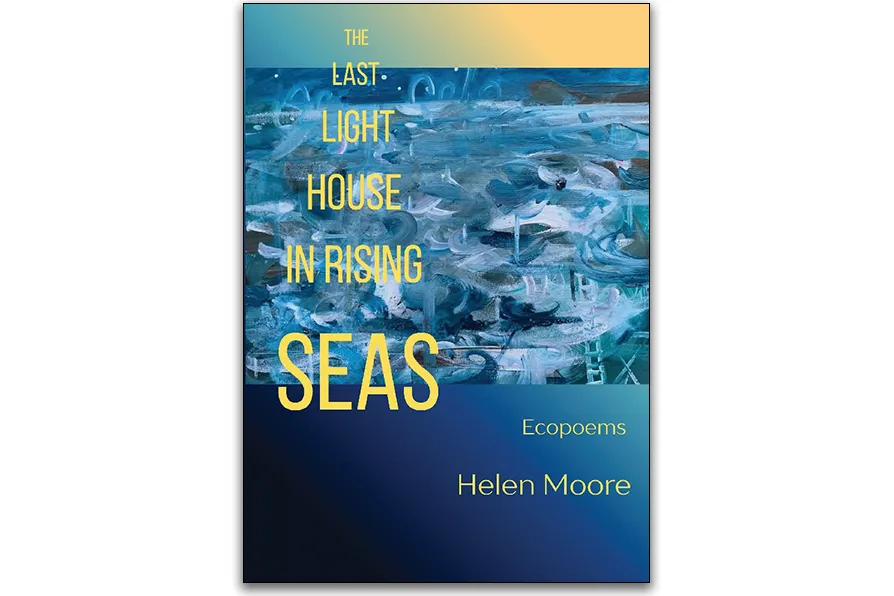
ALAN MORRISON welcomes a new collection from the most imaginative and committed ecopoet of our time
RUTH AYLETT reviews two collections of outright political poetry
A ghost story by Mexican Ave Barrera, a Surrealist poetry collection by Peruvian Cesar Moro, and a manifesto-poem on women’s labour and capitalist havoc by Peruvian Valeria Roman Marroquin