
The UK Prime Minister may have the regal touch in northern England, but he’s been wrong-footed on the constitutional challenges posed by the Celtic Alliance of first ministers from Scotland, Wales and Northern Ireland, argues KENNY MacASKILL

Strangers in the capital: The socialist republic and the Protestant diaspora
AARON SMITH discusses why the Protestant diaspora are still part of Yeats’s ‘Indomitable Irishry’, and an integral part of any future united Ireland.
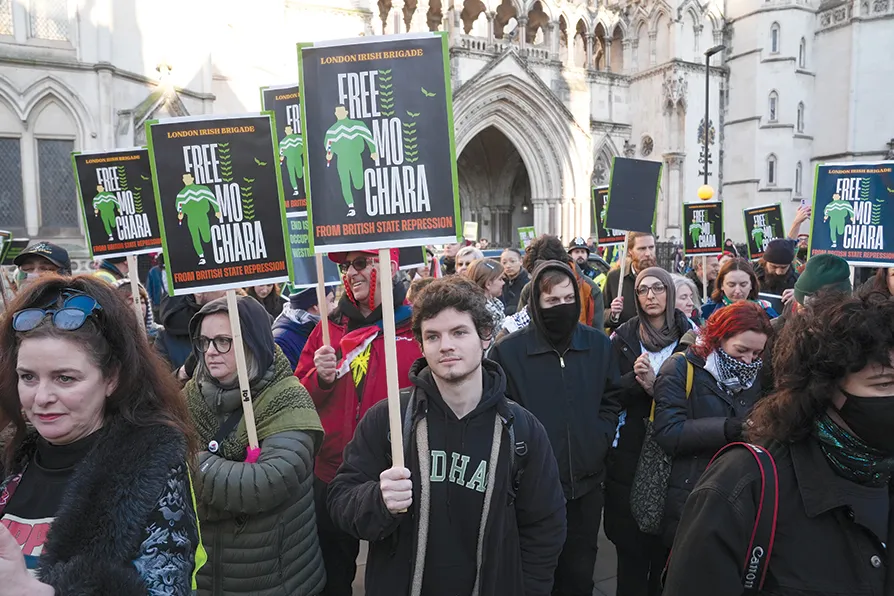
 FINDING COMMON CAUSE: Supporters of the Irish rap group Kneecap outside the Royal Courts of Justice in London with London Irish Brigade solidarity placards for Mo Chara
NEIRLAY ANDRADE, a member of the Communist Party of Venezuela’s political committee, outlines her party’s position on the crisis facing the country
A look at Taylor Wimpey’s accounts shows why Labour’s market-led housing strategy won’t deliver more, cheaper homes, as promised, says SOLOMON HUGHES
DAVID HORSLEY remembers the remarkable life and death of US black revolutionary George Jackson, whose politically passionate prison letters were published as Soledad Brother
Cuban trade union federation CTC leader OSNAY MIGUEL COLINA speaks to Ben Chacko about life and work under a crippling US siege
A part of the British empire’s network of slavery, today the Caribbean island of Nevis faces a new form of exploitation in the form of crypto-colonialism, CLAUDIA WEBBE writes
Challenges from the unscrupulous misuse of AI to steal actors’ voice and physical likenesses is being met with a firm union response, writes LYNDA ROOKE





“Why should I want to go back
To you, Ireland, my Ireland?”
Louis MacNeice, Autumn Journal
I GREW up on the Armagh Road, five minutes from Shamrock Park in Portadown during the 1980s. My dad, an English soldier before he joined the RUC, thought the “Orange Citadel” a safer option than Crossgar — he was killed there four years later.
My great-grandad Power converted from Catholicism to marry my Church of Ireland great-grandmother, while great-grandad Reaney was a Boer war veteran and lay preacher of the Presbyterian Church in Darkley, South Armagh.
Both Powers and Reaneys moved to Portadown in search of employment: my grandmother to Fowler’s entry or “The Orange Cage,” my grandfather to John Street — the only all Catholic street in town.
At seven years old, I remember beaming at my grandmother while I marched for the first, and last time to “the voodoo of the orange bands,” wearing a plain Orange sash crossing right to left.
My great-grandmother Wilkinson (from the Woodvale Road, Belfast) liked to confuse my mother by telling her she had lived in two countries without moving house.
Independence and “statelethood” gave working-class Protestants and Catholics equal right to sleep under a bridge, while Stormont’s preferential treatment of its co-religionists was made on the condition of fierce competition.
If the Protestant working class were treated to the free market, Catholics were the ever-hungry lumpenproletariat at the door: to quote the economist Joan Robinson: “the only thing worse than being exploited by capitalism is not being exploited by capitalism.”
Northern Ireland’s relative poverty compared with “the mainland” reflects its colonial past: somewhere to extract wealth from rather than invest.
Currently, NI is third from bottom of the UK regions in capital investment, Ards and Down has the smallest GDP per head, while Queen’s University’s joint study with the Nuffield Foundation last year confirms the province to have the highest concentration of deprivation in the UK, particularly in education and health.
For as long as the North is so deprived, really as long as we live under the arbitrary scarcity of capitalism, her religious and ethnic divisions will remain opened ground.
England’s colonial experiment in Ireland has not, from an Irish perspective, been a success. My experience of living away from home has convinced me the “colonial gaze,” so to speak, sees me as nothing other than Irish — at least when I open my mouth.
Ethnic nationalism, however, would give me the mark of Cain: as much a moral dead-end as it is intellectually bankrupt; in contrast, civic nationalism draws — ironically — on ancient laws of Irish hospitality; the Scottish Enlightenment; Republican government and Trade Union collectivity — and can appeal to all the people on the island.
Perhaps this is motivated reasoning, as the only nationalism that will “have me dead or alive” (the litany of Protestant Rebels implying, as Edna Longley perceived, that the only good Protestant is a dead one) is the civic variety; yet, if we are to provide a sense of identity embracing the orange and the green, old Irish and the new (avoiding the shipwreck of ethnic purity), we need a collective story that can adopt rather than expel, accept over time rather than knee-jerk deny.
Colonialism has made the experience of leaving Ireland as Irish as living there. There’s a strange parallel between the coffin ships of the 1840s and the Ryanair flights taking us across the water for work — an obvious improvement in comfort, if still a symptom of historical domination.
Unlike my great-granddad, I did not leave to work with my hands on London docks, yet the thrust of the story remains the same: the North so governed, cannot provide for its people. Ironically, in London the distinctions between Ulster Protestant and Cork Catholic evaporate, leaving only the shared experience of an Irish emigre.
As a member of the Irish diaspora, I partake in the alienation that has defined Irishness for almost half a millennia.
Karl Polyani’s insight that society would revolt against the free market as it would from a knife at its throat, explains why the blood of British trade unionism — according to Friedrich Engels — was Celtic blood.
As diaspora Irish, we have a unique role to play in Irish Independence: free of the localised pressures that aggravate sectarianism at home, yet bound to the island by the shared trauma both of upbringing and departure, we are able to work within British institutions to confront and remake them.
Although I have been absent for almost a decade, “the North, where I was a boy, / Is still the North”. A civic nationalism defined by a present tense commitment to all the people of Ireland, can best find its fulcrum in the collective ownership of land, resources and the means of production promised by Connolly’s Socialist Republic.
To get there, we must act within and without: the diaspora reshaping education (through initiatives such as EFUI) to influence attitudes toward granting a border poll, accepting any positive outcome, and undoing the inertia of both small and large U Unionism.
Dr Aaron Smith is head of English at a west London secondary school and secretary of Ealing Trades Council.
Find out more about Educators for a United Ireland here https://linktr.ee/educatorsforaunitedireland

Similar stories
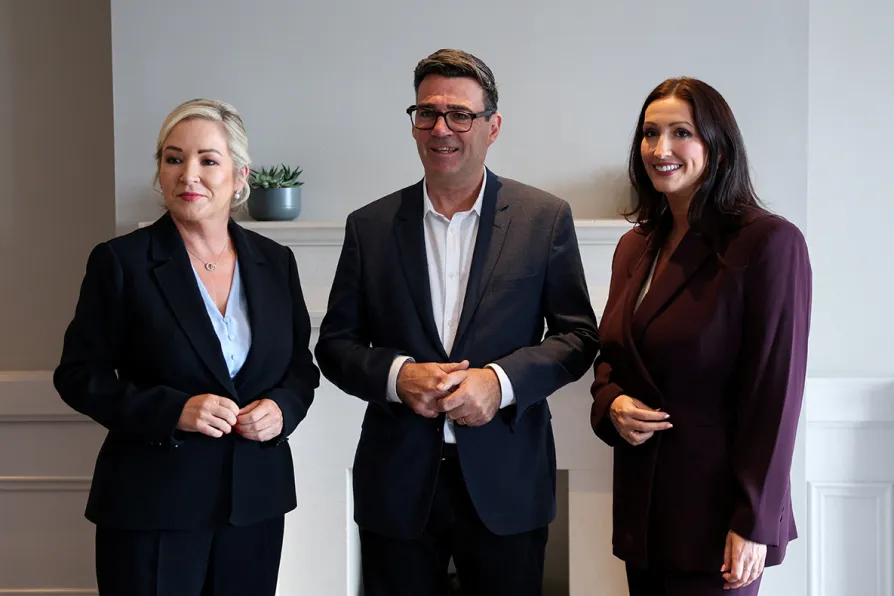
Despite Andy Burnham’s declaration defending the continued partition of the island, all major international and internal trends are converging to make Irish reunification inevitable
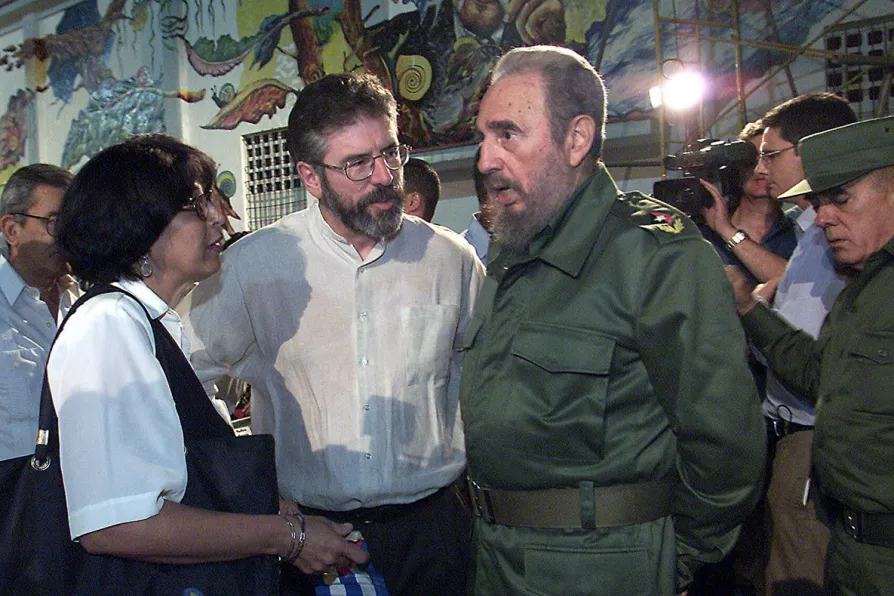
JOE DWYER of Sinn Fein reflects on the links between the Irish and Cuban struggles for independence and on Castro’s personal engagement with the cause of Irish freedom
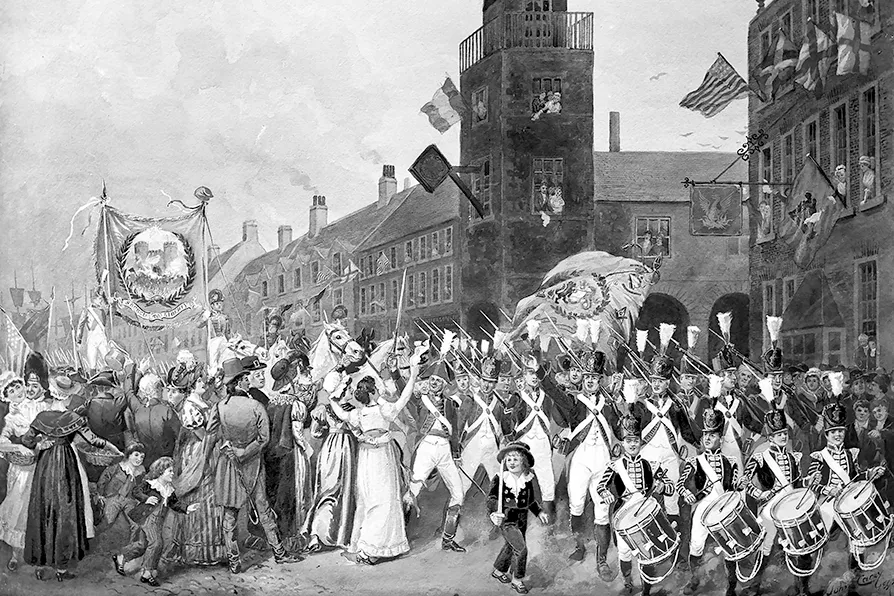
TOM GALLAHUE argues that asking what role Irish diaspora educators can play in shaping Irish unity is to ask a deeper question about democracy itself
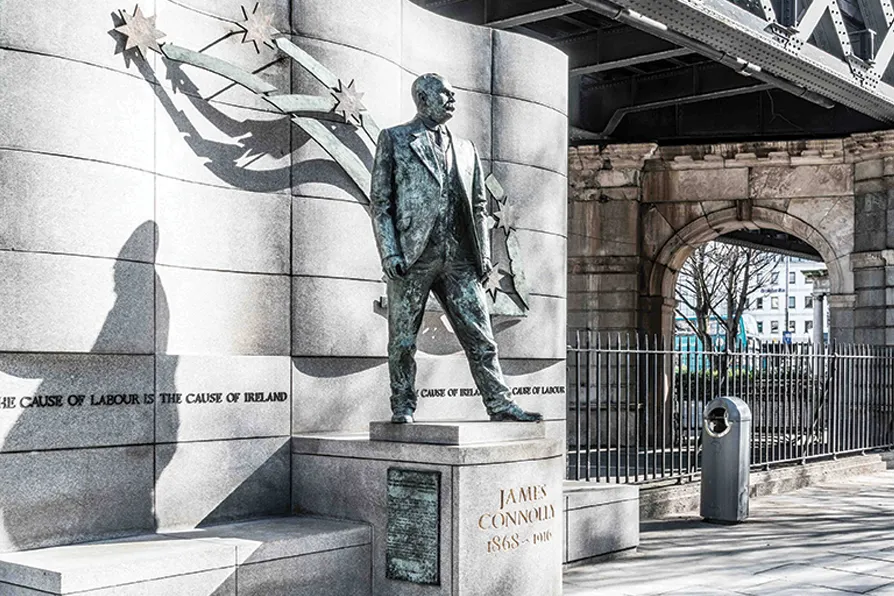
A new group within the NEU is preparing the labour movement for a conversation on Irish unity by arguing that true liberation must be rooted in working-class solidarity and anti-sectarianism, writes ROBERT POOLE