TUC president and POA leader STEVE GILLAN speaks to Ben Chacko on the eve of Congress 2026


 Latest editorial
Reflections on Wapping: Employers come together to prepare – so should we. Be union
SHARON GRAHAM reflects on the lessons of Murdoch’s confrontation with print workers – and argues that, in an age of AI, automation and net zero, only early organisation, collective power and planning can stop history repeating itself
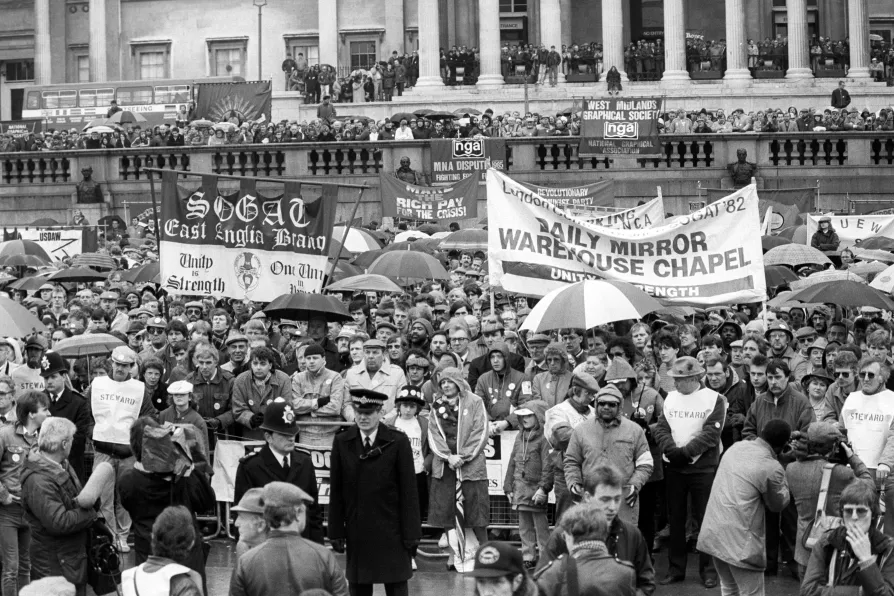 Crowds assembled in Trafalgar Square, London, for the union rally in support of the workers sacked in the print union dispute with Rupert Murdoch's News International, April 6, 1986

DOUG NICHOLLS welcomes a turning point at this year’s Congress, where many motions call for a co-ordinated plan to revive British industry, a perspective outlined in his new book
HOPE VIRGO of campaign Dump the Scales warns MPs voting today they should be alert to the threat legalised assisted death poses to people with eating disorders
The Together Alliance is hosting two summits, North and South, to build power and plan action against the scourge of racism peddled by the right. DANIEL KEBEDE urges mass participation
The drift toward militarisation in Europe is not inevitable, left-wing and peace movements can preserve sovereignty and prevent war, says DÁIRE HUGHES MP
Whatever differences exist among international sympathisers of the Bolivarian revolution about its current trajectory, they should unite against the imperialist power that is the source of an enforced retreat, argues ROGER D HARRIS
Trade unions need to step up and force a turn in the policies of the labour movement to effectively confront the far-right threat, argues NICK WRIGHT





ON JANUARY 24 1986 over 5,500 workers at News International went on strike. They had been provoked by Rupert Murdoch, who planned to sack them “en masse” using Thatcher’s new anti-union laws.
Overnight, the production of the Times, Sunday Times, Sun and News of the World moved from Fleet Street’s hot-metal presses to a high-security site in Wapping. Planned, set up in secret, ready and waiting for these newspapers to be printed using new technology and a much smaller workforce under a no-strike deal and subsequently distributed under police protection.
There are many lessons that can be learnt from the origins of this dispute. The solidarity, determination and spirit of the striking workers and their supporters was without question. The acts of betrayal and the violence launched against them by the state still leave a very bitter taste today. There is also no doubt the co-ordination and planning between Murdoch and the government meant that when the dispute began many possible levers originally available to the workers had been taken away.
As trade unionists this is something we should keep at the centre of our minds when we try to address the challenges that we can see coming up for workers in the years ahead. It is never too early to prepare, and we have to recognise that in some instances there is nothing some employers won’t do and indeed some governments won’t do.
Planning for a response to what could happen when the employer takes on workers is the key to winning. Widening and deepening the collective. Strike ready, yes, but also using our brains as well as our brawn. Understanding where our levers are — where our power is. Who are the real decision-makers and how can they be moved?
Take the new wave of AI and automation. This will radically change the world of work, and it has the capacity to put millions of jobs at risk. Just think of the potential impact of autonomous vehicles on the one million people employed as professional road transport drivers in the UK. We cannot wait until employers have self-driving vehicles in place before we act. We need to anticipate the future realities of the labour market right now, while the power is in the workplace to fight back.
This can’t be done piecemeal — it must be done by sector, building combines, developing multiple areas of support and creating real co-ordination. Winning is based on hard work, not easy talk and idle opinions. No employer or politician will simply hand workers a good deal — we will have to fight for it.
We all know that technological change is inevitable. The question is whether it will be used to improve the lives of workers, or simply to concentrate wealth and deepen inequality.
The financial gains from technology are predicted to be measured in billions. It is only the trade union movement that can collectively ensure workers get their piece of the pie.
In Unite we have begun the work of building combines. Reps coming together by sector, locking in organisers to build collective strength if needed and lock in our industrial, legal, research and leverage teams. We want to prepare for what is coming down the track in the next five to 10 years. How can we widen and deepen the collective and get agreements now for the issues of the future?
Similarly, as we look at immediate issues like the transition to net zero. We of course understand the issues, but we can’t have a jobless transition. Where are the much-promised new green jobs for oil and gas workers?
We face a loss of around 30,000 oil and gas jobs in the North Sea by 2030. Unite has put forward plans to create jobs in the manufacture of our own wind turbines and to convert refineries to make Sustainable Aviation Fuel (SAF). These plans would protect workers’ livelihoods and the environment.
However, the government has just sat on its hands while two of our six refineries have been shut and the new wind farms we see are being populated with turbines manufactured in Denmark and Germany.
Unite will continue to tell the government that it needs to deliver the jobs for workers to transition into. But we will also work with our oil and gas workers so we are ready to act industrially, if necessary, while the decision-makers are dependent on them.
As the great American union leader Joe Hill said with his final words “Don’t mourn — organise.” As we mark the 40th anniversary of the beginning of the Wapping dispute, his epitaph should be our guide.
It is clear the power of workers is in their trade unions. There is no knight on a white horse coming over the hill to save us, no matter the colour of their rosette.
It’s time to be union.
Sharon Graham is general secretary of Unite.

Similar stories
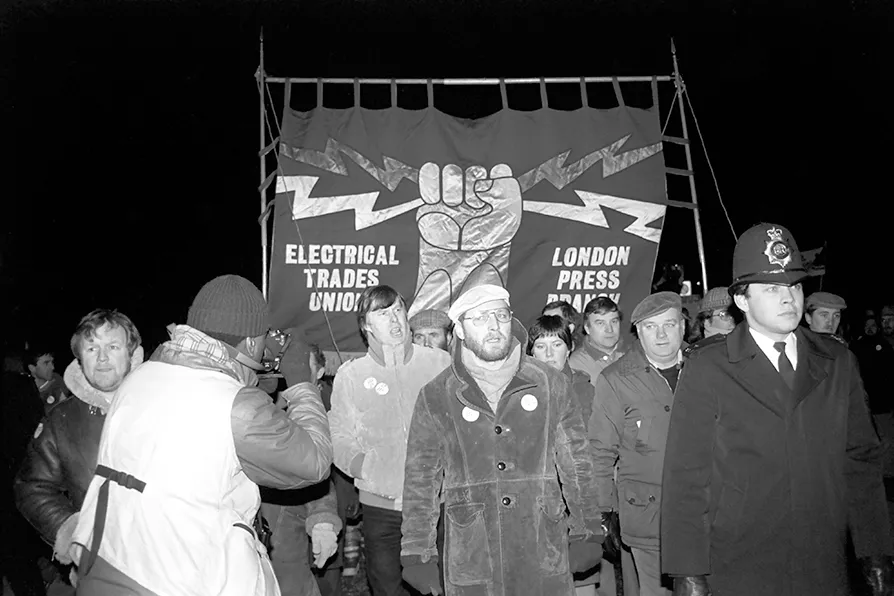
A past confrontation permanently shaped the methods the state will use to protect employers against any claims by their employees, writes MATT WRACK, but unions are readying to face the challenge
![[Pic: Andrew Wiard]](https://msd11.gn.apc.org/sites/default/files/styles/desktop/public/2026-01/19860503_a_wiard_0003.jpg.webp?itok=mR5zV0nE)
The once beating heart of British journalism was undone by technological change, union battles and Murdoch’s 1986 Wapping coup – leaving London the only major capital without a press club, says TIM GOPSILL
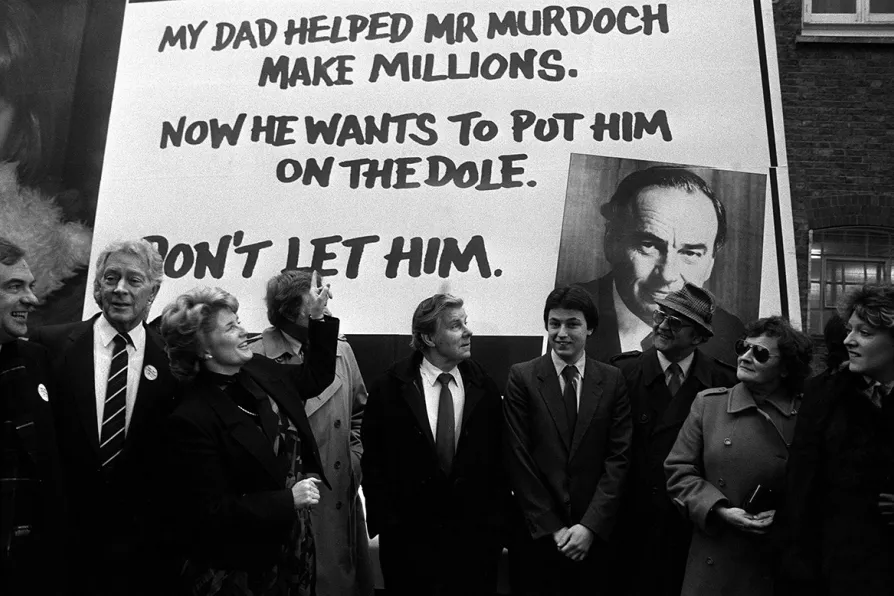
Enduring myths blame print unions for their own destruction – but TONY BURKE argues that the Wapping dispute was a calculated assault by Murdoch on organised labour, which reshaped Britain’s media landscape and casts a long shadow over trade union rights today
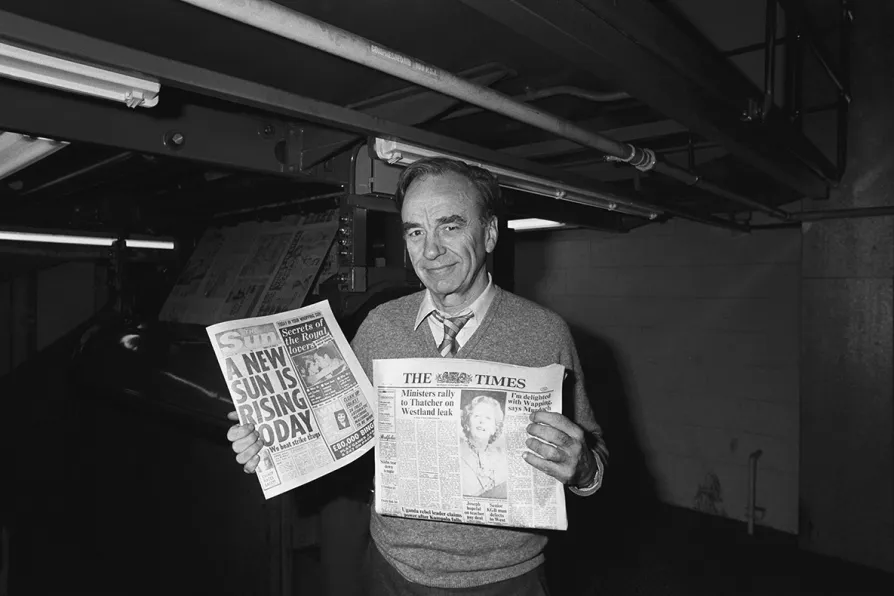
On the 40th anniversary of the Wapping dispute, this Morning Star special supplement traces the long-planned conspiracy that led to the mass sackings of printworkers in 1986 – a struggle whose unresolved injustices still demand redress today, writes ANN FIELD