ROB WARZYNIAK wades knee deep through a pile of ‘dead canaries’ of Trumpist policies which exacerbated the horrors of US capitalism domestically


 Latest editorial

Rebels, Quakers and frogs: Notes from the Southern Marches
From the hills of the England–Wales border, our new fortnightly nature columnist MARK SEDDON reflects on rebellion, faith and the small dramas of rural life — from medieval fugitives to the quiet rescue of a bucket of tadpoles
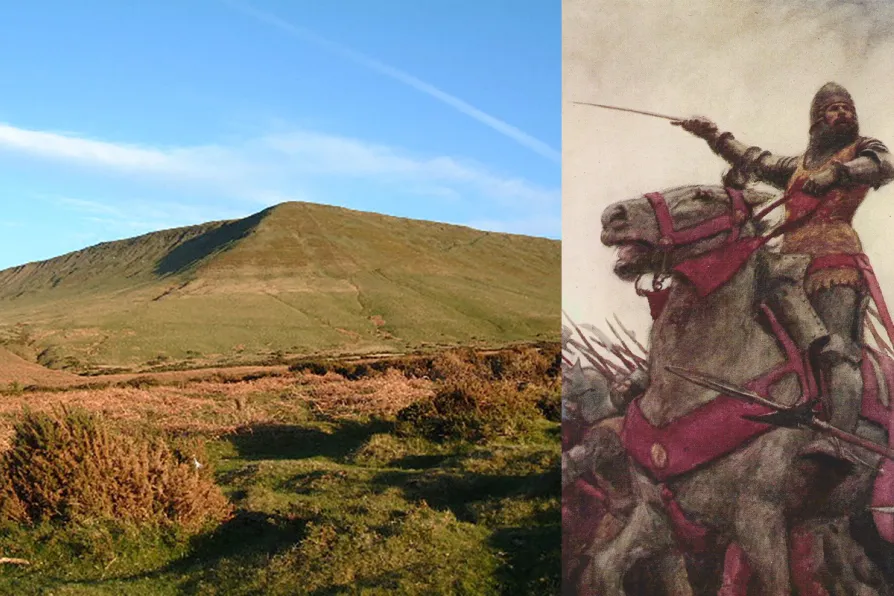 Hay Bluff pictured from the north; and (right) Owain Glyndwr in battle, by Arthur Cadwgan Michael
Without evidence or Nato consultations Berlin’s answer to the Leipzig incident is a rupture of relations. SEVIM DAGDELEN examines why
FRANCISCO DOMINGUEZ introduces the background to a conference on defending Latin America’s sovereignty
The glacier collapse in Nepal is yet another warning that a warming planet is making Himalayan disasters more frequent and destructive – but the countries facing the greatest risks are often those least responsible, says LI YANG
Nick Blair is set to benefit from a hugely lucrative contract to ‘virtually’ train the British army for its next war. Like father, like son, writes SOLOMON HUGHES
Even when tragedy strikes, Western media cannot resist the opportunity to turn it into a sordid propaganda opportunity, as the Nepal-China border tragedy shows, writes CARLOS MARTINEZ
Trade unions should be at the heart of the anti-racist push for reparations for the historic legacy and continuing impact of slavery, writes ROGER McKENZIE





WELL, how does one begin to try and follow in the footsteps of a much-loved columnist whose appetite for the countryside and whose radicalism informed so much of what he wrote?
Letter-writers in these pages often draw attention to some erudite observation that Peter Frost, better known to all as “Frosty,” had once made, and he clearly remains missed by many.
So, I will do my best to follow in his footsteps. I will do so, principally, from the borderlands of England and Wales; the Southern Marches, an ancient, still largely unspoiled land, whose history is as fascinating as it has been so rooted in the day to day struggles of people against kings, against landlords, against enclosures and for the non-conformists; the freedom to practice as Quakers and Methodists and to organise trade unions, mutual societies and co-operatives.
From my bedroom window, I can look across to Hay Bluff and to the Black Mountains, which, as this is published, may well be once again covered in a glinting white topping of snow as this long winter reminds that it is not quite done with us.
Here, we are at least an hour in each direction from any motorway, and I often wonder if some of the rebels who took refuge along this part of the Herefordshire-Powys border, might still recognise much of the terrain?
The last king of the Welsh, Owain Glyndwyr, took to the thickly forested hills and hidden away valleys of these parts, as English soldiers went in hot pursuit for him, as did Sir John Oldcastle, the Lollard leader who was hung, drawn and quartered on the orders of his erstwhile friend, King Henry V.
A local farm still carries his name, and up in the woods, and on what was once one of the most fortified borders in the World — the English-Welsh border — sits one of one of many ancient forts, where Oldcastle was reputed to have retreated to. Today, sitting in its place is a cottage, whose owners keep ducks, chickens and loud peacocks.
Some of the defensive forts and castles stand as ruins, others such as Kinnersley Castle were added to by the Tudors. This ancient place was deemed by the authorities as sufficiently remote during the second world war to be a suitable place to hold notorious Nazi sympathiser Lord Brocket under house arrest.
That other abdicated Nazi fellow traveller, Edward VIII, was of course dispatched further afield. In shades of Andrew Windsor-Mountbatten, he was quietly watched over by a nervous Churchill as the new governor-general of the Bahama Islands.
Our local Friends Meeting House is reputedly the oldest in the country, having been built in 1672. On Sunday we spoke of the second Metropolitan Police raid on the Friends Meeting House in London this year, where 15 supporters of a non-violent direct-action group advocating a wealth tax had been arrested.
In the late 1600s, some of the founders of the Quaker movement moved from our village to help set up the colony of Pennsylvania and to escape persecution. There is a framed letter hanging on the wall from a governor of Pennsylvania commemorating this, and I was left wondering: “What would those Quakers make of a government in the 21st century resorting to the police tactics of one from the 17th century?”
Now of course, some of these observations, even this column which promises to provide a regular diary of country life, may be seen as something of a luxury or slightly frivolous at a time when Donald Trump, at the behest of Benjamin Netanyahu, has unleashed the most terrible of wars in the Middle East. And yet the horrendous environmental destruction from spilled oil tankers, burning oil fields and the acid rain falling on the people of the great city of Tehran, remind us that war sears into all of us in some way.
I am reminded of the great natural history writer and artist, Denys Watkins Pitchford, also known as “BB,” who watched as a lone German bomber winged its way back from a raid on the burning city of Coventry at the dead of night during the second world war.
Still weighted down with bombs, it released them over the hulking shadows of the oaks and ash of the Rockingham Forest. So, even the trees and forest animals are not immune from mankind’s ruinous wars.
Blink and you miss them. You certainly miss the sound of their croaking! For the frogs have been and gone and left the ditches and the old moat opposite in the field full of spawn. Last year, driving back from Kington, we spotted what we thought were loads of leaves on the road. In fact, this was an army of frogs moving from pond to pond.
We drove carefully around them. Frogs may be getting scarce in other parts of the country, but here, mercifully, they are in abundance.
With so much rain this winter, when the ditches and ponds begin to dry put there is always the risk of some of the spawn becoming marooned and drying out. Soon I may have to go, armed with a broom, to push it into deeper water. But I also have a bucket full of tiny, wriggling, hatching tadpoles.
Perhaps someone may tell me off for this, but one of the local farmers has just cleaned out what had been a completely overgrown field pond. I will shortly take them there and release them. Since there is little else to prey on them, they should do well. And in two, or three years time, when mature, they will hopefully begin to hop and croak around and breed there to their hearts’ content.
