ROB WARZYNIAK wades knee deep through a pile of ‘dead canaries’ of Trumpist policies which exacerbated the horrors of US capitalism domestically


 Latest editorial

Clouds with silver linings
Decommissioned railway tracks have been ‘repossessed’ by nature with wild birds the prominent protagonists, writes MARK SEDDON
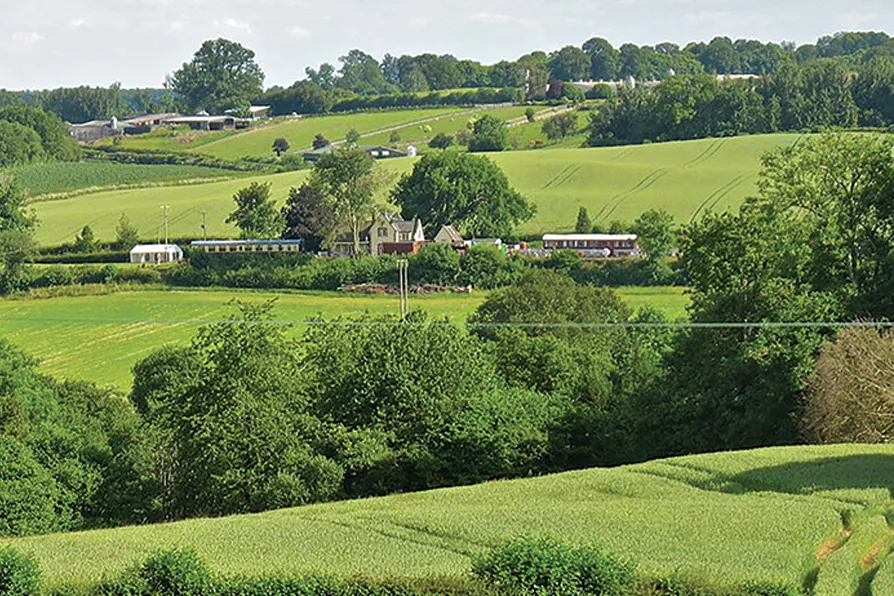 Towards Titley Junction: a view across the fields of the old railway junction station / Pic: Mike Parker/CC

Without evidence or Nato consultations Berlin’s answer to the Leipzig incident is a rupture of relations. SEVIM DAGDELEN examines why
FRANCISCO DOMINGUEZ introduces the background to a conference on defending Latin America’s sovereignty
The glacier collapse in Nepal is yet another warning that a warming planet is making Himalayan disasters more frequent and destructive – but the countries facing the greatest risks are often those least responsible, says LI YANG
Nick Blair is set to benefit from a hugely lucrative contract to ‘virtually’ train the British army for its next war. Like father, like son, writes SOLOMON HUGHES
Even when tragedy strikes, Western media cannot resist the opportunity to turn it into a sordid propaganda opportunity, as the Nepal-China border tragedy shows, writes CARLOS MARTINEZ
Trade unions should be at the heart of the anti-racist push for reparations for the historic legacy and continuing impact of slavery, writes ROGER McKENZIE





OVER 60 years ago now, the Beeching cuts or as it was better known the “Beeching Axe” ripped up whole sections of Britain’s railway network.
In his first report for the government in 1963, Richard Beeching, the then chairman of the nationalised British Railways Board recommended a staggering 2,363 stations and 5,000 miles of railway line be closed.
This amounted to some 30 per cent of the network and some 55 per cent of stations. Almost 70,000 jobs went in the process.
The objective was to get rid of so called loss-making lines since increasing amounts of freight were being moved by road. The end result left many rural communities increasingly isolated and dependent on infrequent buses.
In recent years some of these lines have come back to life, but many have become slumbering nature reserves; overgrown embankments and disused cuttings full of natural wonders and life.
Some old stations have been turned into homes and a few miles from where I am is a beautifully preserved station, replete with old semaphore signals, freight cars and a mile or so of track, upon which occasionally an old steam engine puffs and trundles in the summer months.
This is Titley Junction on the old Eardisley to Presteigne line and which was one of the earliest casualties of the Beeching Axe.
The North Herefordshire Way ambles alongside the track until a tributary of the River Arrow loops under the line and the pathway follows it into deep, high sided woodlands.
The path takes walkers alongside the station from the road to begin with and then into a series of rich meadowlands. These are full of nodding buttercups at present, while in the hedges the Red Campion blooms and since it is the month of May so does the may or the hawthorn wreathed in bright white blossom.
The smell of the hawthorn blossom isn’t so delightful; often bringing with it a faint rotting smell. When I looked this up, I discovered that the flower releases a chemical called trimethylamine, which first produced by rotting animal tissue and then when I looked closely I could see why – a whole host of beetles and other insects were busying themselves in the flowers attracted by the scent.
And for humans too, well certainly our ancestors, the smell of hawthorn was sometimes reminiscent of periods of the Plague. All such thoughts were banished as I closed an old wooden gate and found myself walking alongside the railway line and just beyond it the wonderful sounds and sights of a tributary of the Arrow.
The steep hillside is home to legions of larch, sycamore, elm and stands of fir, planted for their timber, and while the bluebells are fading now, the foxgloves rise ever higher preparing to flower and the common stitchwort appears in drifts.
I was hoping to perhaps catch sight of the azure blue dart that is the Kingfisher but had no luck. Nor did I hear any cuckoos, a once very common bird in these parts.
However, above the sounds of the other birdsong came the very distinctive call of the Green Woodpecker or “Yaffle,” who with its bright scarlet crescent, head is arguably one of the handsomest of British birds. This bird has become uncommon as well in recent years, so it was good to learn that the once bustling old railway line had made a good home for it.
It must have been around the end of April that I hear the distinctive screeching of the swifts returning from their amazing journey that has taken them from the Congo basin and countries such as Mozambique and Zimbabwe to the wilds of north-west Herefordshire.
These are apparently young birds scouting territory out; the larger numbers arrive later in May, scything the air with their scimitar wings.
My neighbour tells me that he “loves the swifts,” and I can quite see why even though they barely ever land and if they do the chance of being anywhere close enough to actually see them is pretty remote.
Their numbers are under threat and modern houses don’t tend to have the cracks and crevices of old churches for instance for them to nest. And so the decision by the government recently not to ensure that all new builds had a “swift brick” allowing them to nest, was one of those petty, mean-minded decisions that is just guaranteed to upset people, never mind the innocent, threatened swifts.
Perhaps this came as a result of lobbying by the building industry? Yet, talking of building, a pair of house martins has taken possession of an old mud nest under the roof eaves of the house.
I watched as they darted in and out, one of them carrying small amounts of mud in its beak, ready to be added to the lip of the nest. These mud nests look as though they could collapse at any time and yet they seem to be able to weather most storms.
The house martins were similarly engaged with all of this frenetic activity last year until a loud and worrisome pair of sparrows pushed them out and proceeded to trash the nest with all manner of straw and old feathers.
As with the swifts, house martin numbers are also in decline and so last year I bought some wooden nests that can be attached under gables and that save the house martins from actually having to go to all of trouble of building their own nests.
I have been out and with binoculars surveying the scene, but up until now, the only nesting activity is coming from the sparrows again. It seems that they have developed distinctive tenant rights!
