
Washington’s inability to subjugate Iran is an example of how it is trying to preserve a regional order that no longer exists, argues RAMZY BAROUD


The truth behind Murdoch’s war on the print unions at Wapping
Enduring myths blame print unions for their own destruction – but TONY BURKE argues that the Wapping dispute was a calculated assault by Murdoch on organised labour, which reshaped Britain’s media landscape and casts a long shadow over trade union rights today
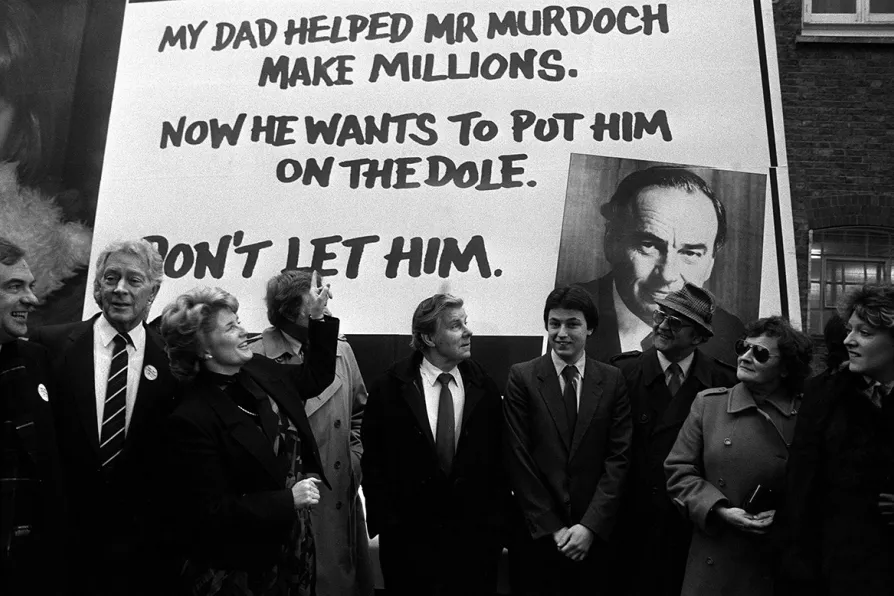
 SOGAT general secretary Brenda Dean (third from left) points to a poster condemning the owner of News International Mr Rupert Murdoch for his action against the print unions, February 11, 1986


US financial instability is exposing the limits of a dollar-dominated global economy — and giving the Global South a historic chance to build an alternative, says MURAD QURESHI
DOUG NICHOLLS says the parasitic finance markets must be challenged or another British government could be toppled
The late country singer’s Imagination Library has put hundreds of millions of books into children’s hands. We should build on that legacy by defending the libraries at the heart of our communities, says BRENDA AITCHISON
Deprivation is a fundamental factor in criminal behaviour that must be addressed but, KENNY MacASKILL argues, there needs to a major rethink in sentencing to tackle overcrowding
MML director MEIRIAN JUMP outlines the recently refreshed library’s busy autumn schedule that ranges from book sales, archival exploration, community work with online education and the ever popular site tours
TONY BURKE surveys the shifting political landscape and the challenges Labour needs to address if it is to prevail in the 2028 federal elections





FORTY years on from the start of the print unions’ dispute with Rupert Murdoch’s News International at Wapping the myths still prevail that the dispute (which began on January 24, 1986) was about the use of technology, intransigent print unions, eradication of “Spanish practices” and industrial disputes in the newspaper industry.
Nothing could be further from the truth. This was a secretly planned demolition of organised labour by Rupert Murdoch, a divestment by News International of 5,500 workers most of whom were dedicated to their industry and proud of the publications they produced, in order for Murdoch’s empire to generate the savings and massive profits which he would use to move his newspaper empire into satellite broadcasting while holding unfettered political influence in Britain.
These were the actions which led to the destruction of lives and families, the enforced closure of a bestselling newspaper and the miring of a global company in a gut-wrenching phone-hacking scandal which almost brought the company to its knees and saw senior executives do jail time — this is now Murdoch’s prime legacy for which he will be remembered.
Despite the myths surrounding the run-up to the dispute the unions were not resistant to change. Jointly the print unions National Graphical Association (NGA), Society of Graphical and Allied Trades (Sogat) and the Amalgamated Engineering and Electrical Union (AEEU) had been seeking meetings not just at local level but also nationally with the company.
Although there were internal disagreements on the use of what was then called “new technology,” technological change had been introduced successfully in the provincial press and there were discussions ongoing with other London and Manchester national newspapers — contrary to the popular belief the British printing industry did not start at one end of Fleet Street and finish at the other.
The print unions were trying to negotiate in good faith, anxious to get talks going on the transfer to a new site away from the cramped confines of Fleet Street and Gray’s Inn Road (home of Times Newspapers).
News International strung the workforce and unions along — promising meetings and draft working agreements while Murdoch was putting his plans in place to sack an entire workforce without compensation.
The ruse of a new London evening newspaper was a “poisoned pill.” When terms and conditions that the unions were expected to sign up to were finally revealed they included legally enforceable no-strike agreements, no closed shops, management having the right to select union reps, management decisions on everything being final and the national unions having to legally repudiate any form of what the company described as industrial action. These proposals were never going to be accepted by any decent union anywhere in the world.
Murdoch had the support of a maverick union, Margaret Thatcher, the police and much of the media were lined up behind him. In they end they broke trade unionism in his British plants, and set up an ineffective in-house body to control their own workforce.
Forty years on the implications of the dispute are still being felt.
Anti-union laws introduced to help Murdoch introduced by Tony Blair are still in place, notably the process to stop unions organising workers in News International. The company was able to move into the wider media, including TV and radio channels, films and the emerging digital media — and politicians are still scared of upsetting Rupert Murdoch.
The media landscape has changed. What what was a group of newspaper and magazine empires is now a multimedia universe where the biggest players are now internet-based social media platforms and AI companies, including Amazon, Google, Apple, Twitter, TikTok etc, some controlled by ultra-rich egomanics like Elon Musk, who pull the strings with politicians as scared of him as they are of Murdoch.
Time dims the memory, but we should never forget the real heroes are the 5,500 workers who were sacked. They understood the implications for the industry, jobs and trade unionism — as did the print unions and the leadership.
At the time of the Wapping dispute Tony Burke was a lay member of the national executive of the National Graphical Association and father of chapel of a provincial newspaper publishers. He became the deputy general security of the merged print union, the Graphical, Paper & Media Union, and assistant general secretary of Unite.

Similar stories
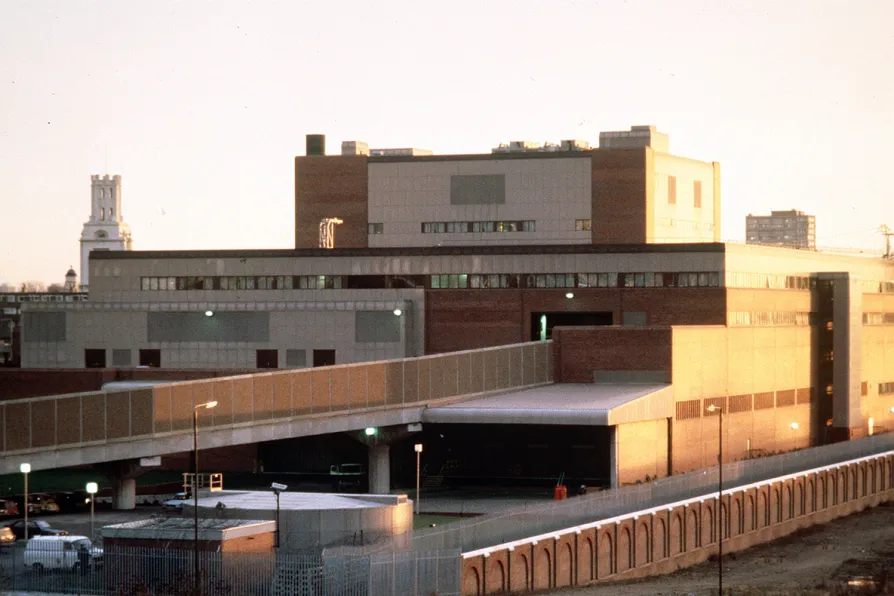
Forty years on, TONY DUBBINS revisits the Wapping dispute to argue that Murdoch’s real aim was union-busting – enabled by Thatcherite laws, police violence, compliant unions and a complicit media
![[Pic: Andrew Wiard]](https://msd11.gn.apc.org/sites/default/files/styles/desktop/public/2026-01/19860503_a_wiard_0003.jpg.webp?itok=mR5zV0nE)
The once beating heart of British journalism was undone by technological change, union battles and Murdoch’s 1986 Wapping coup – leaving London the only major capital without a press club, says TIM GOPSILL
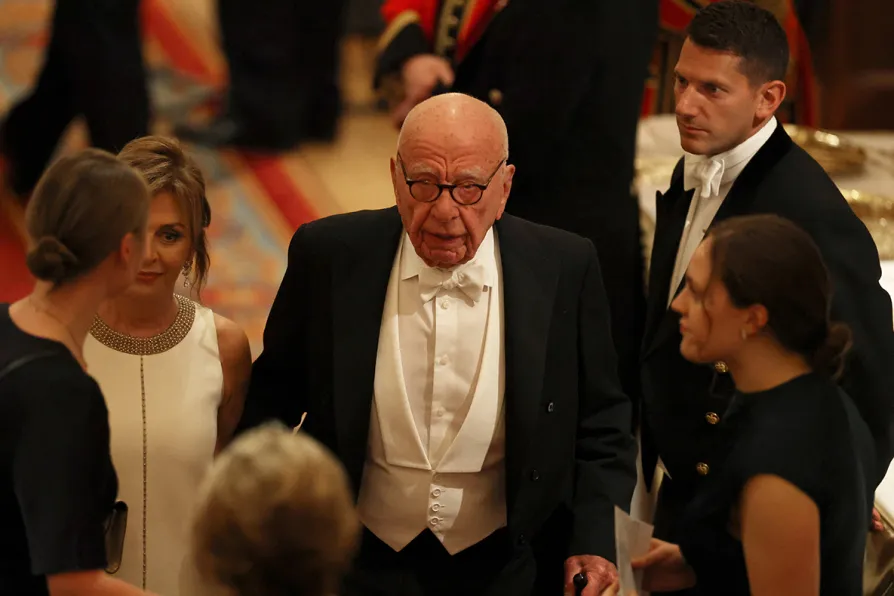
LOUISA BULL traces how derecognition, outsourcing and digitalisation reshaped the industry, weakened collective bargaining and created today’s precarious media workforce
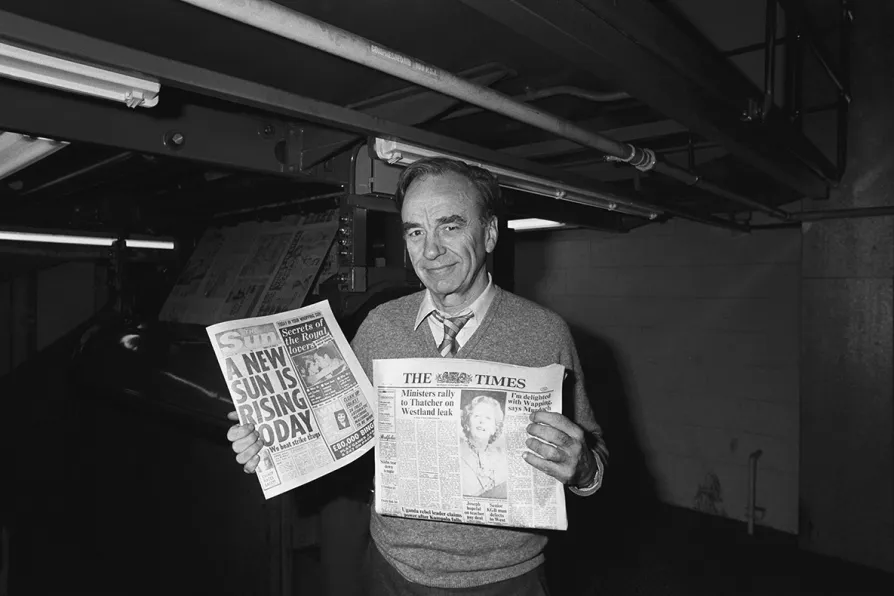
On the 40th anniversary of the Wapping dispute, this Morning Star special supplement traces the long-planned conspiracy that led to the mass sackings of printworkers in 1986 – a struggle whose unresolved injustices still demand redress today, writes ANN FIELD