
The US administration is endangering lives by reversing environmental protection laws, CHAUNCEY K ROBINSON argues

Inside the forces driving Iran’s nationwide protests
MOHAMMAD OMIDVAR, a senior figure in the Tudeh Party of Iran, tells the Morning Star that mass protests are rooted in poverty, corruption and neoliberal rule and warns against monarchist revival and US-engineered regime change
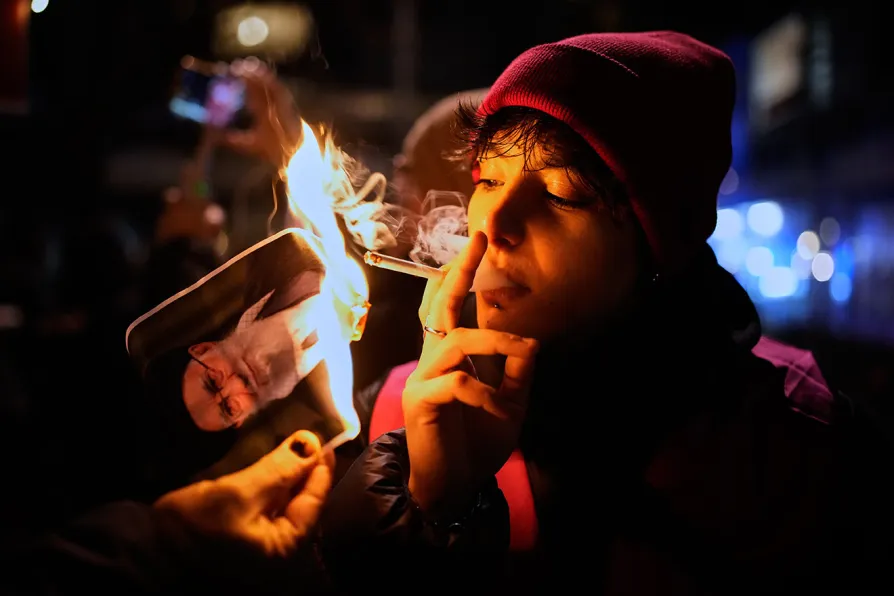
 LIGHTING A FLAME: A protester smokes a cigarette after lighting it off a burning poster of Iran’s Supreme Leader Ayatollah Ali Khamenei during a demonstration in Berlin, Germany, in support of the nationwide mass protests in Iran against the government
It’s time to stop retreating and go on the offensive to promote working-class interests, argues DOUG NICHOLLS
Marco Rubio wants to defeat socialism in Nicaragua, not restore ‘democracy,’ writes JOHN PERRY
Believe it or not, there was a time when the US government built beautiful homes for working‑class Americans to deal with a housing shortage, writes ERAN BEN-JOSEPH
DIANE ABBOTT provides an analysis of the reasons for EU and British voters’ dramatic swing to the right
Train drivers’ union Aslef general secretary DAVE CALFE speaks to Ben Chacko about his hopes that Burnham’s devolution agenda will include the importance of the railway





HOW do you assess the deeper socioeconomic forces that have driven people into the streets, and why do you disagree with the Iranian government’s position that this is a foreign plot?
Firstly, allow me to thank our comrades at the Morning Star and among its readers who have been staunch supporters of our people’s struggle and the progressive forces in Iran.
Our hearts and condolences go out to thousands of families who have lost their loved ones during this savage and brutal crackdown, and like all progressive forces in Iran and the world over, we call for the immediate and unconditional release of thousands of detainees and all the political prisoners in Iran.
As per our party statement on January 9, the popular uprising that began with strikes and peaceful protests and strikes on December 28, which interestingly included the merchants of the bazaar — who have traditionally been a social base for the regime and have supported them over the past 47 years — rapidly spread to all major cities and towns across Iran and posed a serious challenge to the ruling dictatorship.
The foundation of the bazaar protest was the collapse of Iran’s currency, the “rial” or commonly known as “toman,” with the exchange rate against the dollar worsening to 146,000 “toman” to one dollar. It is also important to highlight that the value of many basic goods in Iran is closely connected to the dollar exchange rate. Additionally, it should be noted that US imperialism’s sanctions against Iran have had a devastating impact on the lives of ordinary Iranian people, while the pro-government parasitic bourgeoisie in Iran has benefited from them.
The worsening economic situation means that, even according to official statistics, nearly 40 million Iranians live below the government’s defined poverty line. Rising unemployment, especially among the youth, ongoing repression and attacks upon people’s basic human and democratic rights, unprecedented corruption — where the IRGC [Islamic Revolutionary Guard Corps] leadership and the regime’s leaders, representing the big capital class control, all the key industries in Iran — and the continued suppression of women’s rights, particularly following the heroic struggle of the “Woman, Life, Freedom” movement three years ago, form the foundation of the people’s anger and their struggle to end the dictatorship in Iran.
In short, contrary to “Supreme Leader” Khamenei’s claim, this popular protest movement is a class struggle and not a product of US imperialism or the genocidal Israeli regime. It is rather the direct consequence of the disastrous neoliberal economic policies of the ruling capitalist regime, as well as widespread corruption, insecurity and sweeping oppression imposed upon the nation by the regime’s leaders and their collaborators.
It is also important to note that we are aware that both US imperialism and its allies in the region, especially the criminal government of Netanyahu, and their agents in Iran, have had a vested interest in hijacking the peaceful protest movement and pushing it towards violence — thereby enabling the regime to justify its inhumane savage suppression, killing and injuring thousands of protesters, and arresting thousands more, while imposing an unprecedented total communications blackout on the country.
What is your analysis of the monarchists’ social base in Iran?
Over the past 18 days, we have witnessed that most big Western (and generally right-wing) media corporations like the BBC and the “Iran International” television channel (funded by the Israeli government) have overseen an orchestrated campaign to promote Reza Pahlavi as the head of the protest movement and opposition in Iran, ready to return and take charge.
On top of this, we have witnessed a significant social media campaign orchestrated by the Israeli intelligence agency Mossad, setting up numerous social media channels promoting Pahlavi, doctoring video clips from people’s demonstrations in Iran, chanting fake slogans in his support, and overall creating a false narrative that the Iranian people want the monarchy back.
It is interesting that, according to several reports, even Trump himself is not convinced the people in Iran want the return of the monarchy.
This reflects the reality that Pahlavi lacks a material social base within Iran. Manifestations of support for him are limited to small social groups, mainly those articulating a nostalgia for pre-Islamic Republic Iran. This cannot and should not be falsely projected as somehow indicating a significant level of support for the monarchy in Iranian society.
What do you see as the consequences of a US-engineered regime change?
Let me start by reminding your readers that US imperialism attempted one of its first “regime change” interventions in the world in Iran by overthrowing the elected nationalist government of Dr Mohammad Mossadegh in 1953 through a coup d’etat jointly orchestrated by the CIA and MI6.
This model was subsequently utilised by US imperialism in over 70 countries around the world. The 1953 coup resulted in the restoration of the monarchy, the suppression of the Iranian people’s rights, and the executions of many of our party comrades.
The restored Shah’s regime allowed the plunder of Iran’s oil for nearly 30 years and turned Iran into a regional hub in the US’s sphere of influence and against the neighbouring Soviet Union. In fact, the 1979 Iranian revolution, one of the largest and most popular mass movements in contemporary history, overthrew the Shah’s dictatorship with a very clear anti-imperialist vision for Iran’s independence and freedom from US subjugation.
Therefore, we have experienced what “regime change” under imperialism means in practice. Also, recent US imperialist interventions from Afghanistan to Iraq, Libya, Syria, and Yemen — as well as the genocidal war of the Israeli criminal government with the full backing of US imperialism, Britain and the EU against the Palestinian people, killing over 60,000 innocent people and nearly 20,000 children — have shown the true nature of imperialism and its regional lackeys.
Furthermore, the joint US-Israeli military aggression against Iran last June, aimed at “regime change” in Iran, fostered a patriotic mood within the country, rallying against external hostility. In our party’s statement on June 22, we stated that this criminal attack amounted to military aggression against Iran’s sovereignty and territorial integrity, as well as a clear and flagrant violation of international law as per the United Nations Charter and that our party stood with the people of Iran defending the country against external interference.
Over recent days, we have witnessed the wilful sabotage and derailment of a legitimate and popular protest movement by an element of unrepresentative bad actors, aided by a current within the diaspora and the continual threat of foreign intervention.
This aggression and malign interference in the internal and sovereign affairs of Iran and its people only serve to undermine and set back the genuinely popular protest movements and democratic currents inside Iran, enabling the regime and its repressive apparatus to falsely cast all protesters and dissenters as “rioters” and “foreign agents.” The damage this causes to the progressive movement in Iran cannot be overstated.
Your party calls for unity among progressive and patriotic forces around a Minimum Programme. What concrete steps does the Tudeh Party believe are necessary now to build such a united front?
The Tudeh Party of Iran, through its calls and direct contacts with other progressive and patriotic forces, has repeatedly emphasised the need for constructive dialogue and co-operation around a basic programme in the struggle against the ruling dictatorial regime.
Progressive forces must develop a united programme to present to the people and prepare the popular movement to face the current critical situation. Via such a programme, there is hope that the movement can be properly oriented towards serving national interests and the people’s demands.
Sadly, thus far, this opportunity has not been utilised or progressed to enable a co-ordinated and concerted campaign against the dictatorship — hence the attempt of the US and its allies to craft a “safe” alternative, either from within the regime or imposed from outside.
Mohammad Omidvar is a member of the Politburo and spokesperson of the Tudeh Party of Iran and the editor of party’s organ, Nameh Mardom.

Similar stories
Committee for the Defence of the Iranian People’s Rights general secretary GAWAIN LITTLE discusses the impact of the US-Israeli war on the Iranian people and economy
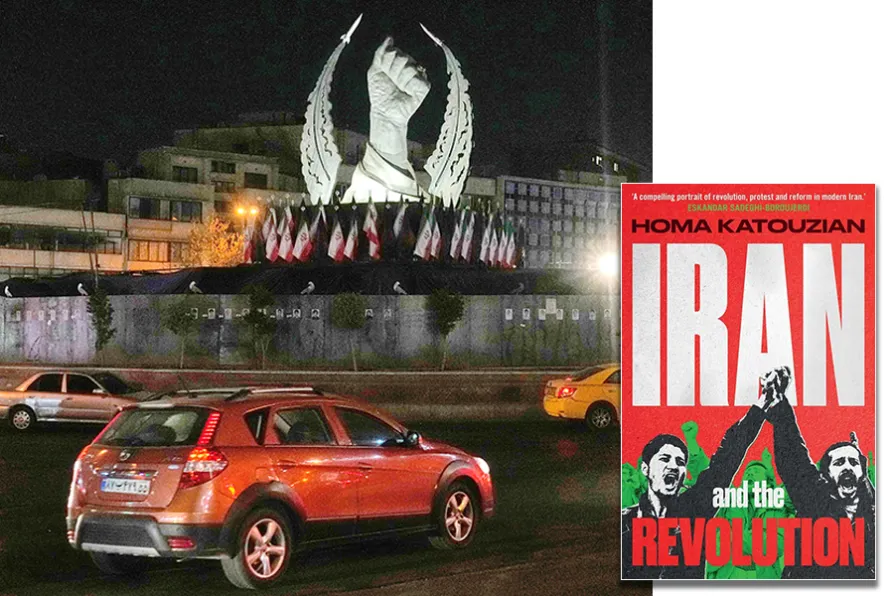
BRENT CUTLER searches a new history of contemporary Iran for an understanding of the Islamic Republic, finding both interesting detail and glaring omissions
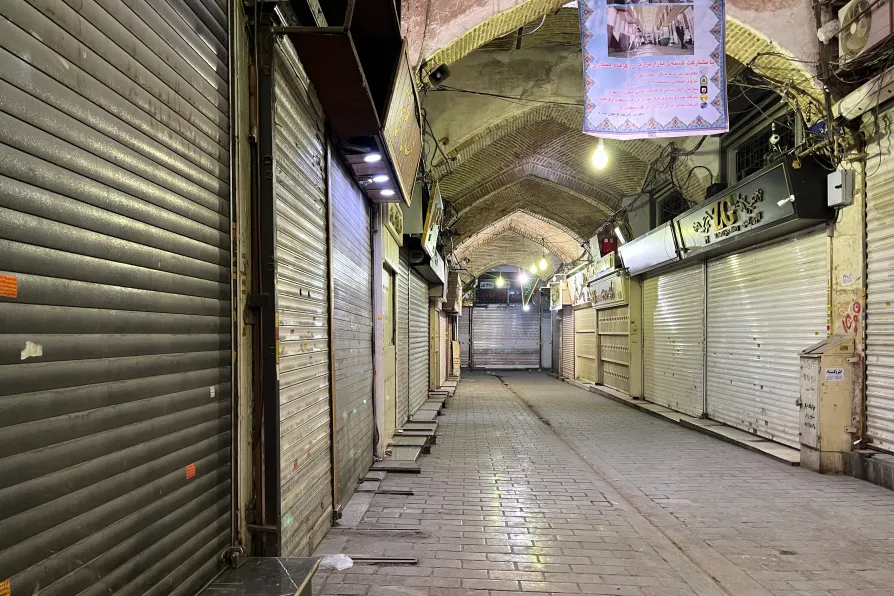
Trump threatens war and punitive tariffs to recapture Iranian resources – just as in 1953, when the CIA overthrew Mossadegh and US corporations immediately seized 40% of the oil, says SEVIM DAGDELEN
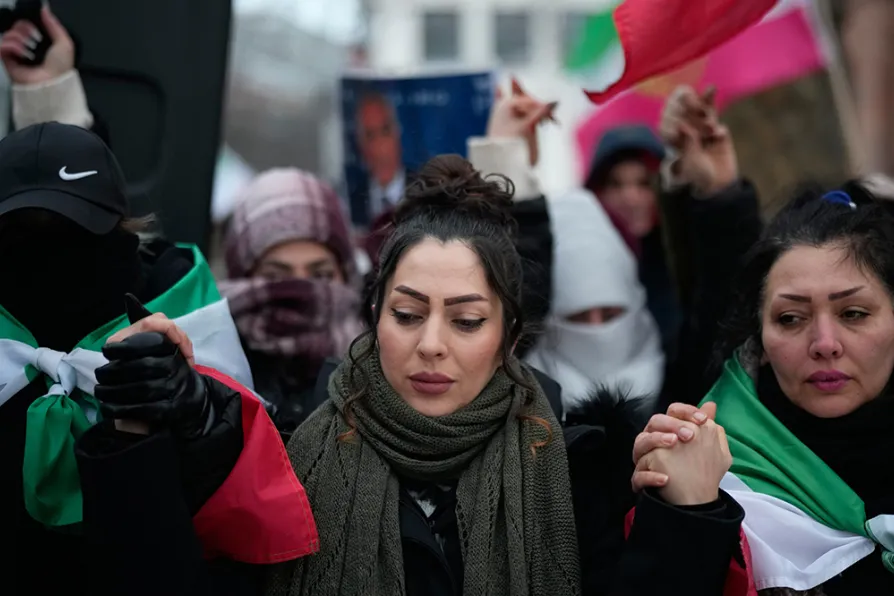
The Committee for the Defence of Iranian People’s Rights (Codir) welcomes demonstrations across Iran, which have put pressure upon the theocratic dictatorship, but warns against intervention by the United States to force Iran in a particular direction