Committee for the Defence of the Iranian People’s Rights general secretary GAWAIN LITTLE discusses the impact of the US-Israeli war on the Iranian people and economy


 Latest editorial

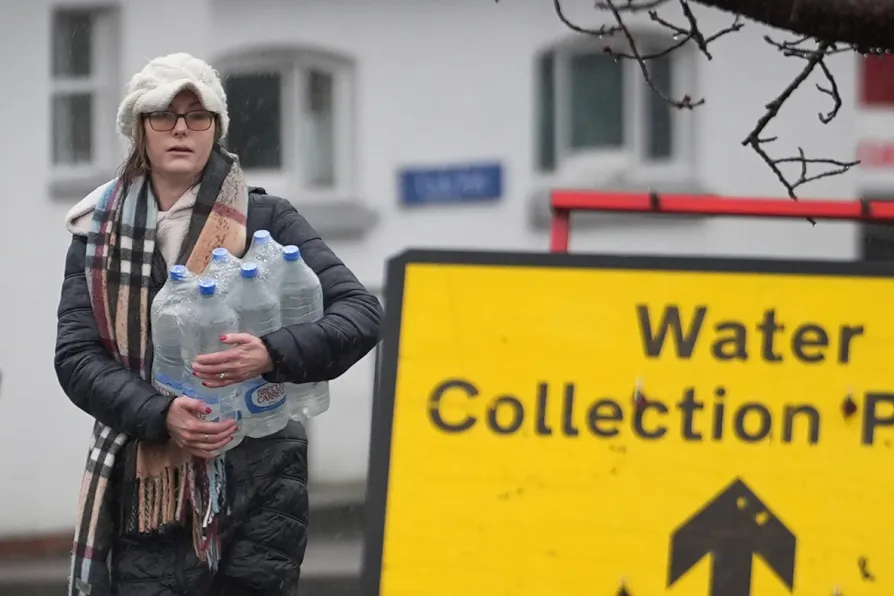
Glass half empty? How water privatisation in England is continuing to fail citizens
Part of dealing with vast problems such as climate change and the new weather patterns it brings is making public decisions about the future, argue ROX MIDDLETON, LIAM SHAW and JOEL HELLEWELL
 Dry cracked earth at Baitings Reservoir in Ripponden, West Yorkshire
Capitalism has extracted itself from crisis before, argues PRABHAT PATNAIK – but through methods no longer available. So it is turning to authoritarianism, militarism and neocolonialism
The five young men killed in the A66 crash were responsible for a devastating tragedy — but the crash should force us to ask difficult questions about wider society, argues RENATA MEDEIROS MIRRA
Britain funds the policing of black culture 16 times better than the culture itself. The Diamond Jubilee is the moment to end that, argues CLAUDIA WEBBE
Despite Andy Burnham’s declaration defending the continued partition of the island, all major international and internal trends are converging to make Irish reunification inevitable
Humans are part of the ‘animal kingdom’ – and of nature in general – but also distinct from it and labour (work) is part of what makes us unique, declared Engels. His insights 150 years ago into how our species came to be and how we differ from the rest of nature, are as important today as they were then, says the MARX MEMORIAL LIBRARY





IT’S easy to forget the complex system by which water ends up coming out of our taps.
Towards the end of Ulysses by James Joyce, Stephen Daedalus and Leopold Bloom have just finished a lengthy drinking session, and have returned to Bloom’s house.
Bloom fills an iron kettle with water from the tap in order to prepare cocoa. Joyce describes in exacting detail the causal chain that delivers water into Bloom’s kettle: all the way from the 2,400 million gallons of “Roundwood reservoir,” through a “subterranean aqueduct of filter mains” constructed at a cost of “£5 per linear yard” and eventually through a system of “relieving tanks” down into Dublin.
By including this lengthy description — over 200 words long — Joyce emphasises the communality of even the intimate, personal act of filling a kettle.
Society contains millions of superficially isolated personal decisions: a late-night cup of cocoa. But Joyce knew that by including the wider perspective, he could demonstrate that these small acts in fact rested on vast networks of co-operative endeavours.

Similar stories


MAT COWARD says the heatwave is a testing time for gardeners — but he has some tips