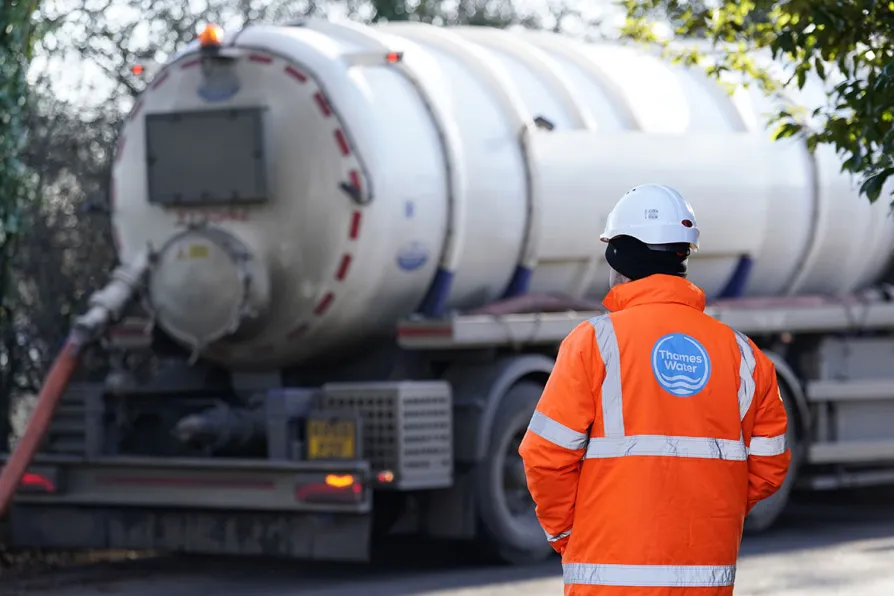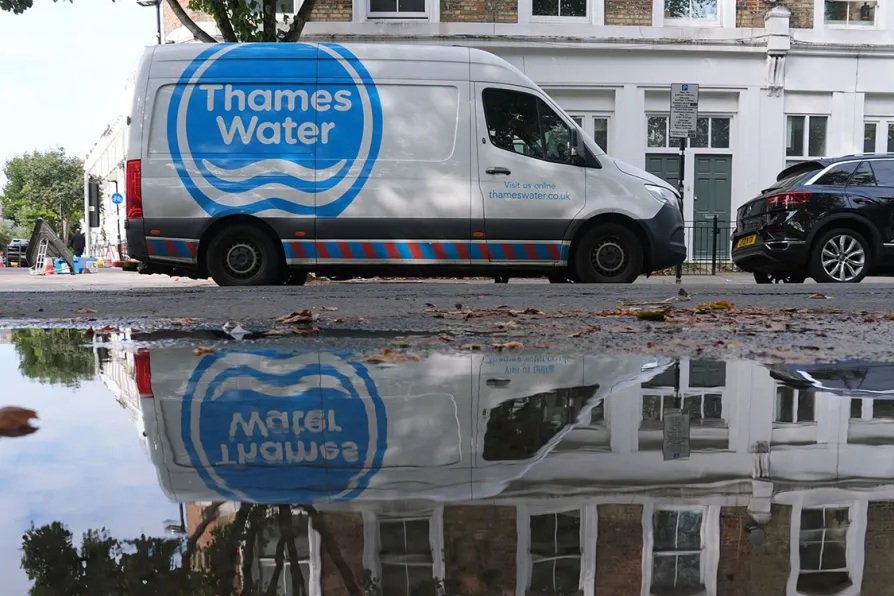
 Thames Water sign at a water works in Islington, north London, July 23, 2026






CAMPAIGNERS demanded the government take back control of debt-ridden Thames Water after its “indefensible” decision to give a £1 million golden handshake to its finance chief amid likely drought conditions in large parts of the country.
Britain’s largest water company gave Steve Buck the huge sign-on fee in July as it continues to struggle with a debt pile of around £20 billion, as well as public outcry over pollution and mismanagement of the utility.
The payment, which a senior company figure admitted would be seen as “unjust” by customers, was made despite renewed strain on southern England’s water systems, as Amber heat alerts were issued for most of the country yesterday.
More areas across England are likely to plunge into drought this week, as the Met Office predicted temperatures are to soar into the mid-30°Cs yet again this week.
Mr Buck joined Britain’s largest water company in April 2025, and received the seven-figure payment last month, according to a letter from the Thames Water chairman to MPs on the environment, food and rural affairs committee.
In the letter, Sir Adrian Montague claimed that despite the public’s likely criticism of the payment, such enormous sums were necessary to keep staff from leaving their posts.
The sum given to Mr Buck was described a “necessary incentive” and the money had come from emergency funding provided by Thames Water’s lenders, Sky News reported.
Sir Adrian claimed issues with recruitment and retention of staff would “persist” if it were to be nationalised or put into special administration.
River Action head of campaigns Amy Fairman said the payment was “indefensible” and the government must “put Thames Water into special administration and rebuild it to serve its customers, and clean up our rivers, not reward failure.
“It is on the brink of financial collapse with a debt pile of £20bn, rivers in their region are drowning in sewage and 571m litres of water are lost every day.
“Yet there’s still £1m for a finance chief’s signing-on payment when over a quarter of Thames Water customer bills go to servicing debt.
“Meanwhile, front-line staff are out around the clock holding this failing company together.”
A government spokesperson said the payment was “unacceptable,” adding that Thames Water is “handing out huge payments to its executives when it should be focusing on improving performance and rebuilding public trust.”
They added that the government has banned “bonuses for polluting water bosses” and that companies must “follow both the letter and the spirit of the rules.”
New Prime Minister Andy Burnham has previously said he would like to see “greater public control” of key players in the water and energy industries.
This past year, Thames Water boss Chris Weston has seen his pay increase by 14 per cent, to £1.63m. Other directors have received bonuses totalling £4.1m.
Despite the Met Office predicting some rain next weekend, it said this would not make up for the shortfall in recent weeks and months.
England and Wales had their driest July in records dating back to 1836, with 19 counties of England seeing no rain for the entire month, provisional statistics have shown.
Southern England also had its hottest July on record, while it was the joint hottest July on record for Wales, and the UK and England had their second hottest July, Met Office figures show.
The combination of very dry weather and heat, producing conditions of “flash drought,” have put pressure on water resources.
Some 23m customers have hosepipe bans as rivers and reservoirs run low, and farmers have warned of a “brutal harvest” for crops and a lack of feed for livestock.
The PM’s spokesperson said dry weather was having a “significant impact on communities, farmers and businesses across the country.”
They added that the government is “working through the national drought group with the Environment Agency, water companies, farmers, and environmental organisations to protect water supplies and minimise environmental damage.
“And we’re also backing major investment in water infrastructure, including new reservoirs, whilst making clear that water companies must do more to cut leaks and improve resilience.”