WILL STONE samples the 20th anniversary atmosphere of this eclectic end-of-season indie festival


 Latest editorial
Why do we get sea-sick?
JOHN GREEN is intrigued by an explanation of irrational behaviour from the point of view of brain science

Comics are not just superheroes and spandex – it can be public art, telling public stories, suggests HARRIET EARLE
The bard serenades the Diggers of Wigan and their festive followers
ALEXEI SAYLE speaks to Angus Reid about a lifetime of protest, how to hone political art – and what to do now
ANDY HEDGECOCK, JAMES WALSH, LEO BOIX and MARIA DUARTE review Just An Illusion, Everybody Digs Bill Evans, Blue Film, Oasis: Don’t Look Back in Anger, and Runner
MARIA DUARTE recommends a nerve-wracking reconstruction of the 72 hours before the Normandy landings





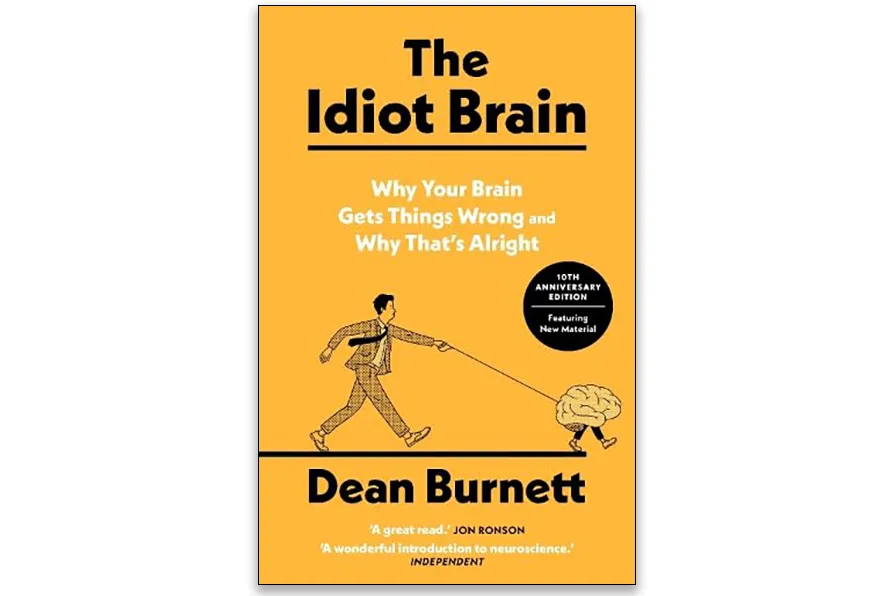
The Idiot Brain – Why Your Brain Gets Things Wrong and Why That’s Alright
Dean Burnett, Faber & Faber, £10.99
THE title of this 10th anniversary edition of the Idiot Brain is catchy but misleading. The brain is not idiotic, and this book is a very useful and clear explanation of how our brains, thankfully, work in a non-idiotic way, at least for most of the time.
Neuroscientist Dean Burnett relates how our brains have evolved and why we sometimes do apparently silly things, despite our rational selves telling us not to. He does this in an easily digestible and witty manner.
In essence our brains are an agglomeration of evolutionary changes over millions of years. The more primitive part of our brain — the brain stem and cerebellum – is not that very different from that of the first animals who clambered out of the sea on to dry land, aeons ago. Its function is to co-ordinate voluntary muscle movements, maintain posture, balance and equilibrium, and helping us survive in a largely inimical environment.
In more recent times the cerebral cortex has been added, which has given us the more sophisticated powers of complex thought, language and consciousness. These two parts of the brain, while they do work together, are also often in conflict with each other.
Why do we get seasick, or why do we jump when a balloon bursts with a bang, or feel afraid when unusual shadows creep across our bedroom wall at night? This is our cerebellum warning us and overriding our rational self, which is trying to tell us that there is no reason to be afraid or get seasick. The primitive part of our brain evolved to react quickly to what could be threatening stimuli, the fight or flight effect. If this hadn’t worked effectively in the past, we wouldn’t be here today discussing it.
In order to make sense of the real world, our brains tend to see patterns and connections where there aren’t any. It has difficulty dealing with the randomness we face. This is the reason many of us readily believe conspiracy theories or why we may view random coincidences as having deeper, connected meanings.
It is also the reason why many of us find it difficult to accept the concept of a finite and material world, believing instead in superstition and a heavenly being governing our lives. This gives us a comfortable reassurance, even if a false one, of a senseless world actually making sense.
The superstitious and the conspiracy theorists among us maintain their bizarre beliefs despite everything the rational world throws at them. “And it’s all thanks to our brains,” Burnett tells us.
A good introduction for anyone interested in how our brains work and why we sometimes behave irrationally.
