
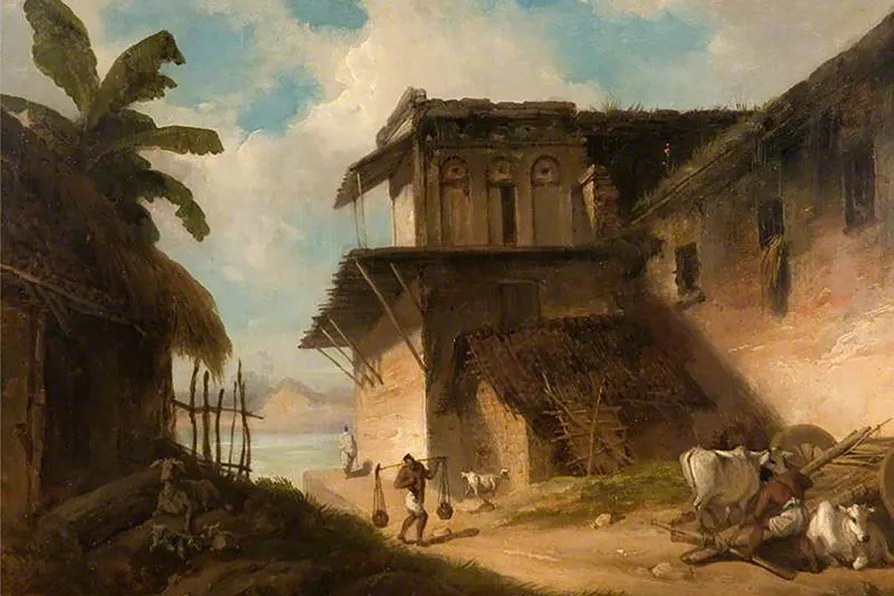
APURBA CHATTERJEE explains how British artists in India used the “picturesque” to reshape colonial landscapes and celebrate imperial power


The unfinished work of theorising globalised capital
MARTIN GRAHAM welcomes, with reservations, a scholarly addition to the unfinished business of understanding how capital works on a world scale
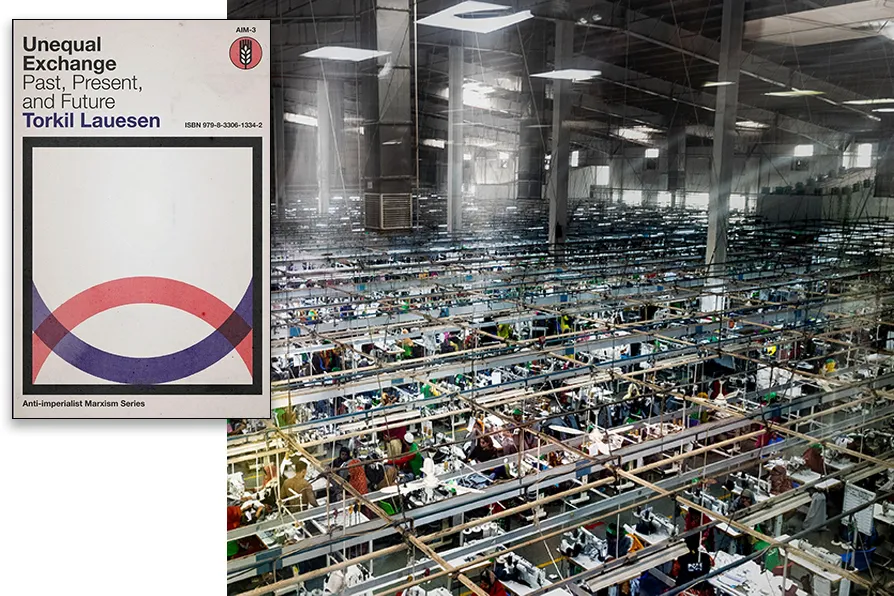
 WORKERS IN THE PERIPHERY: Remi Holdings Ltd Garment factory, Bangladesh, 2020 [Pic: Fahad Faisal/CC]
PAUL DONOVAN welcomes a revival of Reginald Rose’s classic play that reminds us of the fundamental need for trials with juries
SIMON PARSONS applauds an exceptional performance of Wesker’s little-known play, by the same actor for whom it was written 45 years ago
ANDY HEDGECOCK and MARIA DUARTE review Late Fame, The Death of Robin Hood, Leviticus, and Gail Daughtry and the Celebrity Sex Pass
ANGUS REID recommends a uniquely accomplished documentary collage that contemplates our relation to the natural world
GORDON PARSONS enjoys Kant’s ‘mind-boggling’ theory of human reality: that we create the reality we experience





Unequal Exchange: Past, Present and Future
Torkil Lauesen, Iskra Books, £16
UNEQUAL EXCHANGE became a hotly debated concept in the 1970s following the publication of Unequal Exchange: A Study of the Imperialism of Trade by the economist Arghiri Emmanuel (1911-2001). In this book, Torkil Lauesen endorses Emmanuel’s approach and examines its implications.
Emmanuel studied international trade in the light of Marx’s Labour Theory of Value and Competition between Capitals resulting in an Average Rate of Profit. He viewed imperialism as consisting of the centre, or imperialist core, of North America, Western Europe and Japan, and an exploited periphery. He concluded that trade between the imperialist core and the periphery results in the appropriation of surplus value by the imperialist core due to the difference in wage levels between the core and the periphery.
This concept is contrary to Ricardo’s classical economic theory on free trade, still mainstream thinking, according to which both developed and underdeveloped nations benefit from trade.
Marx intended to conclude his critique of political economy with a volume of Capital that examined the accumulation of capital on a world scale. In the absence of this final volume, Marxist understanding of imperialism and international trade was largely based until the 1960s on Lenin’s Imperialism as the Highest Stage of Capitalism. Although sound, this is essentially descriptive and fails to provide much of a theoretical framework for understanding globalised capitalism as it subsequently developed, including those developments described in Capitalist Value Chains by Selwyn and Bernhold and reviewed by Steve Andrew on March 2.
While imperialism retains elements of pure plunder, racism, cultural appropriation and denial of the need for reparation for slavery, Emmanuel’s concept of Unequal Exchange was held by many to be the missing theoretical framework to understand globalised capitalism.
Lauesen largely attributes opposition to Emmanuel’s concept to concern over its implication that workers in the imperialist core are benefitting at the expense of workers at the periphery. This was seen by some as undermining the efforts of organised labour at the centre to defend workers; and it could also be seen as contradicting the call in the Communist Manifesto for the workers of all nations (including those in the imperialist core) to first “settle matters with their own bourgeoisie.”
Perhaps in tacit acknowledgement of these concerns, the author sees the transition from capitalism to socialism as a “long process” and one that must be undertaken “globally”. Whether, given the accelerating pace of global warming, there is still time for such a “long process and how the transition can be pursued “globally” are not discussed.
There are, however, other, more fundamental objections to Emmanuel’s concept of Unequal Exchange to which Lauesen only indirectly refers. Guglielmo Carchedi and Michael Roberts argue, convincingly it seems to me, in Capitalism in the Twenty First Century Through the Prism of Value (Pluto Press, 2023), that the size of Unequal Exchange depends not on differential wage levels but rather on differences between the Organic Composition of Capital at the core and periphery.
The Organic Composition of Capital is the ratio of constant capital to variable capital and, in Marxist analysis, is a significant variable which broadly reflects long-term technological advantage. For Carchedi and Roberts, Unequal Exchange is not super-exploitation of workers in the periphery, it is a relation between capitals which ensures that capital accumulates faster at the imperialist core than in the periphery.
The book, at least in the paperback edition reviewed, has a large reference section but no index. This is regrettable as it is a work of some scholarship and warrants detailed study, even if this reader was left with reservations.

Similar stories
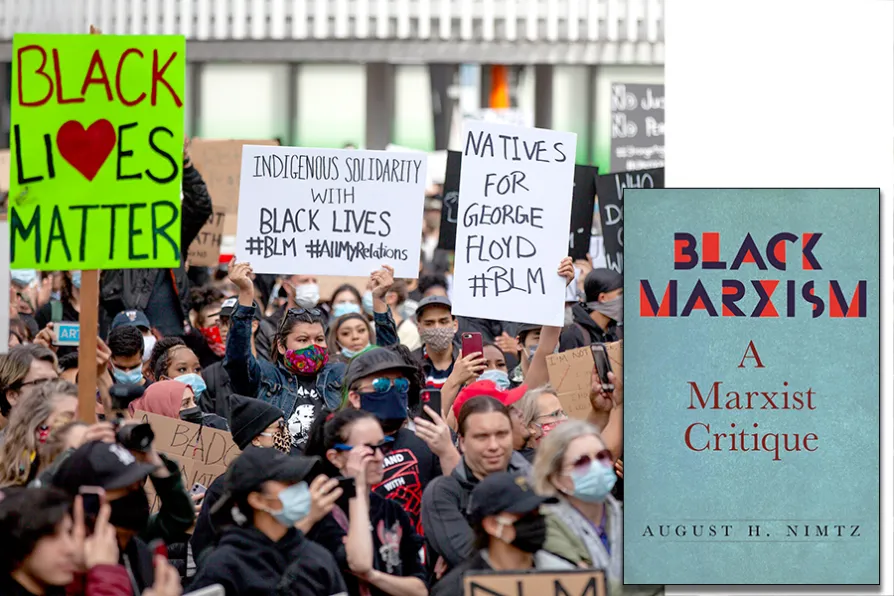
SETH SANDRONSKY recommends a Marxist critique of the ‘race-first’ views of the influential black US theorist Cedric Robinson

Internationalism is deeply embedded in socialist theory and practice. Examination illuminates its complexity asserts the Marx Memorial Library and Workers’ School

Nature as well as society works dialectically, asserts the Marx Memorial Library and Workers’ School
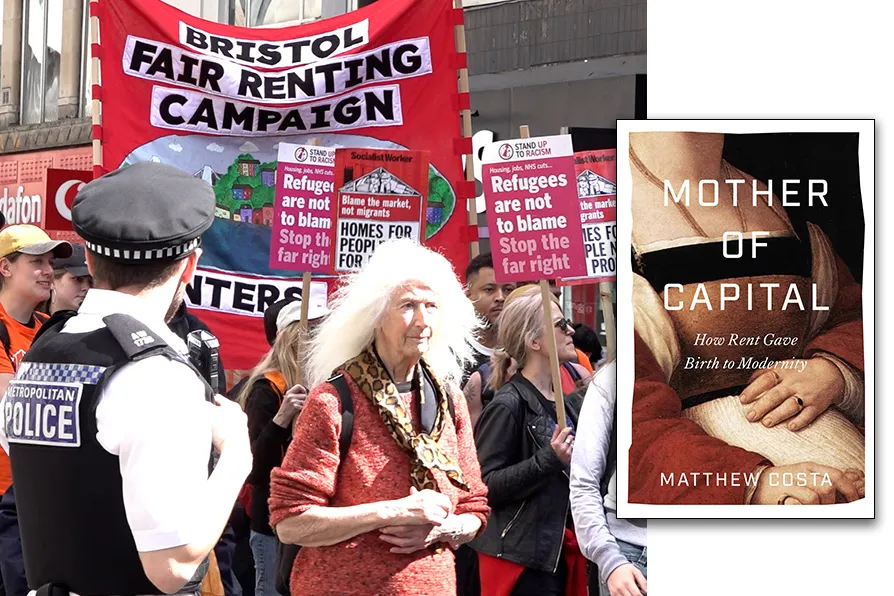
ALEX HALL is fascinated by a lucid and historically convincing account of how rent has dominated capitalist economies from feudalism to modernity