The SNP’s government programme for the next five years raises the threat of more cuts and attacks on the public sector, engagement with unions and service users is essential, argues ROZ FOYER


 Latest editorial
Trump was half right about British forces in Afghanistan
Outrage greeted Donald Trump’s suggestion earlier this year that Britain stayed off the front lines. But evidence suggests our forces were at times pulled from the most dangerous fighting — not by military failure, but by pressure at home, says IAN SINCLAIR
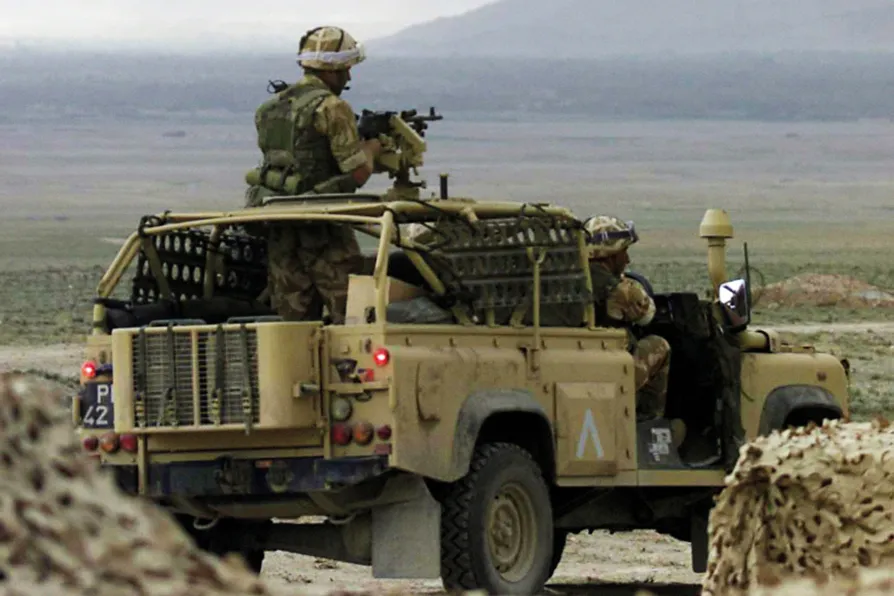 CONSTRAINED ROLE? British marines on patrol at Camp Taylor, the forward operating base, as more than 1,000 troops began Operation Snipe in the south-east region of Afghanistan, 2002
MARK JONES recounts the remarkable revolutionary pioneers Goodwyn Barmby and Catherine Watkins, who brought the term communist into the British labour movement.
The West’s policies in Yemen are in tatters as the Ansarallah forces have taken strategic territory and humiliated Saudi-backed militias. This provides an opportunity to end Britain’s shameful policy in the region, argues STEPHEN BELL
KEITH FLETT pays tribute to the resilience of the peace and anti-imperialist movement in Britain that emerged after the September 11 attacks and is ever-more needed today
The US administration is endangering lives by reversing environmental protection laws, CHAUNCEY K ROBINSON argues
It’s time to stop retreating and go on the offensive to promote working-class interests, argues DOUG NICHOLLS





WITH the horror of the war on Iran dominating headlines since late February, it feels a long time ago that US President Donald Trump claimed in January that Nato, and therefore Britain, sent “some troops” to Afghanistan but “stayed a little back, a little off the front lines.”
The response from politicians across the political spectrum in Britain was swift. Prime Minister Keir Starmer called the comments “insulting and frankly appalling,” while Reform leader Nigel Farage said “Donald Trump is wrong. For 20 years our armed forces fought bravely alongside America’s in Afghanistan.”
Green Party MP Ellie Chowns described the claim as “disgusting” and “an insult to the memories of the more than 400 British soldiers who lost their lives in Afghanistan and to their families.”
To be clear, the 457 British servicemen and women who sadly died in Afghanistan (not to mention the thousands of Afghans they killed) confirm that British forces, as part of the larger Nato force, did plenty of front-line fighting.
However, from what I can tell no-one in the government, the military or media has pointed out an uncomfortable fact — that there is actually a sliver of truth to Trump’s remarks.
Let me explain.
US concerns about British troops and other European forces were far from a secret. For example, writing in the Guardian in December 2008, veteran journalist and historian Max Hastings noted: “Although the British in Helmand province are trying harder than the Germans, French or Italians in their respective zones, in US eyes we, too, are relatively risk-averse.”
This US perception is corroborated by Brigadier Ed Butler, who served as commander of Task Force Helmand in 2006.
In British journalist Sandy Gall’s 2012 book War Against The Taliban, the senior British officer gives an example of the political sensitivities a British commander had to be aware of: “We have an election coming up, we may not be able to have a major operation this month.”
Why? “If we were to lose twenty British soldiers this month it would influence the outcome of the general election… When the summer fighting season kicks off this year there will be handbrakes put on the military commanders to go easy, don’t take too many risks.”
General Stanley McChrystal, then the Nato commander in Afghanistan, had similar concerns in November 2009, with the Independent reporting the top US general “believes Britain’s continued involvement would be politically more palatable at home if its 9,000 troops were moved out of ‘harm’s way’ from the frontline in Helmand.”
A “senior military source” quoted in the story elaborates: “McChrystal feels the need to keep Britain ‘in the fight’ by withdrawing British forces from harm’s way, by firstly pulling them back into a smaller area of operations commensurate with their resources; and secondly by transferring them to a ‘capacity-building’ rather than a ‘front-line mission’.”
In his 2012 book Little America: The War Within The War For Afghanistan, Washington Post journalist Rajiv Chandrasekaran confirms this is what transpired during the US surge in Helmand province in 2009.
Gordon Brown’s government “inform[ed] the Obama administration that it would not increase forces, even nominally, in tandem with an American surge.” Chandrasekaran continues: “Then the [UK] Defence Ministry instructed military commanders to work up secret plans to hand off Sangin and Musa Qala [two towns in Helmand where British troops were involved in heavy fighting] to the Americans and consolidate in less dangerous parts of the province.”
Which is what happened. “The 10,000 British soldiers who once roamed all over the province [of Helmand] are now consolidating their operations in a handful of operations around the provincial capital” of Lashkar Gah, Chandrasekaran reported in the Washington Post in September 2010.
The academic Dr Paul Dixon argues this shift seemed to have an impact on British casualties. “Although 2010 was the worst year for Nato deaths, the British casualty rate from July to December 2010 dropped to 38 compared with 76 in the same period of 2009,” he notes in a 2018 Forces Watch report. “In 2009 there were 108 UK military fatalities in Afghanistan, 103 in 2010 but this dropped to 46 in 2011; 44 in 2012.”
This is important history to get right. But what really interests me is why British troops were repositioned in less dangerous areas.
The quotes presented above give hints but Dixon spells out the essential point: “The British public’s opposition to the wars in Iraq and Afghanistan… imposed operational constraints on the political and military elite’s willingness to put British lives at risk for fear of further undermining domestic support.”
Indeed, the British military were keenly aware of the importance of public opinion, with Butler describing it as a key strategic factor in the Afghanistan campaign, according to a July 2006 report in the Observer.
As a senior British officer told the Telegraph in 2008: “There is a general policy by the MoD [Ministry of Defence] to keep the horror of what’s going on in Afghanistan out of the public domain, and that’s probably for political reasons. If the real truth were known it would have a huge impact on army recruiting and the government would come under severe pressure to withdraw the troops.”
Similarly, an officer quoted in the Observer article notes: “If the public turn against the campaign, it will be terrible for morale and will make it far more difficult to obtain the resources we need to get the job done.”
This prediction came to pass, with polls showing Britons turned against the war in 2008-9. And, as Professor Theo Farrell explained in his 2017 book Unwinnable: Britain’s War in Afghanistan 2001-2014, “British forces lacked the personnel and material (especially helicopters and armoured vehicles) for the job.”
That this lack of support is connected to public opinion is confirmed by a leaked November 2009 US State Department cable.
“The cupboard is bare,” was the reply from Philip Barton, director for Afghanistan and Pakistan in the Cabinet Office’s foreign and defence policy secretariat, to a US enquiry about Britain sending more troops.
“A request from the US for more British troops would… be unhelpful to HMG [Her Majesty’s government] in terms of the domestic political considerations, Barton said.”
Nick Clegg, then Liberal Democrat leader, came to the same conclusion in July 2009. Speaking to the BBC, he said prime minister Gordon Brown had made “a deliberate decision” not to send more troops to Helmand because he was “worried about the domestic political reaction.”
If you agree that the huge anti-war movement of the 2000s was a key driving force behind the growing opposition to the war in Afghanistan amongst the British public, then it becomes clear the often-derided anti-war movement had a material impact on government and military policy.
Through the organisation of mass demonstrations, direct action, public meetings, lobbying and media work, it played a significant role in constraining British forces on the ground in Afghanistan and in the decision by the British government to not deploy the level of troops and equipment the military requested.
Furthermore, it’s clear the anti-war movement, by helping to build-up anti-war public opinion, influenced the timing of the British withdrawal. As Hew Strachan, professor of the history of war at the University of Oxford, argues in the conclusion of the 2013 edited volume British Generals In Blair’s War: “When Prime Minister David Cameron confirmed in November 2010 that British combat troops would be withdrawn from Afghanistan by the end of 2014, he explained the timeline not in relation to the conditions which he saw as likely to prevail in Afghanistan but in terms of what the British public would demand.”
An important aside: there’s lots of evidence the anti-war movement had a similar constraining influence on British forces in Iraq, a war in which domestic anti-war opinion was even more keenly felt.
All of which leads to a hopeful and empowering conclusion. We, the general public, when large numbers of us are organised and active in opposition to war, are much more powerful than many of us realise. Which is definitely something worth remembering today.
Follow Ian on X @IanJSinclair.

Similar stories
Andy Burnham offers unconditional support for Zelensky but no solutions to the underlying conflict between the Nato/EU bloc and Russia, says NICK WRIGHT
Washington’s response to a downed jet shows a superpower still reaching for overwhelming force even as its wars repeatedly fail, says NICK WRIGHT
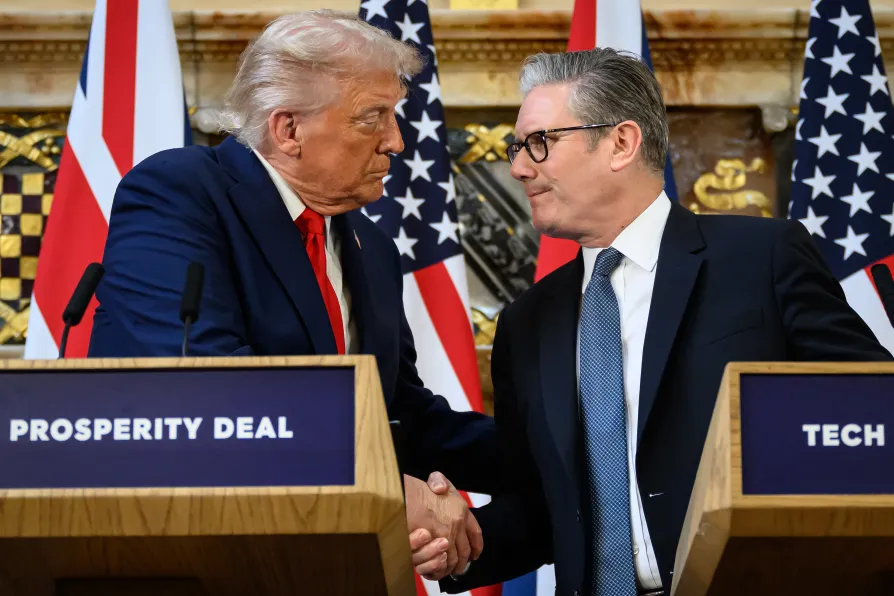
The media present Starmer as staying out of Trump’s war — but we’re already deeply involved in a conflict that sees the US and Israel kill civilians on a huge scale, argues IAN SINCLAIR

As the government quietly upgrades the role of Britain’s special forces, their growing global footprint and near-total exemption from democratic oversight should alarm us all, says ROGER McKENZIE