Trade unions need to step up and force a turn in the policies of the labour movement to effectively confront the far-right threat, argues NICK WRIGHT


 Latest editorial

Survival, silence and digital resistance: Afghan women’s fight for justice
Afghan women living under the Taliban are navigating a system that makes their public existence conditional on male approval, writes SHUKRIA RAHIMI
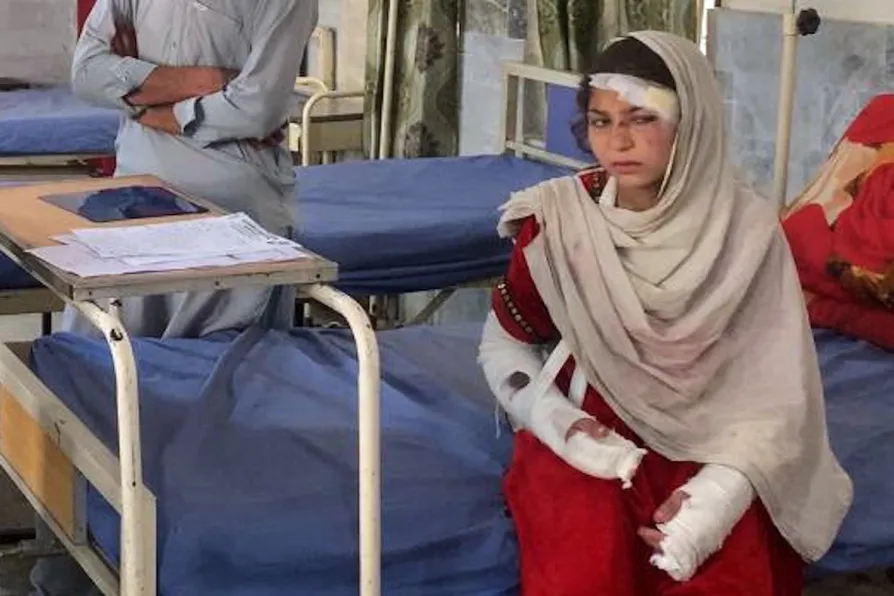 A girl, who was injured in the overnight cross border fighting between Pakistan and Afghan forces, receives treatment at a hospital at Khar, in Bajaur, a district of Pakistan's Khyber Pakhtunkhwa province bordering with Afghanistan, February 27, 2026
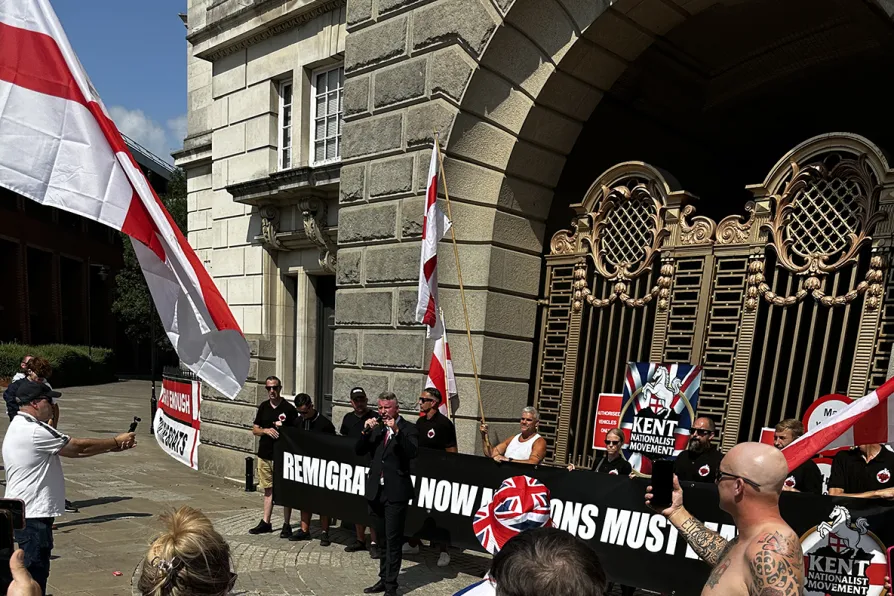
As the 90th anniversary of the outbreak of the Spanish civil war is marked, Teesside campaigners will gather to remember the local men and women who stood against fascism, explains TONY FOX
Whatever differences exist among international sympathisers of the Bolivarian revolution about its current trajectory, they should unite against the imperialist power that is the source of an enforced retreat, argues ROGER D HARRIS
Washington’s inability to subjugate Iran is an example of how it is trying to preserve a regional order that no longer exists, argues RAMZY BAROUD
US financial instability is exposing the limits of a dollar-dominated global economy — and giving the Global South a historic chance to build an alternative, says MURAD QURESHI
Deprivation is a fundamental factor in criminal behaviour that must be addressed but, KENNY MacASKILL argues, there needs to a major rethink in sentencing to tackle overcrowding





ON International Women’s Day, the global language of equality and empowerment often feels distant from the lived reality of Afghan women.
Since the return of the Taliban in August 2021, Afghanistan has become the only country in the world where girls are formally banned from secondary and higher education and where women are systematically excluded from most forms of paid employment.
What is unfolding is not merely discrimination. It is the construction of a gender-based system of social, economic, and political erasure.
To understand the human consequences of these policies, consider the story of 13-year-old Nooria, who disguised herself as a boy to work and feed her family following her father’s death, documented in reports circulating in February 2026.
Detained by the Taliban after her identity was discovered, her case highlights the “Bacha Posh” practice and the extreme survival strategies forced upon women in Afghanistan. In a country where women cannot legally or safely work in most sectors and cannot travel freely without a male guardian, families without a man face economic suffocation.
Nuriya’s disguise was not an act of rebellion; it was an act of survival. Her case is not isolated. It is the logical outcome of a system that makes a woman’s public existence conditional upon male sponsorship.
From a human rights perspective, the prohibition on women’s employment does more than violate international legal norms, it restructures the private sphere in dangerous ways.
When survival depends on the presence of a male breadwinner, households without men become structurally vulnerable. Poverty deepens, but so do coercive social practices. Child labour increases as daughters and sons are pushed into informal work. Early and forced marriages rise, as families seek economic security through marital arrangements. Widows and single mothers may feel compelled to remarry not out of consent or companionship, but to restore access to food, mobility and protection.
In such conditions, the character or behaviour of the man becomes secondary to his economic function. His mere presence restores legitimacy and access. This dynamic concentrates unchecked authority in male hands, reinforcing domestic hierarchies and heightening the risk of gender-based violence.
What emerges is a system of legalised dependency, one that reproduces power imbalances across generations. Nooria’s story is therefore not only about disguise. It is about how law and policy can manufacture vulnerability inside the home.
Yet even within these constraints, Afghan women are not passive victims. They are adapting, organising, and resisting, often in ways that are less visible but deeply consequential.
As physical schools and universities remain closed to girls, a parallel educational infrastructure has emerged online.
The Afghanistan Youth Leaders Assembly (AYLA) is one such initiative, providing structured mentorship, educational programming, and language development opportunities. By offering free English-learning pathways, including structured Duolingo-based advancement systems, AYLA equips young women with the linguistic tools necessary to apply for scholarships abroad.
For many participants, language acquisition is not merely academic advancement; it is a pathway to safety, mobility, and the possibility of continuing their education outside Afghanistan.
Transnational solidarity has also taken meaningful form. Voices Unveiled, founded by US educator Cara, grew out of earlier empowerment programmes delivered to Afghan women. Though not Afghan-based, the initiative provides free leadership development courses, psychological support spaces, and feminist education modules designed specifically for women navigating repression and displacement.
During my own time inside Afghanistan, organising protests and working directly with survivors of human rights violations as a translator, such online courses functioned as psychological armour. They did not replace the right to attend a university or protest safely in the streets. But they sustained clarity, motivation and emotional resilience in an environment engineered to exhaust dissent.
As physical classrooms remain shuttered, Afghan-led digital resistance has flourished. Pioneering initiatives like the Anar Online School, the Herat Online School, and the Defa Online School, recently launched by singer and activist Aryana Sayeed, are providing essential remote learning pathways for thousands of girls who refuse to let their education be erased.
This struggle for education refuses to be contained by borders. Thousands of Afghan students, particularly girls, have crossed into Pakistan to continue their education. Afghan refugees have established private learning centres in areas like Islamabad, where boys and girls study together in Farsi/Dari and English, preparing for future opportunities abroad.
Additionally, the UNHCR operates over 150 schools in refugee villages that provide primary and secondary education. Also UniArk provides more than just financial aid; through its Women’s Scholarship programme, it offers fully funded grants of up to £35,000 for degrees across Britain, the US and EU. By providing expert 1:1 mentorship, from IELTS preparation to complex university applications, UniArk ensures that Afghan women don’t just find safety, but the academic power to lead their nation’s eventual rebuilding.
These initiatives are not substitutes for structural justice. They cannot compensate for the systematic dismantling of public education, nor can they fully mitigate the economic violence embedded in gender apartheid. But they matter. They create intellectual continuity. They prevent total isolation. They preserve a generation’s capacity to think, to plan, and to lead.
Inside Afghanistan, hidden home-based classes continue in silence. Women-run small businesses, many operating digitally, provide income in a hostile economy. Supporting these enterprises through ethical purchasing, small-scale donations, or scholarship funding may appear incremental. Yet in a system designed to eliminate women from public life, incremental support sustains resistance.
The struggle of Afghan women today is therefore multi-layered. It is fought in kitchens where widows calculate impossible budgets. It is fought in secret classrooms. It is fought on encrypted platforms and scholarship applications. It is fought in exile by refugee women learning new languages while rebuilding their identities.
International Women’s Day demands more than symbolic solidarity. For policy-makers, it requires sustained diplomatic pressure grounded in international human rights law. For civil society and labour movements, it requires material support for grassroots initiatives that keep Afghan women intellectually and psychologically alive. And for the broader international community, it requires refusing to normalise a system that conditions a woman’s right to exist on male approval.
Nooria’s forced disguise reveals the cruelty of exclusion. The digital classrooms and underground networks reveal something else: determination. Afghan women are using every available tool, from language apps to leadership seminars, from small businesses to scholarship pipelines, to resist erasure.
They are not asking for pity. They are demanding the right to work, to learn, and to live without permission.

Similar stories
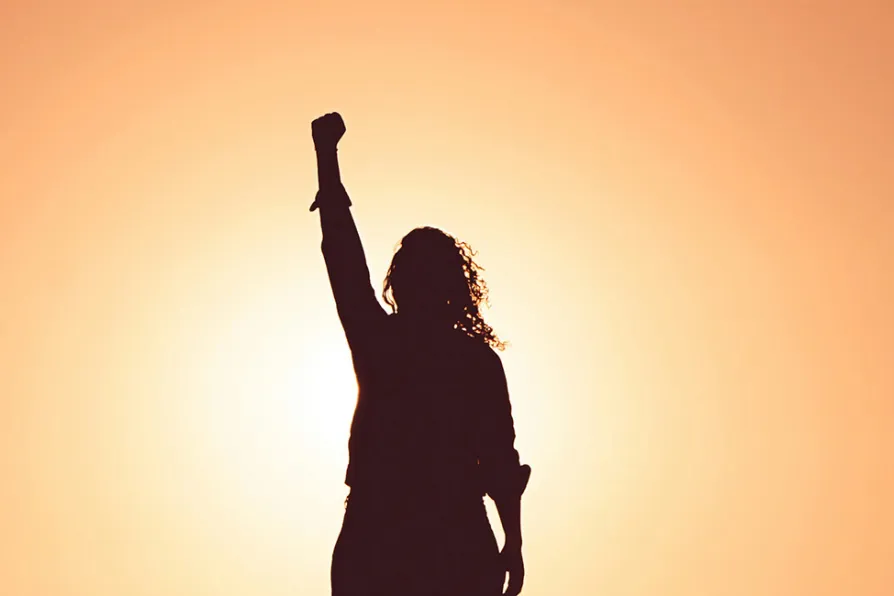
Women’s fight against violence and legal erosion is central to building a democratic and just Iraq, says Dr SALMA SAADAWI
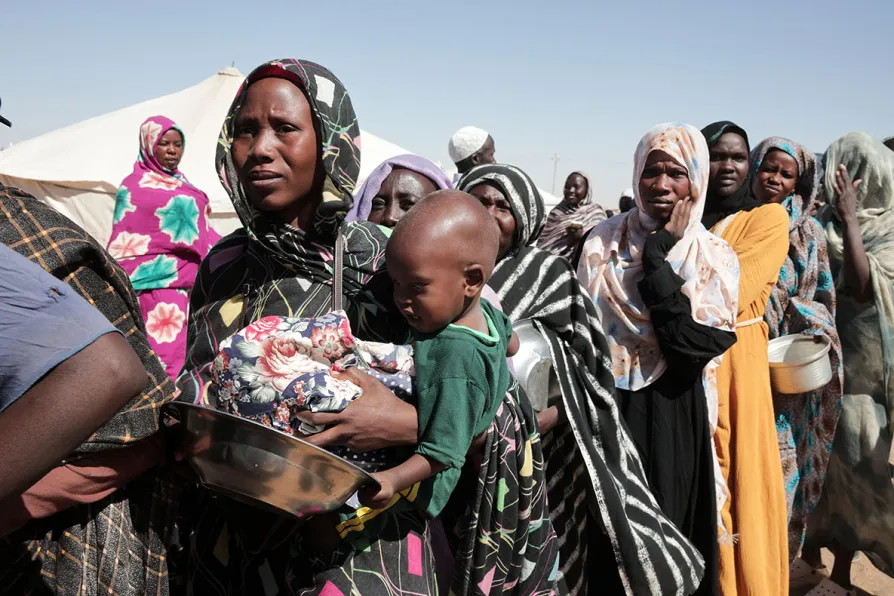
MAISSON HASSAN highlights how amid bombed-out cities and collapsing hospitals, women-led initiatives are keeping communities alive
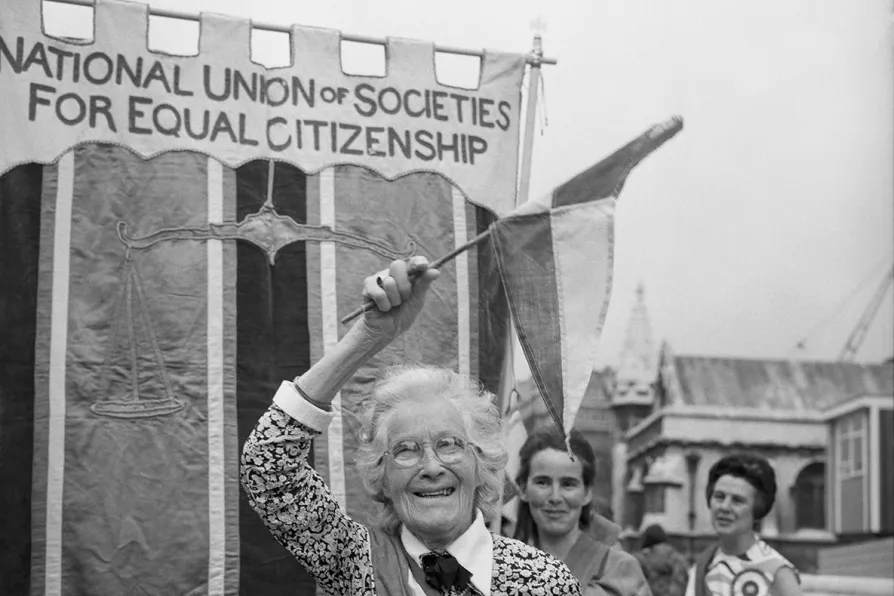
Half a century after transformative laws reshaped Britain, women’s rights are again contested. This International Women’s Day is a call to remember how change was won, and to organise to defend it, says KATE RAMSDEN
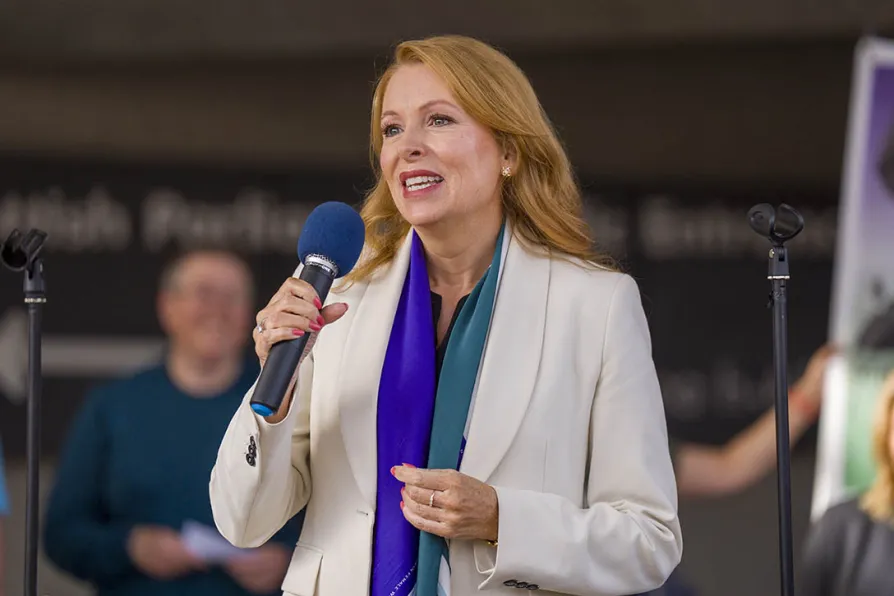
As Ash Regan’s Unbuyable Bill sparks debate in Scotland, the real issue remains unaddressed: a digitalised sex industry and a neoliberal economy that repackages exploitation as empowerment while leaving women’s material conditions unchanged, argues LAUREN HARPER