TUC president and POA leader STEVE GILLAN speaks to Ben Chacko on the eve of Congress 2026


 Latest editorial
Sudan’s catastrophe: a war on women
MAISSON HASSAN highlights how amid bombed-out cities and collapsing hospitals, women-led initiatives are keeping communities alive
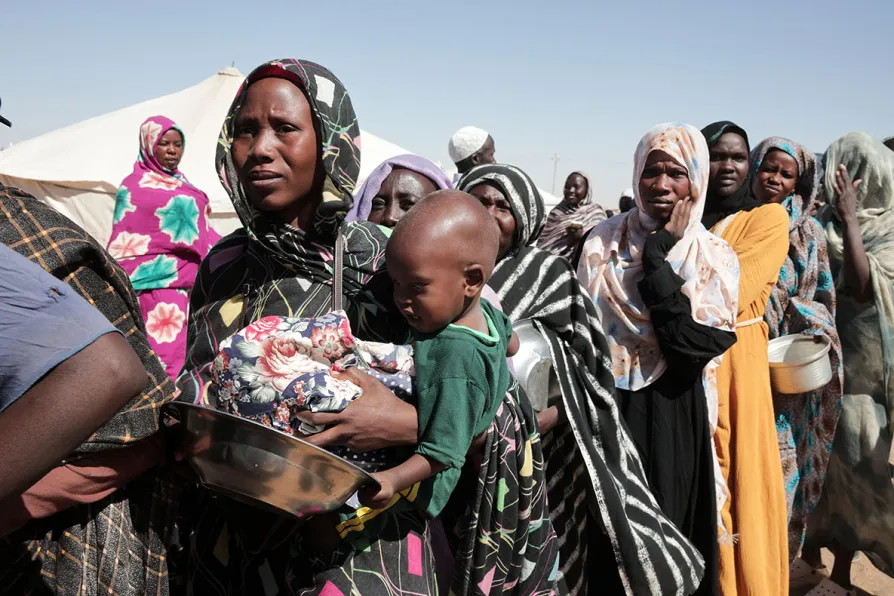 Women displaced from El-Fasher stand in line to receive food aid at the newly established El-Afadh camp in Al Dabbah, in Sudan's Northern State, November 16, 2025

DOUG NICHOLLS welcomes a turning point at this year’s Congress, where many motions call for a co-ordinated plan to revive British industry, a perspective outlined in his new book
HOPE VIRGO of campaign Dump the Scales warns MPs voting today they should be alert to the threat legalised assisted death poses to people with eating disorders
The Together Alliance is hosting two summits, North and South, to build power and plan action against the scourge of racism peddled by the right. DANIEL KEBEDE urges mass participation
The drift toward militarisation in Europe is not inevitable, left-wing and peace movements can preserve sovereignty and prevent war, says DÁIRE HUGHES MP
Whatever differences exist among international sympathisers of the Bolivarian revolution about its current trajectory, they should unite against the imperialist power that is the source of an enforced retreat, argues ROGER D HARRIS
Trade unions need to step up and force a turn in the policies of the labour movement to effectively confront the far-right threat, argues NICK WRIGHT





AS OF February 2026, the war between the Sudanese Armed Forces (SAF) and the Rapid Support Forces (RSF) has entered its most catastrophic phase.
Since erupting on April 15, 2023, the conflict has created the world’s largest displacement and protection crisis, with over 33.7 million people in urgent need of humanitarian aid.
More than 12.8m have been forced from their homes, most of them women and children. Entire cities lie in ruins, health systems have collapsed, and hunger has spread on an unprecedented scale.
In 2025 alone, civilian deaths more than doubled from the previous year, with over 11,000 killed. By February 2026, UN experts warned that atrocities in Darfur now bear the “hallmarks of genocide.”
The numbers are staggering. But the lived reality behind them is even more brutal — especially for women and girls.
The violence has escalated into what international observers call a “war on the bodies of women.”
Sexual violence has escalated from a byproduct of war into a deliberate, systematic weapon. During the siege of El Fasher, evidence indicates a targeted campaign against non-Arab ethnic groups, with gang rape and sexual slavery employed as tools of “ethnic cleansing.”
The UN has documented thousands of cases of conflict-related sexual violence, and in 2025 alone, the demand for gender-based violence (GBV) services surged by 288 per cent. These documented cases represent only a fraction of the true scale, as stigma, fear, and the destruction of reporting mechanisms leave many unrecorded.
The intensity of GBV has reached levels described by experts as “indicators of a genocidal path.”
Sudan is now experiencing one of the worst hunger crises in the world. Famine conditions were confirmed in parts of Darfur in 2025, and warnings have continued into 2026 (World Food Programme). Female-headed households have become increasingly common as men are killed, detained or go missing, leaving women and children facing the highest levels of food insecurity.
Since the war began, over 80 per cent of health facilities in conflict zones have become non-functional. Maternal healthcare has deteriorated dramatically. Today, an estimated 1.2 million pregnant and breastfeeding women are facing acute malnutrition, a direct result of being “last to eat” in food-insecure households. Preventable deaths are rising.
Meanwhile, the 2026 Sudan Regional Refugee Response Plan requires approximately $1.6 billion (£1.3bn) but remains critically underfunded. As needs accumulate year after year, global attention has waned.
Yet Sudanese women continue to organise. Since 2023, women-led Emergency Response Rooms and community kitchens have sustained neighbourhoods under siege. They distribute food, provide shelter, and co-ordinate medical referrals — often without salaries, protection or reliable funding.
The war has uprooted over 13.6m people, including 4.2m who have fled to neighbouring countries.
Inside Sudan, women in cities like Khartoum and El Fasher have endured bombardment, looting and lawlessness.
Even daily tasks, such as collecting water, expose women to harassment and assault. Women with disabilities face acute vulnerability. Reports during 2025 documented cases of people unable to flee attacks in North Darfur being targeted for point-blank executions.
Those who fled for their lives now face the risk of being forced back into the hands of the militias they escaped. In Egypt, authorities began a campaign in late 2025 of “arbitrary detention and unlawful deportation” of Sudanese refugees, directly violating international law.
This agony is fuelled by foreign interference, which has funded the warring parties and transformed the conflict into a proxy war, claiming an estimated 150,000 lives since 2023.
Without enforcement of arms embargoes, full humanitarian funding, protection for refugees, and accountability for atrocities, Sudan’s women will continue fighting this war alone.
The statistics keep rising. So does the silence.
Maisson Hassan is a Sudanese activist based in London.

Similar stories