ROB WARZYNIAK wades knee deep through a pile of ‘dead canaries’ of Trumpist policies which exacerbated the horrors of US capitalism domestically


 Latest editorial

Remembering Claudia Jones in an age of division
The pioneering activist understood that freedom could only be won through solidarity across communities. Her legacy offers vital lessons at a time when progressive politics risks losing that shared purpose
The Morning Star republishes PRAGNA PATEL’s speech at the annual commemoration of Claudia Jones on February 22 2026
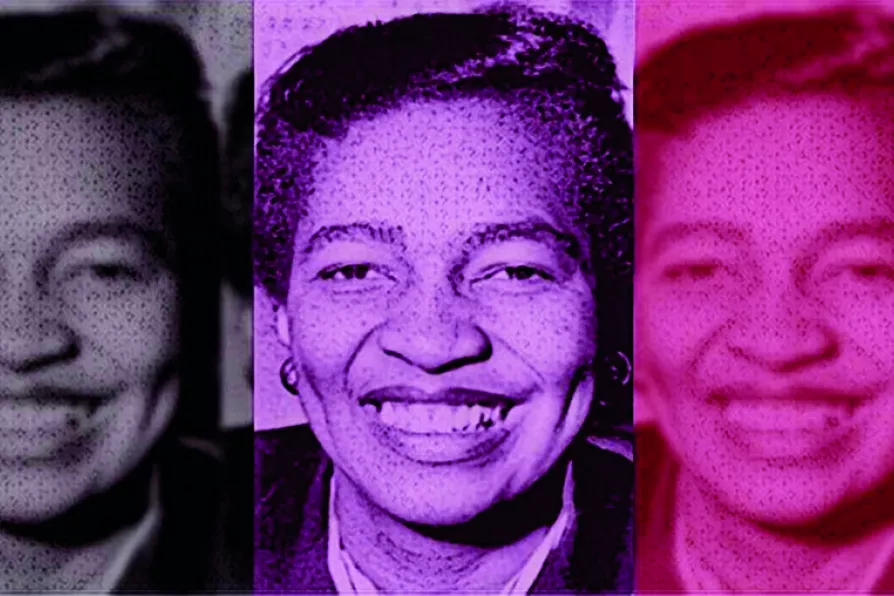 Claudia Jones
Without evidence or Nato consultations Berlin’s answer to the Leipzig incident is a rupture of relations. SEVIM DAGDELEN examines why
FRANCISCO DOMINGUEZ introduces the background to a conference on defending Latin America’s sovereignty
The glacier collapse in Nepal is yet another warning that a warming planet is making Himalayan disasters more frequent and destructive – but the countries facing the greatest risks are often those least responsible, says LI YANG
Nick Blair is set to benefit from a hugely lucrative contract to ‘virtually’ train the British army for its next war. Like father, like son, writes SOLOMON HUGHES
Even when tragedy strikes, Western media cannot resist the opportunity to turn it into a sordid propaganda opportunity, as the Nepal-China border tragedy shows, writes CARLOS MARTINEZ
Trade unions should be at the heart of the anti-racist push for reparations for the historic legacy and continuing impact of slavery, writes ROGER McKENZIE





I AM DEEPLY honoured and privileged to be invited today to commemorate the life and times of the courageous and incomparable Claudia Jones. It seems fitting to stand here today to not only pay homage to her but also to remember another titan of the civil rights movement, Jesse Jackson, who sadly died on Tuesday [February 17 2026].
Both represented the very best of humanity in the cause of global freedom, democracy and human rights; ideals that are in danger of disappearing from a world increasingly enamoured by fascism and authoritarianism.
Claudia Jones died on Christmas Eve 1964. The following December in 1965, I arrived in the UK as a five-year old with my mother and two younger siblings from Kenya to join my father who had arrived the previous year as an economic migrant.
My formative years in the UK in the ’60s and ’70s, were frequently marred by the blatant racism that I experienced first-hand in the school classroom and playground and witnessed through my parents’ struggle to find work in factories and to rent somewhere to live. I wish I had known about women like Claudia Jones during those difficult years — she could have guided me and those like me who were desperately trying to navigate feelings of humiliation and inferiority that arose from being accorded second class status.
But in those days, people like Claudia Jones and countless other heroic figures in the UK and across the world who were at the heart of anti-colonial and anti-racist struggles were simply hidden from history. They did not exist — not in our history books, not in popular culture and not in the wider public consciousness.
It was only through my first encounters with Asian and African-Caribbean socialists, anti-racist and feminist activists, from the late ’70s onwards, that I realised that there was another way of existing that was both empowering and self-affirming. Seeing young, second generation, politically conscious South Asian men and women in particular, take to the streets to challenge racial violence, police brutality, poor and unequal working conditions and discriminatory nationality and immigration laws, was a complete revelation to me.
With slogans like “We are here because you were there” or “Here to stay, here to fight” or “Self-defence is no offence” I came to understand that resistance and activism can transform us from victims to proud agents of our own destiny.
I did not look back. I found my political home in Southall Black Sisters which emerged in the heat of anti-racist and second-wave feminist struggles that were in full flow in the ’70s and ’80s. Borrowing from the US civil rights movement, many of us embraced the term “black” as a secular and progressive mobilising identity; capable of unifying all oppressed people affected by histories of colonialism and racism. The emphasis of our politics was firmly on building solidarity.
I didn’t know it then but we were clearly following in the footsteps of Claudia Jones who had understood the importance of creating unity between Afro-Caribbeans and south Asians who represented the two largest diaspora communities in the UK.
It was this perspective that led us to also support a range of wider struggles by the white working classes and other disenfranchised groups. For example, in the 1980s as black feminists, we joined delegations to support the republicans during the Northern Ireland Troubles and the mining communities during the great miners’ strike of 1984.
These were genuine attempts to build solidarity across difference and to locate ourselves within left politics, even though as black feminists we had to fight for autonomy and legitimacy from within. We argued that the pursuit of equality and freedom involves being simultaneously attentive to a range of intersecting forms of oppressions such as those experienced by black and minority women because they led to heightened forms of discrimination, exclusion and powerlessness.
Claudia Jones clearly understood this when she talked about the “triple oppression” of women and stressed that no peace can be obtained if women are excluded from the conversation.
By organising autonomously, we were not seeking to separate ourselves off from other black or social justice struggles but to strengthen them by bringing our critical perspectives to the struggles. And in doing so, bridge the gap between anti-racism, feminism and socialist left politics.
In the years that followed, together with others, we successfully mobilised across racial, ethnic and religious lines around the issue of violence against women — the dominant issue that women presented with when they arrived at our door seeking help and protection. Rallying around political slogans such as “Self-defence is no offence” — borrowed from our anti-racist struggles, we challenged community and state structures for perpetuating the patriarchal values and practices that also underpinned women’s oppression.
By the ’90s, we had brought together women who were young and old, white and black, activists and professionals, survivors and organisations, in what were some of the largest, noisiest and most colourful feminist campaigns and protests against violence against women that had been seen in a long time.
Sadly, we have not been able to sustain the political vision that we once had. We are now at a political juncture where regressive identity politics have taken hold at both ends of the political spectrum, radiating forms of authoritarianism from above (that is the state) but also from below (that is from within our own communities and political movements).
The degradation of progressive left politics has created fragmentation, division and competition as each identity group vies to hold the status of ultimate victimhood — a process that cuts off possibilities of alliances and solidarities. It is a politics disconnected from class and from the history of progressive forms of resistance of the past and has created a vacuum that is increasingly filled by the far right and the religious right.
In order to move forward we must urgently reclaim the secular histories of struggles waged by those like Claudia Jones who came before us. They talked in the language of universal rights and solidarity, and in doing so, they created the potential for building coalitions that were cross-cutting and outward-looking.
This is why this commemoration and events like this are so significant.
At the core of Claudia Jones’s life and times and indeed of the wider civil rights movement was the idea of collective resistance. History has shown that resistance based on need and the language of rights, justice and solidarity rather than victimhood and identity, is likely to provide the most effective weapon against oppression and authoritarianism.
It might also just serve as a more promising basis for building a new politics of liberation that puts us back on track and gets us to the finishing line.
Pragna Patel is co-director of Project Resist (www.projectresist.org.uk).

Similar stories
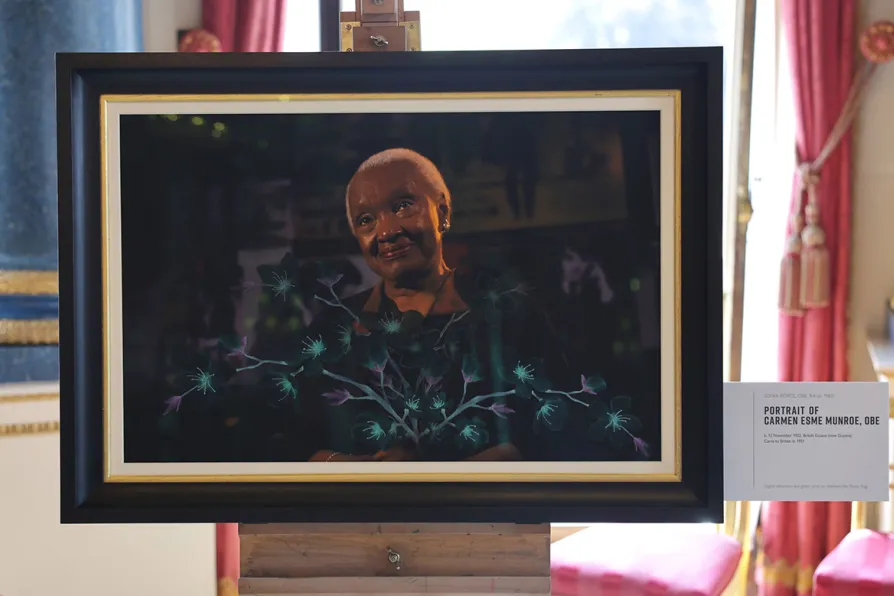
For generations black women have shaped Britain’s activism, arts and public life despite exclusion and discrimination. ZITA HOLBOURNE pays tribute to these political trailblazers and cultural icons, whose courage continues to inspire
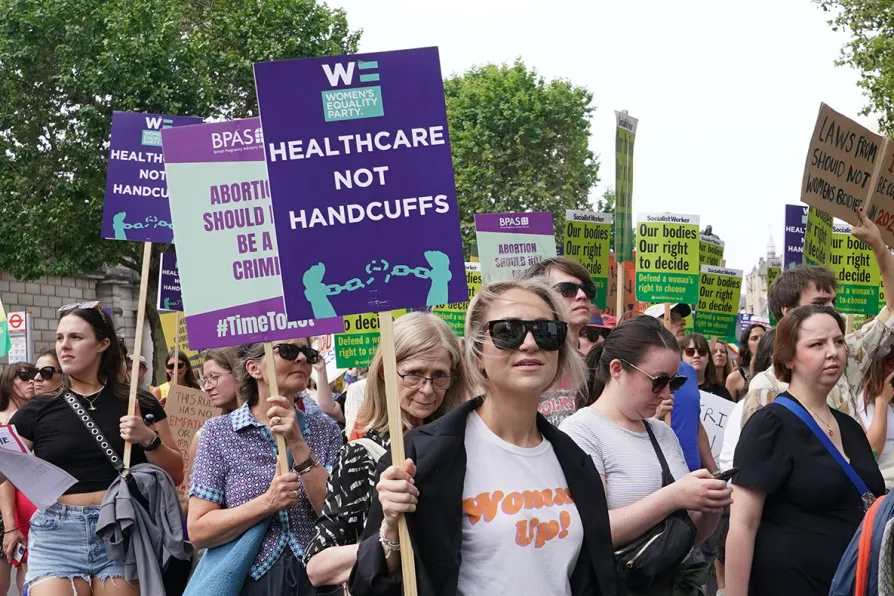
Professor MARY DAVIS argues that feminism has been hollowed out by liberal co-option – and only a revival of socialist, class-based politics can restore International Working Women’s Day’s original, radical purpose
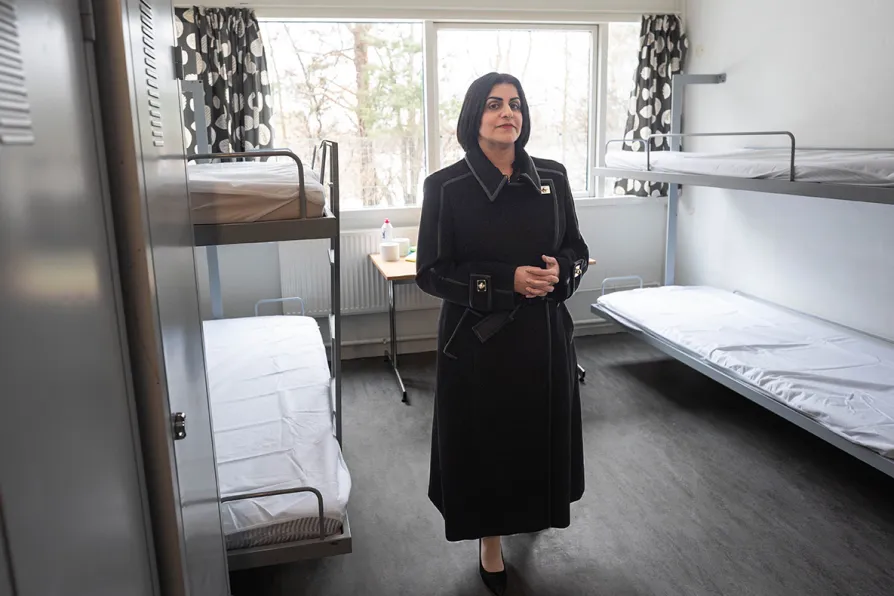
The government’s new immigration proposal risks creating a society where rights are earned, not guaranteed, warn feminist groups Project Resist and FiLiA in a joint statement
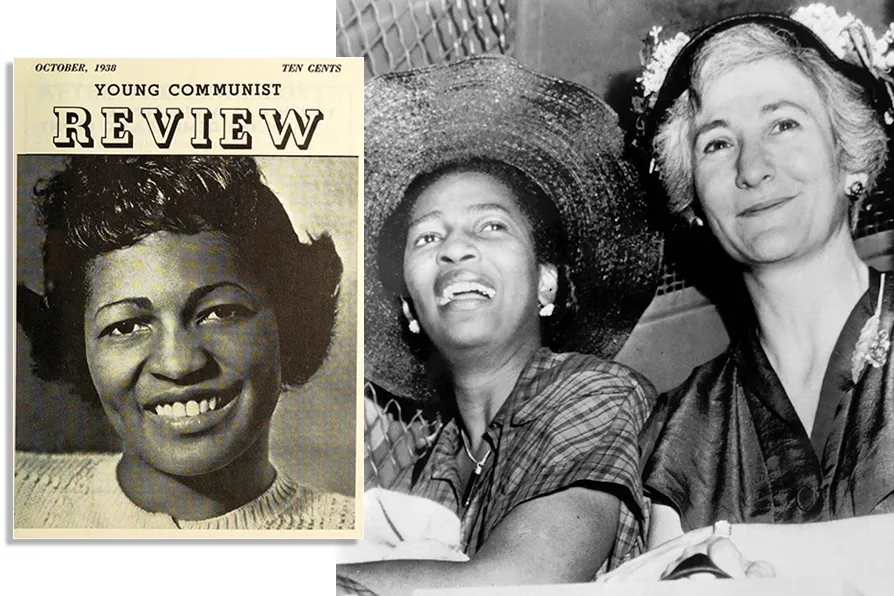
On the 121st anniversary of communist Claudia Jones’s birth ROGER McKENZIE looks at political events that shaped her, and those she helped shape