TUC president and POA leader STEVE GILLAN speaks to Ben Chacko on the eve of Congress 2026


 Latest editorial
From Reform to reformism…
Labour movement history in Britain shows workers secured reforms through collective pressure and political representation, rather than being gifted from above, writes KEITH FLETT
 Reform boss Nigel Farage

As Cuba faces the most dangerous moment in its recent history, Britain must do more than condemn the US blockade at the United Nations, writes KEVIN COURTNEY, chair of the Cuba Solidarity Campaign
The Together Alliance is hosting two summits, North and South, to build power and plan action against the scourge of racism peddled by the right. DANIEL KEBEDE urges mass participation
Morning Star assistant business manager BERNADETTE KEAVENEY and international editor ROGER McKENZIE remember attending the 2001 TUC, suspended midweek after news of the World Trade Centre attacks
Whether it’s dented bike frames or broken ferries, MATT KERR wishes politicians had the same steely staying power of elite engineering instead of chasing disposable self-importance
The events of 9/11 reverberated across the United States and then the world. JOHN WIGHT remembers the eerie atmosphere that exposed racial divisions at the heart of Hollywood





THOSE who vote for Reform have mixed reasons. Some are hardcore racists, others, despairing of getting a change in their lives for the better, look to Nigel Farage’s political business vehicle for improvements.
Historically, as Raymond Williams noted in Keywords, this is not what the word “reform” meant. First appearing in the 14th century, it was often used to mean restoring something to its previous state — in Farage’s case at least the Britain of the 1950s — more than positive change and innovation.
As Williams suggests, reformism came into use from the 1870s when organised labour began to press for parliamentary representation.
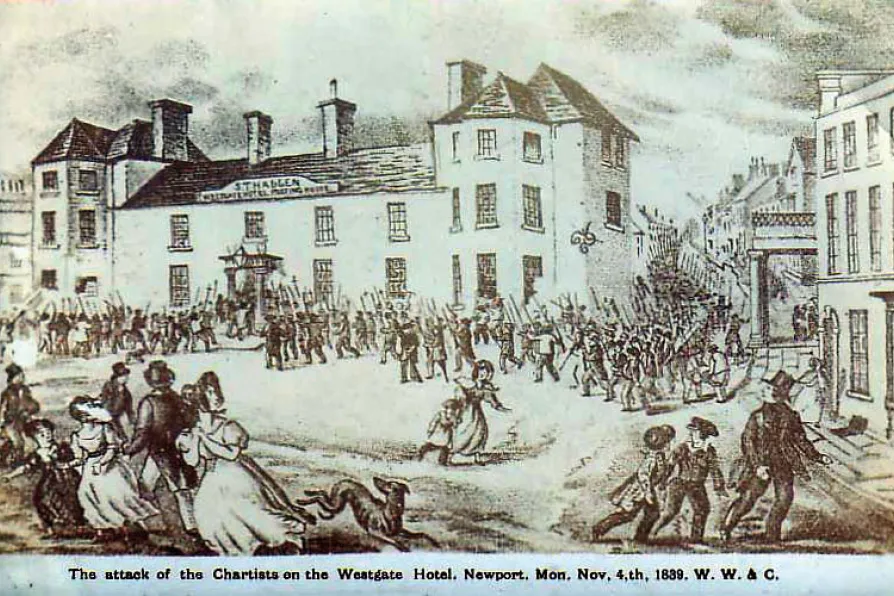
EP Thompson argued that after the Chartist challenge in the 1840s, by the 1860s the working class had moved away from revolution and instead looked to warren capitalism from end to end, with institutions which remain very familiar today.
Trade unions, trades councils, co-ops. The controversy was whether this reformist approach could actually achieve meaningful and lasting change.
In the mid-1860s there were a series of small scale inter-union disputes in Sheffield that however got media attention. A royal commission was set up in 1867 to look at the issue of unions. It was the minority of the commission that won the day when the matter was debated in the Commons. The result was the 1871 Trade Union Act.
For the first time trade unions were recognised as existing in law. That meant that union funds now had legal protection against anyone seeking to make off with them. Other provisions had wider importance. Union activity including strikes could not be regarded as “restraint of trade,” meaning neither employers or scabs could pursue unions for damages.
Further union organisation could not be regarded as a conspiracy, a point going back to the Tolpuddle Martyrs 35 years before.
The 1871 Act was a key part of putting unions and union members on a legal footing but there was more to do.
The Conspiracy and Protection of Property Act 1875 addressed further key issues, in particular it made picketing in disputes legal. The Employers and Workmen Act also of 1875 made all disputes between employers and employees civil matters.
Previously under the Master and Servant Acts workers who left employment before the end of their contract could be pursued by the boss and fined or jailed.
All this was achieved by the strength of organised labour making a political impact. In effect pressure from outside of Parliament.
These important changes however were far from set in stone and were challenged by employers. Taff Vale is the most well-known case. A court judgement in 1901 found that the rail workers’ union in south Wales was liable to pay the employment damages for money lost in a strike.
The issue of parliamentary representation for workers became key, Labour MPs were elected for the first time in 1906 and in the same year the Trades Disputes Act restored union immunity from prosecution.
The lesson of this period is that while reforms could be achieved by pressure from outside Parliament, to protect them required representation in it. This was part of the raison d’etre of the Labour Representation Committee, formed in 1900.
If we fast forward more than a hundred years the 2025 Employment Relations Act underlines that the relationship remains partly in place. However there are also independent socialists and Greens in Parliament who will go in to bat for workers. Here the relationship between organised labour and MPs is central. Individual MPs may be sympathetic but the institutional structure to hold them to account, and hence where unions political links are, is central.
How effective reformism is remains a live debate. Reform in its historical meaning is not the way forward.

Similar stories
It may have become a traditional month for holidays, but episodes from early British labour movement history show that class struggle never takes time off, argues KEITH FLETT
KEITH FLETT looks at geographical roots of working-class activism in Britain
Inspired by a hit TV show, KEITH FLETT takes a look at the murky history of undercover class war
It’s not just the Starmer regime: the workers of Britain have always faced legal affronts on their right to assemble and dissent, and the Labour Party especially has meddled with our freedoms from its earliest days, writes KEITH FLETT