TUC president and POA leader STEVE GILLAN speaks to Ben Chacko on the eve of Congress 2026


 Latest editorial
‘Burnham has a good PR machine – but where does it go from here?’
In a wide-ranging interview, JEREMY CORBYN talks to Ben Chacko about the difficulties the new Prime Minister faces and why he sees no future in Labour
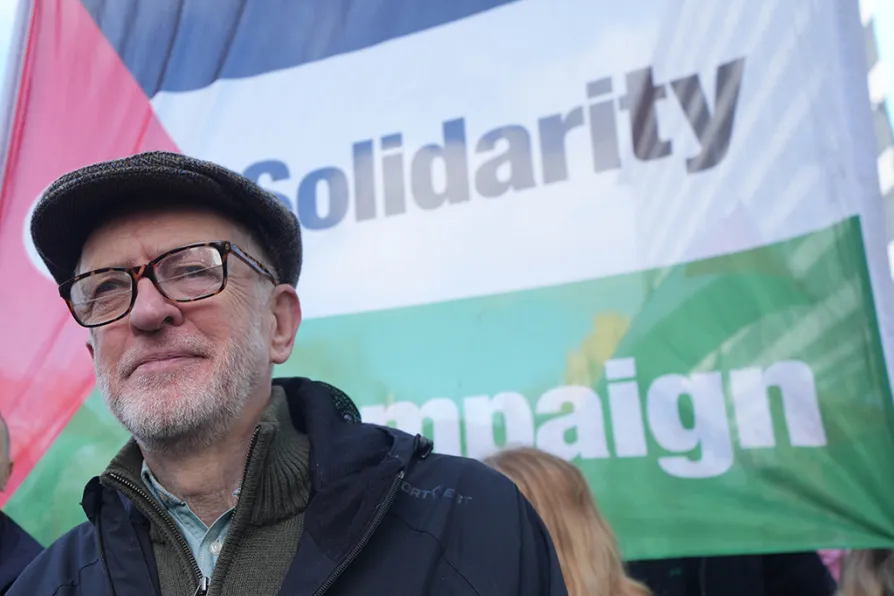

DOUG NICHOLLS welcomes a turning point at this year’s Congress, where many motions call for a co-ordinated plan to revive British industry, a perspective outlined in his new book
HOPE VIRGO of campaign Dump the Scales warns MPs voting today they should be alert to the threat legalised assisted death poses to people with eating disorders
The Together Alliance is hosting two summits, North and South, to build power and plan action against the scourge of racism peddled by the right. DANIEL KEBEDE urges mass participation
The drift toward militarisation in Europe is not inevitable, left-wing and peace movements can preserve sovereignty and prevent war, says DÁIRE HUGHES MP
Whatever differences exist among international sympathisers of the Bolivarian revolution about its current trajectory, they should unite against the imperialist power that is the source of an enforced retreat, argues ROGER D HARRIS
Trade unions need to step up and force a turn in the policies of the labour movement to effectively confront the far-right threat, argues NICK WRIGHT





THE new Labour Prime Minister has come in denouncing 40 years of neoliberalism, the privatisation of the commanding heights of the economy and the deindustrialisation of Britain.
The pitch — and the reaction of many major newspapers, that this is a regressive “back to the ’70s” project — is familiar. Does Jeremy Corbyn feel vindicated by Andy Burnham repeating much of what he was saying 10 years ago?
“Yes, and I hope the government continues following our policies!” he laughs. “I hope it starts following our lead on international policy as well.”
He’s less convinced the reality will match the rhetoric. How’s Burnham doing? “He’s got a very good PR machine.
“He’s effectively filling up the media in July and August — but where does it go from here?
“I welcome his starting with a pledge to end rough sleeping. It was what I had planned as my first announcement if I had been elected prime minister.
“We ended it [temporarily] during Covid but essentially by renting people rooms in Travelodge and places like that, which isn’t a long-term solution.
“If they’re serious, and I hope they are, it means building a lot of council housing. That means changing the finance and planning arrangements so local authorities are not forced to finance it site by site, so you end up with 30-40 per cent social housing and the rest either so-called affordable housing or sold at market prices. Unless it’s close to 100 per cent council housing, they’ll never get near the targets they’ve set.
“They need to provide the resources for local authorities to buy places that have been sold on right-to-buy… my council has bought back over 300 right-to-buy properties, which is good because they’re social housing again, but economically mad because they were sold at £100,000 discounts and bought back at market rates. We’re subsidising profiteering.
“The government is also very reluctant to deal with the private rented sector.
“I supported the Renters’ Rights Act that went through last year, the fundamentals were good — no more than annual rent rises, the ability to challenge them, length of tenancies, ending no-fault evictions. But what’s bad is it hasn’t addressed the unaffordability of rent for people on average or even above average incomes. In my constituency I see former council housing rented out at £2,200 a month next door to current council housing at £6-700. It’s crazy.”
Corbyn is as focused as ever on the way a rigged system hurts the poorest: noting that the public end up subsidising private rents and profits, while with local housing allowance frozen, people on universal credit, whether working or not, and often with children to support, are having to raid one social security payment to cover another.
“I’m very disappointed Angela Rayner has ruled out private rent controls.” But always a politician of the social movements and the streets, he doesn’t intend to leave it at that, saying the Peace & Justice Project he founded will convene a mass online meeting on August 10 with groups including Defend Council Housing and Homes for All to discuss a campaign for more radical action.
He doesn’t doubt that Burnham wants to solve the problem: but isn’t sure the PM has the stomach for the showdown with the private building industry or the huge power of landlords that’s needed. That has to happen though, since the sector is getting worse, with big banks now moving into buying up properties to let.
The same goes for Burnham’s social care plans. Costs are ratcheted up by for-profit provision, accelerated recently by the rapid growth of predatory private equity “investment” in the sector.
Care is so expensive it swallows up homes, or is so beyond people’s price range that “millions of working-class people, nearly all of them women, give up jobs, careers and opportunities to care for a loved one.” What we have now is “an exploited workforce, grotesque levels of profits and inadequate care.”
Corbyn wants a national care service modelled on the NHS, though separate. Liaison with social services will mean a big role for councils. Such details can be thrashed out — the key is “it’s got to be publicly owned and delivered, democratic and accountable.” As for the costs: “As you pointed out in your editorial, the maximum cost estimate from the Health Foundation is very conveniently the same amount of money they’re adding to the arms budget…”
As we speak, we hear news of scores more arrests as peaceful demonstrators protest outside Westminster Magistrates’ Court against the Palestine Action ban.
The news underlines how little has changed.
It may be early days, but despite an apology for Labour’s approach to Gaza Burnham has given no indication he intends to lift the ban on Palestine Action — he has kept Starmer’s Home Secretary Shabana Mahmood in place. British bases have again been used by US planes to bomb Iran, and his choice of Chancellor — John Healey, who resigned from the last Cabinet on the grounds Starmer wasn’t warlike enough — suggests the warfare-not-welfare agenda will continue. The day I met Corbyn Burnham doubled down on his support for expanding Britain’s nuclear arsenal, at staggering cost.
Such policies are nothing new for Labour, but the shrunken opposition to them — the pitifully small rebellion against the Palestine Action ban, the conformity of the parliamentary party — reinforce Corbyn’s instinct that Labour will never again be his political home.
I ask the question — after all it was Starmer who drove him out (“I was expelled,” he stresses), Starmer is now gone, and he has been a back-bench rebel against warmongering Labour leaders before.
“Things have gone too far,” he reflects. “A party that has endorsed genocide, which is continuing against the Palestinian people. Privatisation and continued austerity economics. Ongoing punishment of the poorest in society — in an underhand way as by not raising the tax thresholds, so half a million more people will start paying tax in the next two years, on incomes of just £12,500. That cannot in any way be fair.”
The enormous damage Starmer has done is reflected, he suggests, in the fact that when the parliamentary party decided the PM had to go they couldn’t find a replacement from their own ranks but had to bring Burnham in from outside.
“You’d have thought of 402 MPs they could find one. The centralisation of power in the party by Starmer, the heavy influence of Peter Mandelson over candidate selections, has let very few talented people through and very few socialists.” There are socialist MPs, but most predate the 2024 election. Of the vast cohort elected then hardly any — he name-checks Brian Leishman and Steve Witherden as exceptions — can be considered socialists.
Burnham’s uncontested coronation — a “palace coup” — also means there has been no real debate within the party about what was wrong with Starmerism, and what needs to change.
“He’s not been through a democratic process. He’s said some good things, without being challenged much on the details, and he’s appointing people to key positions whose records suggest they do not support the policies he’s just announced.”
That leaves little hope that the current government will really divert too far from Starmer’s repressive model. “The criminalisation of peaceful protest is really serious,” he says. Together with Tony Benn, Corbyn opposed the Terrorism Act of 2000, warning then home secretary Jack Straw it would lead to bans on peaceful protest. Straw indignantly denied it. But the authoritarian trajectory has continued ever since.
“Is this going to be the Labour government that makes it illegal to protest against an illegal war? Burnham is not showing any indication of changing policy on that. All the rights we’ve got, the right to vote itself, came from protest. I think they should make every MP go and visit the Peterloo Memorial in Manchester and learn something about our history.”
Standing up for our democratic history feels more urgent in the 90th anniversary of Cable Street, with the far right on the march again. Corbyn is scathing about Labour’s approach to Reform so far — “they spent the last two years conceding to them, copying their language, competing to be the most anti-immigrant.”
Cable Street is a reminder that the far right must be faced down on the streets, he says, as well as of the reluctance of Establishment parties and institutions to mobilise against it — the mobilisation to stop the Blackshirts was organised by the Communist Party and the Morning Star’s forerunner the Daily Worker, the Jewish People’s Council Against Fascism and Anti-Semitism, the Independent Labour Party and other grassroots groups, but opposed by the Labour Party, the Board of Deputies of British Jews and the like.
Little changes, Corbyn notes: in 1977 when he was helping organise for what became the Battle of Wood Green against the National Front, “the historic role of the then Labour Party head office was to ring me up and tell me to cancel it.”
He doesn’t believe Labour’s recent polling edge over Reform will necessarily last, or that Nigel Farage’s current difficulties mean the threat is over. And he’s uncomfortable about the descent of the Clacton by-election into farce, with Farage’s most prominent opponent the comedy candidate Count Binface.
“The left should have stood a candidate, because Farage’s politics need to be taken on and exposed. I hoped we [Your Party] might stand a candidate, but there was a feeling we weren’t ready in that area.”
Which reminds us that a year ago things looked different: rather than a “Burnham bounce,” there was a surge of enthusiasm for the idea that Corbyn might head up a major new party of the left. Your Party has hardly thrived since its founding conference, having a very low profile in May’s local elections and becoming more a byword for faction fights than a new pole of class politics.
“It’s well known that we’ve had a lot of problems getting this party going. We worked with a lot of independents in the local elections, and some of them did very well, in Kirklees, in Bradford, parts of London and Birmingham.
“We’re now almost at 40 active branches that have been established and we’re holding meetings, training programmes on combatting the far right, anti-racism, housing campaigns. We are developing it. It’s been a rocky path, but I am determined that we do build an alternative — which we will work together with others on doing, independents and others on the left.
“There has to be some basis for unified action, in the way the Morning Star provides that — a place for us all, a voice for us all that allows for differences without always looking to find failings in each other. Your excellent annual conference is an example, and so I think is the Peace & Justice Project — focus on what unites us. Opposing racism. Improving working-class living standards. Opposing rearmament.”
We live in a world in crisis, with every power ramping up arms spending and Britain risking being dragged into conflicts through its “special relationship” with a reckless and trigger-happy United States — whose government simultaneously supports the far right on our streets.
“It’s terrifying.” And it means we need a real alternative. Corbyn thinks some form of proportional representation is needed, though is also keen to preserve the constituency link for MPs — as possibly the most popular constituency MP in the country — and alert to the risks that party-list PR systems might close off opportunities for independents at a time the political system really needs shaking up.
For him the answer still begins from the grassroots: in the community campaigns against cuts or for housing, on the Palestine marches, in mobilisations against the far right. The transition from Starmer to Burnham absorbs the national media. But in Corbyn’s view it makes little difference to the campaigns that need our efforts right now.

Similar stories
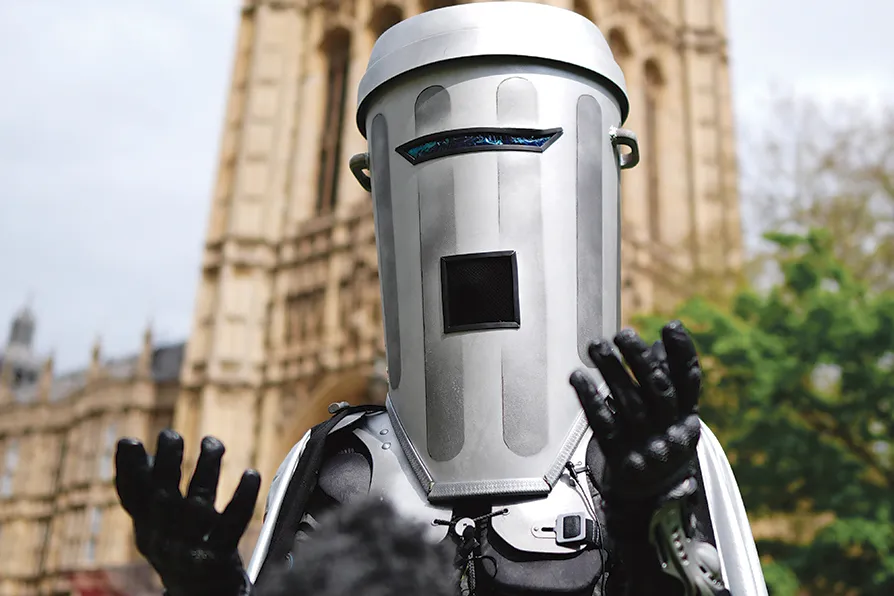
CHARLEY ALLAN reports from Clacton on Farage’s fears his by-election stunt has backfired
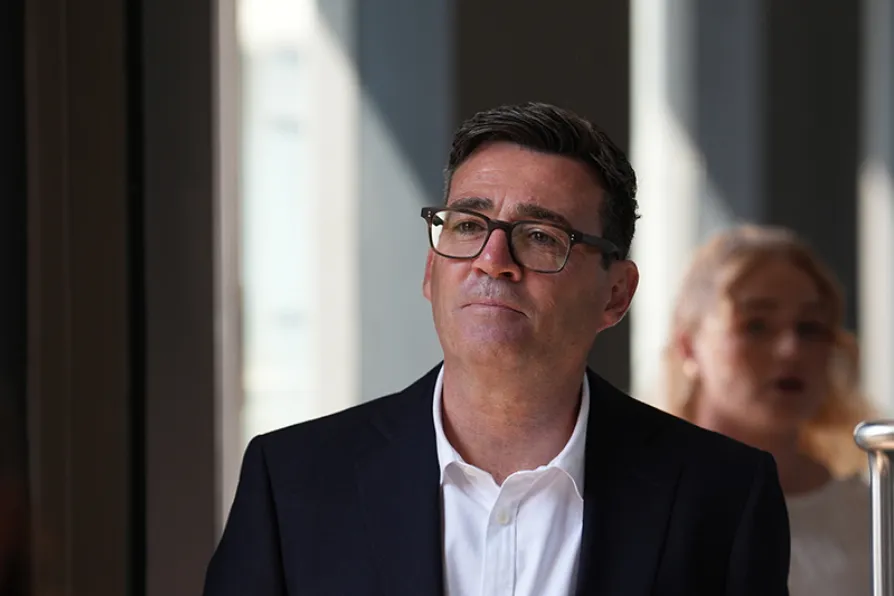
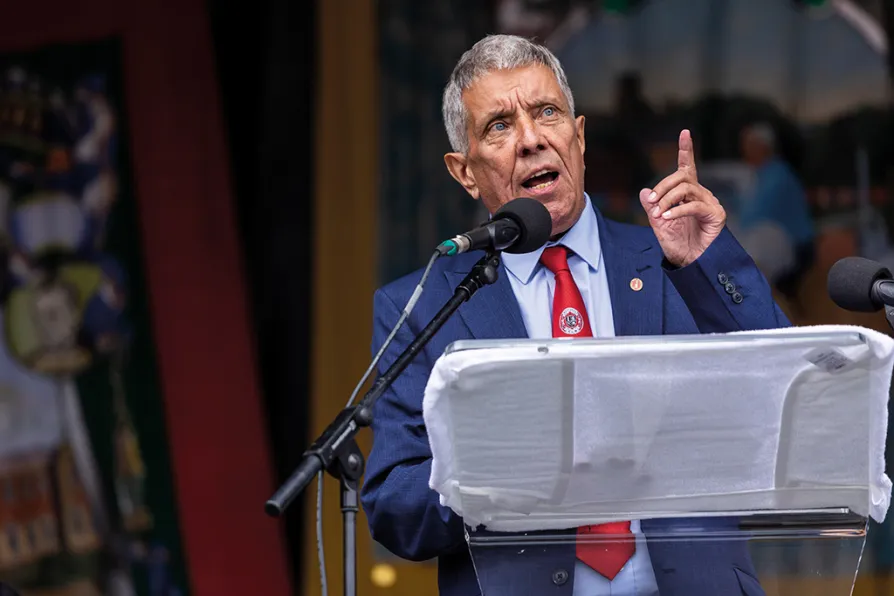
Durham Miners’ Association general secretary ALAN MARDGHUM speaks to Ben Chacko about the PM-in-waiting, the threat of Reform and the radical change of direction this country needs

With ‘Your Party’ holding its founding conference in Liverpool this weekend, JEREMY CORBYN speaks to Morning Star editor Ben Chacko about its potential, its priorities — and a few of its controversies too