Trade unions need to step up and force a turn in the policies of the labour movement to effectively confront the far-right threat, argues NICK WRIGHT


 Latest editorial

Venezuela under siege – what should progressives do?
Whatever differences exist among international sympathisers of the Bolivarian revolution about its current trajectory, they should unite against the imperialist power that is the source of an enforced retreat, argues ROGER D HARRIS
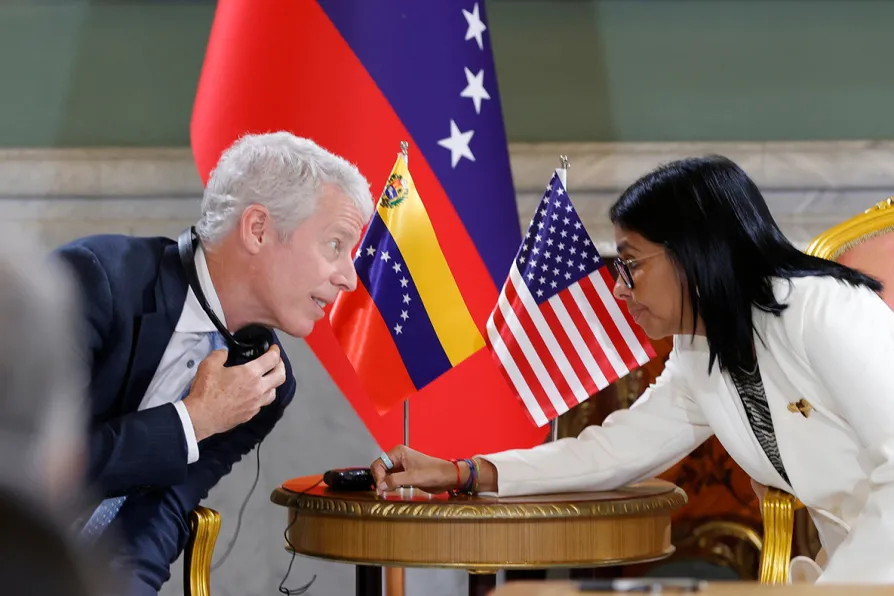 US Energy Secretary Chris Wright, left, meets with Venezuelan acting President Delcy Rodriguez at Miraflores presidential palace in Caracas, Venezuela, September 2, 2026 [AP Photo/Pedro Mattey]
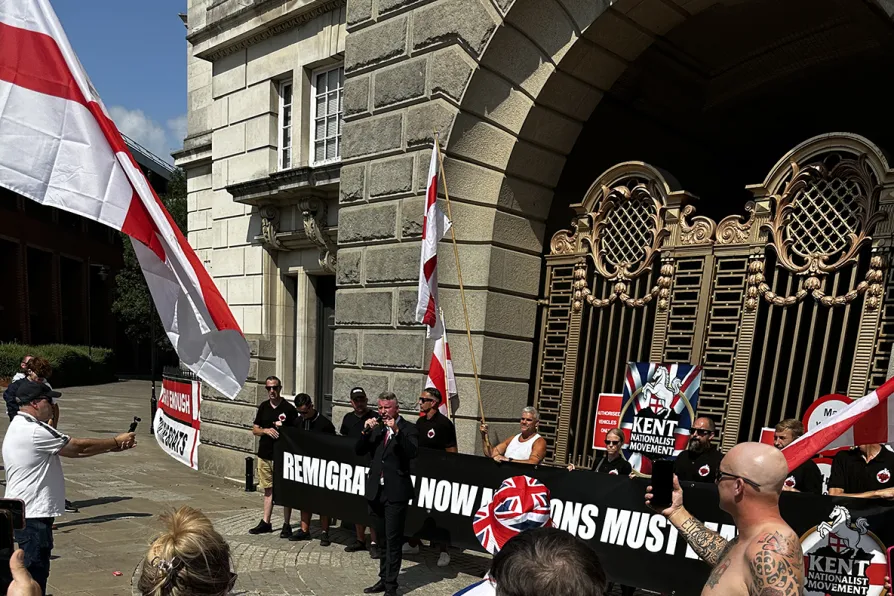
As the 90th anniversary of the outbreak of the Spanish civil war is marked, Teesside campaigners will gather to remember the local men and women who stood against fascism, explains TONY FOX
Washington’s inability to subjugate Iran is an example of how it is trying to preserve a regional order that no longer exists, argues RAMZY BAROUD
US financial instability is exposing the limits of a dollar-dominated global economy — and giving the Global South a historic chance to build an alternative, says MURAD QURESHI
Deprivation is a fundamental factor in criminal behaviour that must be addressed but, KENNY MacASKILL argues, there needs to a major rethink in sentencing to tackle overcrowding





EVER since Hugo Chavez became Venezuela’s president in 1999 and initiated the Bolivarian revolution, the country has been under siege by the US. The aggression escalated with the kidnapping of its lawful president, part of a larger and accelerating assertion of US imperial power worldwide. The Bolivarian revolution survived but is in a forced tactical retreat.
For progressives outside Venezuela, this presents a difficult question. How should we respond when a government resisting US domination makes compromises that we may oppose, but does so under conditions largely imposed by Washington?
This article argues that criticism has its place. But it also needs to be contextualised in the larger struggle over Venezuela’s sovereignty and the consequences of weakening a government confronting overwhelming US power.
Chavez – founding of the Bolivarian revolution
Tension between solidarity with an actually existing revolutionary process and criticism of its compromises has recurred throughout the Bolivarian revolution. Among the first on the left to part company with the Chavista government were anarchists, who proclaimed that they were second to none in supporting revolutions against imperialism — until those projects succeeded in achieving state power.
This tendency still affirmed their abstract solidarity with “the people” but not with their chosen representatives. They felt betrayed because the Bolivarian leadership failed to fulfil their expectations to build a workers’ state on a suitably expeditious timetable.
Riding a global commodities boom, the Bolivarian revolution funded major social welfare programmes, prioritising poor and working people. To finance these measures, over half of Venezuela’s oil exports and 60 per cent of its overall exports were sold to the US. Dependency on oil sales deepened, with oil accounting for over 95 per cent of its foreign earnings.
Chavez proclaimed the goal of a socialist future, although he pardoned the unsuccessful 2002 coup-plotters in an effort — perhaps mistakenly — to encourage a co-operative domestic business class. He pragmatically sought opportunities to negotiate with them.
Maduro – intensification of the imperialist siege
When Chavez died in March 2013, his chosen successor, Nicolas Maduro, won the snap presidential election. Maduro carried the Bolivarian project forward but under geopolitical conditions markedly different from his predecessor. Venezuela scholar Steve Ellner argues that there were no substantive political differences between the two leaders.
During Chavez’s illness, economic problems had accumulated (eg, a dysfunctional currency exchange system). Maduro was under intense pressure from the moment he entered office.
Immediately, the US-backed and funded opposition started the guarimbas, demonstrations intended to accomplish by violence what they had failed to achieve at the ballot box.
Washington, meanwhile, stepped up its hybrid war. Soon oil prices crashed and the US, under Barack Obama, initiated ever more punishing sanctions in 2015.
Under these coercive measures, the Venezuelan economy by 2019 was in freefall with inflation over 100,000 per cent. Never had an economy contracted so much in modern peacetime.
At this time of maximum weakness, a faction of the Venezuelan Communist Party developed a strategic disagreement with the governing coalition. It argued that the revolution should confront its class enemies more aggressively and expropriate major corporations, rather than seek a temporary rapprochement.
The nearly overwhelming task of righting the economy was ultimately achieved under Maduro’s leadership. After precipitous economic contraction, Venezuela has experienced positive economic growth since 2021. Never had a petro-economy achieved such a turnaround, which included near food sovereignty. To do so, the government relied foremost on the strong Chavista base. It also had to appeal to nationalistic elements among the bourgeoisie and offer them economic incentives to secure their co-operation.
Venezuela was not unique in making such accommodations. During this period, Cuba and Nicaragua — the two other Latin American countries striving for socialism — also introduced market-oriented reforms. With all three countries, the measures were pragmatic adjustments to a world economy dominated by the US and hostile to socialism.
Kidnapping of Maduro
The events leading up to Maduro’s abduction on January 3 involved an ever-intensifying regime-change campaign by the US in concert with its allies: asphyxiating sanctions, stolen assets, diplomatic isolation, cyber-attacks, assassination attempts, mercenary invasions, among other measures. The last two months saw a total naval blockade on Venezuelan oil shipments, cutting the country’s economic lifeline.
Regardless, Maduro repeatedly maintained his longstanding willingness to negotiate with Washington. Just two days before his abduction, Maduro outlined a programme of accommodation in his annual new year’s interview with Ignacio Ramonet. This is the programme that his successor Delcy Rodriguez has followed, including the amnesty and hydrocarbons laws.
The fact that Maduro did not waver and the Bolivarian revolution did not break presented a dilemma for Washington. The US — especially as its aggression against oil-rich Iran was heating up — needed access to Venezuelan oil. Neither country benefited by keeping the oil in the ground.
Yet the US had painted itself into a corner. The Trump administration had demonised Maduro as a narco-trafficker. Even though Maduro was more than willing to negotiate, the US had precluded that option. The kidnapping followed.
Rodriguez – negotiated sovereignty
The US invasion of Venezuela on January 3 demonstrated to both the leadership and the Venezuelan grassroots that they were alone — no country came to their defence. Whatever guardrails had existed before on the hegemon were down.
Yet the Bolivarian revolution did not collapse. The highly polarised nation did not fall into civil unrest between Chavistas and opposition — if anything, it unified. The far-right Maria Corina Machado did not make her triumphal return to Caracas. Instead, that part of the opposition found itself discredited and in disarray.
In a seamless constitutional transition, Maduro’s vice-president was sworn in as president. The Chavista movement united behind Acting President Delcy Rodriguez. Venezuela’s national recovery continues under a negotiated sovereignty where the US now bargains — with the ever-present threat of an even more lethal military action — over matters that should be the sole purview of Venezuelans.
Finding a way forward
The Bolivarian revolution persevered. Its accommodations may be understood as tactical responses to unfavourable conditions rather than as a full abandonment of the project.
For international solidarity activists, the central question is how to forge a stance that advances the anti-imperialist struggle under these conditions. Those of us who support national sovereignty and self-determination should understand that what Venezuela is suffering relates to our failure to constrain our own imperialists.
Aiming the punch at the target. We can all agree that the Rodriguez government faces demands backed by overwhelming US power and unite to oppose the continuing imperialist siege. Those of us living in the imperial core must aim the main blow at the conditions that have necessitated such retreats.
We can all unite on actions to demand freeing President Maduro and “First Combatant” Cilia Flores from jail in New York City, ending sanctions, and returning stolen assets.
Differences among progressives. A useful distinction can be made between disagreements within the “left camp” and the fundamental conflict with imperialism. This does not mean suppressing differences or assuming that they are unimportant. Rather, it suggests approaching tensions among forces resisting imperialism in ways that seek common ground and avoid turning secondary differences into antagonistic ones.
Under pressure from Washington, the Rodriguez government deported former Venezuelan diplomat and minister Alex Saab and has established consular relations with Israel. These are among the bitter pills to swallow. Criticism of such actions may be entirely warranted, but should be assessed in light of the extraordinary constraints under which the Rodriguez government is operating.
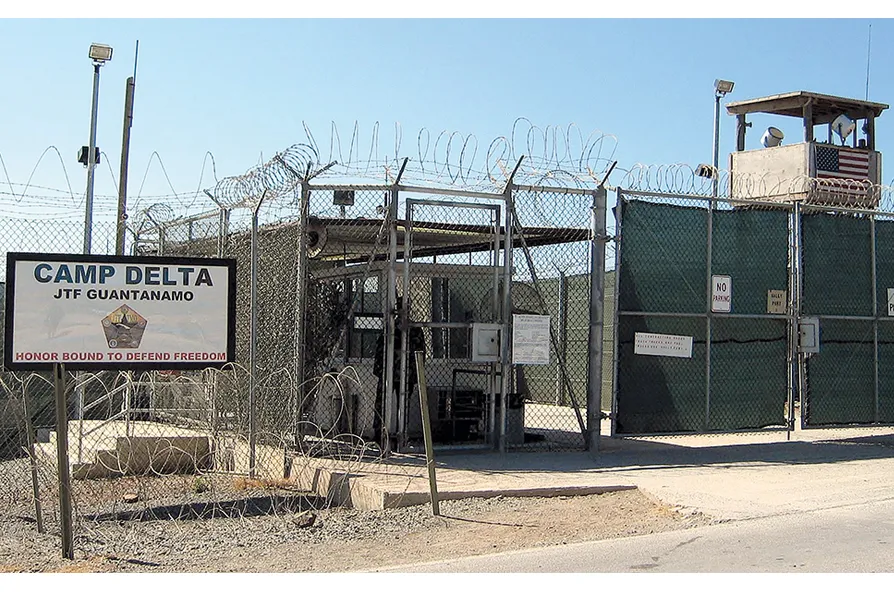
A related example is Cuba, which is forced to tolerate a US military base and torture centre in Guantanamo, has had the indignity of having the US secretary of war and the commander of the US Southern Command visit, and has introduced pro-capitalist economic reforms.
Those reforms should be understood as “strategic adaptation,” according to an article in Black Agenda Report. While not welcoming these accommodations to the US siege, international solidarity activists still unite with and defend Cuba.
Considering the alternatives. For example, the US and its allies waged wars of aggression and deposed Iraq’s Saddam Hussein in 2003, Libya’s Muammar Gadaffi in 2011, and Syria’s Bashar al-Assad in 2024. There were left critiques of these leaders but, in all instances, there were no viable left alternatives to them; nor were conditions for their people improved by their removal. There is no “third way” in a war.
This suggests that the relevant question is not whether a preferable government can be imagined, but what forces actually stand to replace the existing government. For Venezuela, if not the Rodriguez government, what is the actual alternative?
After 26 years of siege and domestic polarisation, the Venezuelan people yearn for peace, reconciliation, and reconstruction — more so than ever after the devastating twin earthquakes on June 24. For those of us abroad, we can only imagine the difficulties of life under sanctions from the US and its allies.
Developments in Venezuela reflect a broader shift in Latin America under the “Donroe Doctrine,” where Trump’s reactionary wave has flooded the former “pink tide.” Venezuela should therefore be understood in the context of this region-wide sea change.
Not since Maduro’s election in 2024 has a leftist won in the region. We have witnessed a succession of far-rightists replace centre-left presidents in Latin America. Last year, Nasry Asfura replaced Xiomara Castro in Honduras, Jose Antonio Kast replaced Gabriel Boric in Chile, and Rodrigo Paz replaced Luis Arce in Bolivia. This year, Abelardo de la Espriella replaced Gustavo Petro in Colombia. Coming up in October is the Brazilian presidential election pitting Flavio Bolsonaro against incumbent Luiz Inacio Lula da Silva, with Trump actively interfering as he did in the other contests.
In all cases, the incumbents faced considerable criticism from the left. Yet whatever their shortcomings, the alternatives have been, or would be, less desirable.
Conclusion
Venezuela is not an isolated case. How progressives weigh criticism against solidarity, assess governments operating under US pressure, and consider the actual alternatives is increasingly relevant throughout the region.
Remarkably, given the intense pressure from the imperialists, the core Chavista leadership, the Socialist Party (PSUV), the civil-military union, the high courts and legislature, and the communes and grassroots organisations have all remained unified. Preserving that unity is particularly important; Bolivia’s experience of left fragmentation offers a cautionary example.
Between the Rubio State Department and corporate media, on one hand, and rejection of the Rodriguez government by some on the left, on the other, there is a vast intermediate terrain that needs to have a voice.
Whatever disagreements progressives may have with decisions made in Caracas, those decisions belong ultimately to Venezuelans. Our first responsibility is not to prescribe Venezuela’s political course, but to challenge the coercive power our own government exercises over it. The Venezuelans have not told us how to make our revolution; we should do the same for them.
Our tasks are to educate the broader public about what is happening in Venezuela under extreme duress and to take collective action against the imperialist siege. The Bolivarian revolution has not failed. But the project urgently requires relief.
Roger D Harris is a founder of the Venezuela Solidarity Network and is active with the Task Force on the Americas and the SanctionsKill! campaign.

Similar stories
FRANCISCO DOMINGUEZ introduces the background to a conference on defending Latin America’s sovereignty
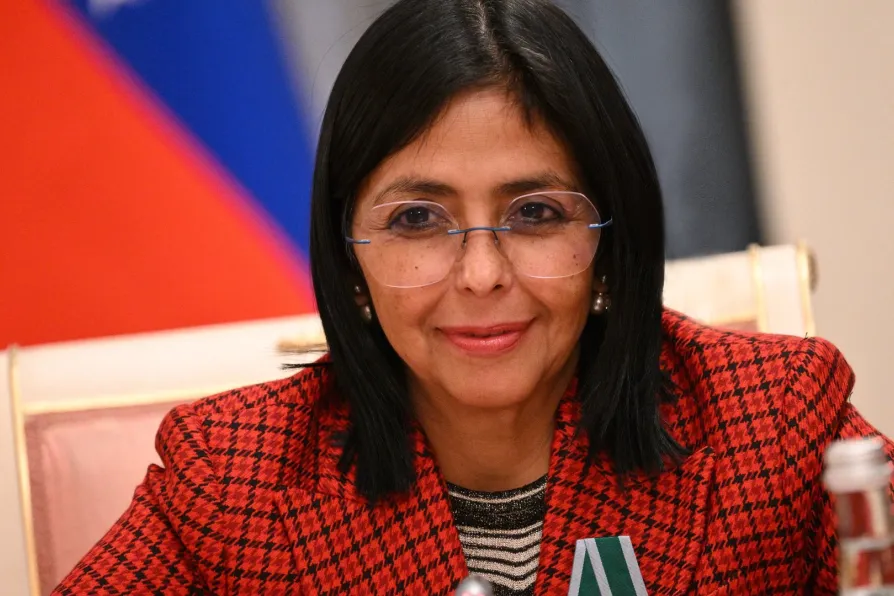
Concessions to Washington by the post-Maduro leadership in Caracas are designed to preserve the core of the Bolivarian Revolution not betray it, argue Roger D Harris, Francisco Dominguez and Mara Paez Victor. How the solidarity movement responds is critical
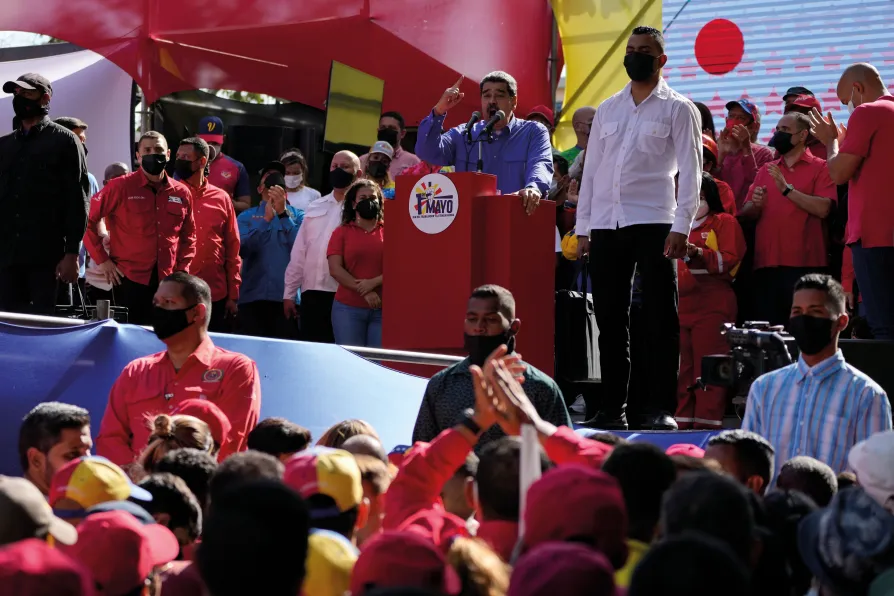
Sinn Fein’s CHRIS HAZZARD MP addressed the closing rally at Latin America 2026 earlier this month with a reminder that the struggle for national dignity and popular power is no longer regional or symbolic — it is the front line of a global realignment led by organised peoples who refuse to bow to empire. The Star republishes his speech here
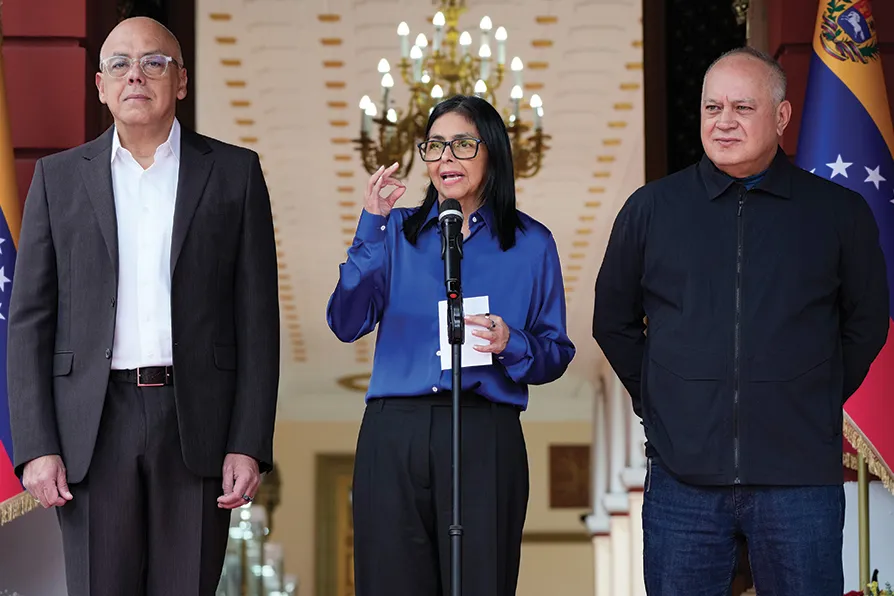
International solidarity can ensure that Trump and his machine cannot prevail without a level of political and economic cost that he will not want to pay, argues CLAUDIA WEBBE