DOUG NICHOLLS says the parasitic finance markets must be challenged or another British government could be toppled


 Latest editorial

The collapse of the dollar standard is an opportunity – if we have the courage to take it
US financial instability is exposing the limits of a dollar-dominated global economy — and giving the Global South a historic chance to build an alternative, says MURAD QURESHI
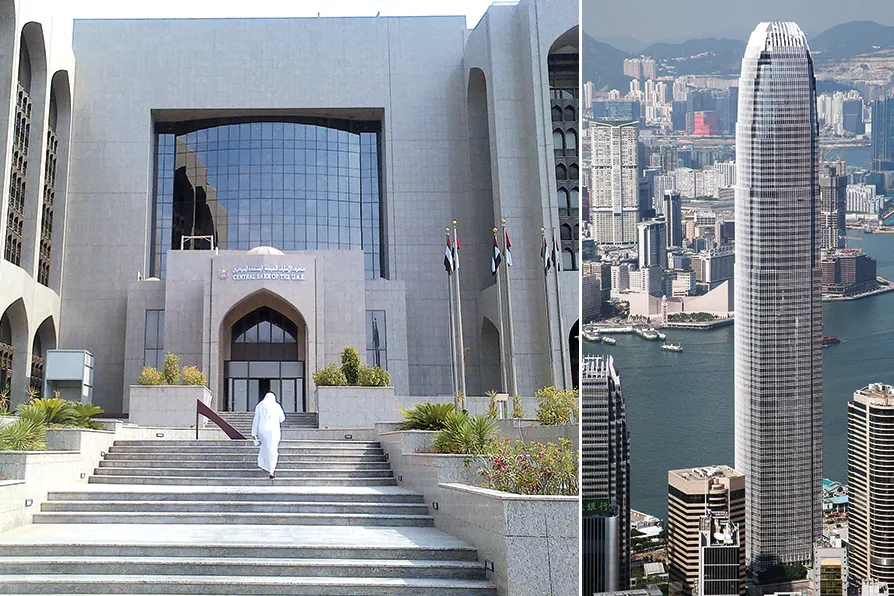 mBRIDGE MOVERS AND SHAKERS: (L to R) The Central Bank of the United Arab Emirates HQ in Abu Dhabi; the International Finance Centre in Central, Hong Kong / Pics (L to R) : Achilver/CC, Exploringlife/CC
The late country singer’s Imagination Library has put hundreds of millions of books into children’s hands. We should build on that legacy by defending the libraries at the heart of our communities, says BRENDA AITCHISON
Deprivation is a fundamental factor in criminal behaviour that must be addressed but, KENNY MacASKILL argues, there needs to a major rethink in sentencing to tackle overcrowding
MML director MEIRIAN JUMP outlines the recently refreshed library’s busy autumn schedule that ranges from book sales, archival exploration, community work with online education and the ever popular site tours
Some thinkers and authors on the right are openly discussing the possibility that the historically successful party of the British ruling class may be exhausted
Class struggle is the motor of history but the direction and detail of change at any time and place is the outcome of many factors, suggests the Marx Memorial Library and Workers’ School
TONY BURKE surveys the shifting political landscape and the challenges Labour needs to address if it is to prevail in the 2028 federal elections





FOR DECADES, the global economy has operated under a single, unwritten mandate: when Wall Street sneezes, the rest of the world catches pneumonia.
Michael Burke (“If the US is catching a financial cold, we should all worry,” August 28) correctly highlights the profound danger of this arrangement.
With US federal debt surging past £30 trillion, ballooning current account deficits, and erratic trade policy driving global market instability, the fragile foundations of US economic dominance are laying bare.
Yet focusing exclusively on the fear of financial contagion misses the larger historical picture.
Crisis and realignment are two sides of the same coin. The systemic volatility emanating from Washington and New York does not merely signal danger; it signals the definitive end of an unequal economic era.
For the Global South and nations long constrained by the Washington Consensus, this instability presents a historic opening to dismantle a flawed monetary order and build a truly multipolar global economy.
De-dollarisation as financial sovereignty
At the heart of US structural power lies the dollar’s role as the world’s reserve currency. This status allowed the US to export its inflation, print debt with relative impunity and use global financial infrastructure as an instrument of unilateral geopolitical pressure.
That leverage is rapidly diminishing. The mounting volatility of US treasuries and the aggressive weaponisation of dollar-denominated financial networks have triggered a quiet revolution among global central banks.
The shift away from dollar reserves is no longer an ideological stance — it is a matter of basic risk management.
By expanding local-currency trade settlements, building alternative payment systems like Multiple Central Bank Digital Currency Bridge (mBridge) and increasing physical gold reserves, developing economies are asserting financial sovereignty.
The opportunity here is profound: a multipolar currency system insulates sovereign nations from the domestic mismanagement of US policy-makers and keeps trade flows stable, even when Western markets falter.
Rebuilding trade along South-South lines
For half a century, the global economic architecture pushed developing nations into a subordinate role: exporting raw materials and low-cost labour to Western markets while taking on high-interest dollar debt to import manufactured goods.
As protectionism and tariffs fragment Western trade corridors, new networks are rushing to fill the void. Intra-Global South trade is expanding at its fastest pace in decades.
Emerging economies are moving up the value chain, processing their own raw materials, and trading directly with regional partners.
This shift moves global commerce away from a hub-and-spoke model — where all trade routes inevitably flowed through Western financial hubs — toward a decentralised web of regional trade agreements.
By deepening economic ties across Africa, Latin America and Asia, nations can build self-sustaining economic ecosystems that do not rely on the health of the US consumer.
Democratising global financial institutions
When financial shocks hit developing nations in the past, their only recourse was to turn to the International Monetary Fund or the World Bank — institutions historically dominated by US and European interests.
Assistance almost always came attached to strict austerity measures, privatisation mandates and structural adjustments that crippled public services.
The weakening of Western financial hegemony creates space for institutional alternative building. Multilateral bodies like the New Development Bank (NDB) and regional liquidity pools like the Chiang Mai Initiative demonstrate that development finance can exist without predatory ideological conditions.
The rise of competing sources of capital forces legacy institutions to adapt or face irrelevance.
For the first time in modern history, developing nations have alternative options for infrastructure funding, climate adaptation finance, and emergency liquidity.
Seizing the moment
Transitions between global economic orders are rarely smooth. The immediate fallout of US economic turbulence will bring challenges — higher borrowing costs, market volatility and global uncertainty.
But enduring the short-term pain of a breaking system is far preferable to remaining trapped in a permanent cycle of dependency.
The current financial instability is not an unfortunate anomaly to be patched over with temporary bailouts; it is proof of a structural dead end. The task for forward-thinking governments, economists and policy-makers is not to help repair the old system, but to
construct the alternative.
By accelerating de-dollarisation, investing in regional trade infrastructure, and demanding a democratic redesign of international finance, the world can turn an impending financial crisis into a transformational leap forward. The era of single-nation economic hegemony is ending.
What replaces it is up to us to build.
Murad Qureshi is a former member of the London Assembly.

Similar stories
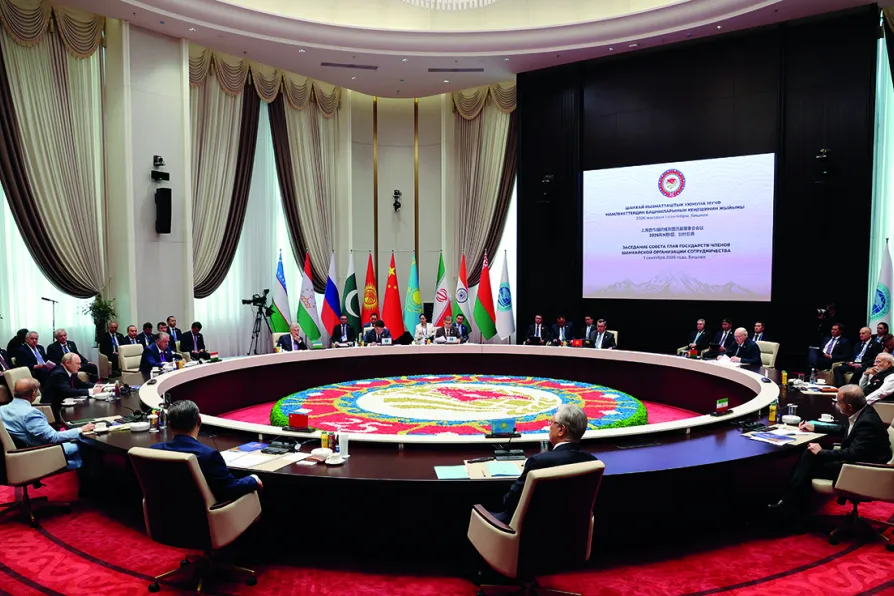
The 25th anniversary meeting of the Shanghai Co-operation Organisation in the Kyrgyz capital may offer a glimmer of hope that international relations do not need to be defined by endless confrontation, writes KENNY COYLE
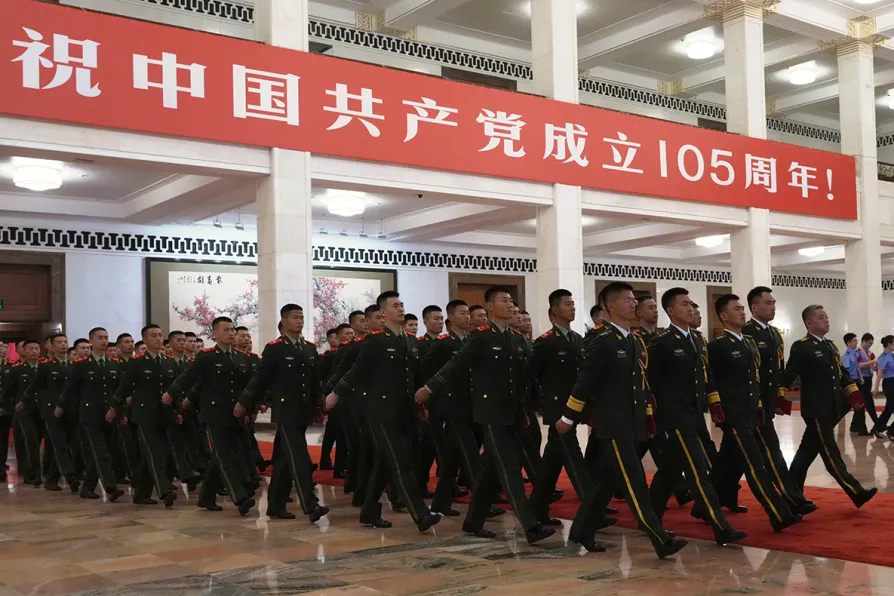
Marking milestones in the histories of China and the United States, this week offers a chance to examine two very different visions of the international order, says CARLOS MARTINEZ

Friedrich Merz’s call for a new Plaza Accord ignores how Washington’s 1985 currency ambush destroyed Japan without fixing US deficits — China, a sovereign socialist state with 1.4 billion consumers, cannot be bullied the same way, writes CARLOS MARTINEZ
As the dollar falters and US power turns predatory, Britain and Europe must abandon transatlantic illusions and build a collectivist alternative before the system implodes, writes ALAN SIMPSON