
ROB WARZYNIAK wades knee deep through a pile of ‘dead canaries’ of Trumpist policies which exacerbated the horrors of US capitalism domestically


What drives history?
Class struggle is the motor of history but the direction and detail of change at any time and place is the outcome of many factors, suggests the Marx Memorial Library and Workers’ School
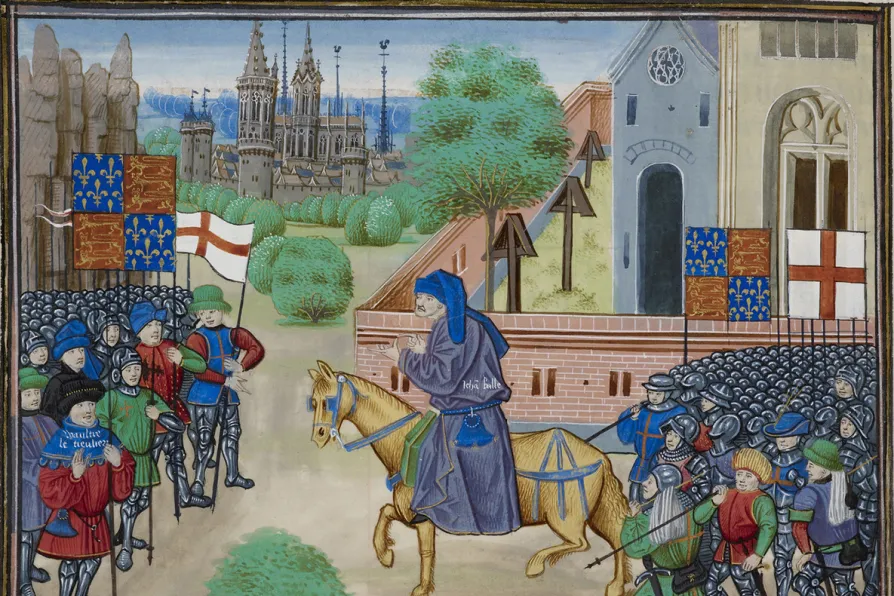
 The Peasants' Revolt - Froissart, Chroniques de France et d'Angleterre, Book II. Public Domain, from the British Library's collections.

Without evidence or Nato consultations Berlin’s answer to the Leipzig incident is a rupture of relations. SEVIM DAGDELEN examines why
FRANCISCO DOMINGUEZ introduces the background to a conference on defending Latin America’s sovereignty
The glacier collapse in Nepal is yet another warning that a warming planet is making Himalayan disasters more frequent and destructive – but the countries facing the greatest risks are often those least responsible, says LI YANG
Nick Blair is set to benefit from a hugely lucrative contract to ‘virtually’ train the British army for its next war. Like father, like son, writes SOLOMON HUGHES
Even when tragedy strikes, Western media cannot resist the opportunity to turn it into a sordid propaganda opportunity, as the Nepal-China border tragedy shows, writes CARLOS MARTINEZ
Trade unions should be at the heart of the anti-racist push for reparations for the historic legacy and continuing impact of slavery, writes ROGER McKENZIE





KARL Marx and Friedrich Engels famously declared in their 1848 pamphlet, the Communist Manifesto that “the history of all hitherto existing society is the history of class struggles.”
Class struggle — the conflict between those who control the “means of production” and those who actually do the producing (under capitalism, between “owners” and “earners”) is an ever-present and inescapable feature of all (class) societies.
Human society, unlike that of all other animal species, has changed constantly — from the Neolithic, through the industrial, to today’s information revolutions, and from the life of our ancestors to our own today. Although external or “contingent” factors are often important, the ultimate drivers of change are principally internal.
While the “forces of production” (skills, knowledge, technology) are dynamic, the “relations of production” (who owns and controls the means whereby production takes place — tools, machinery, raw materials) are relatively conservative. Change is resisted, because it threatens the self-interest of those who benefit from the status quo.
In pre-capitalist societies that conflict of interests between slaves and their owners, between feudal serfs and lords was sometimes seen as God-given, as the natural order of things (although sometimes it erupted into physical confrontation).
Within capitalism that conflict is obscured by the supposed supremacy of a “free market.” The worker is “free” to sell her labour power (or starve); the capitalist is “free” to buy it (or not).
That’s why they saw the primary task of communists then, as it remains today, to help transform the working class — a “class in itself,” a simple descriptive category — into a “class for itself’; a mobilised class that could consciously make history
Transitions from one mode of production — slavery, feudalism, capitalism, socialism — to another are by no means inevitable or automatic. Neither are they linear. They can coexist and they can go backwards. But to all of them, class struggle is central. Other, contingent factors may influence the timing, location or trajectory of change but all are linked, sometimes in complex ways, to how society functions.
Environmental change, geological events, resource shortages, war and a host of other factors can be important. The depletion of timber reserves was an important driver of the transition to fossil fuels for the smelting of iron and to generate power, first for static engines and subsequently of locomotives, during Britain’s first industrial revolution.
But, as with current debates around automation and artificial intelligence, a Marxist approach rejects technological determinism. These are not the fundamental drivers of change (in this case, capital accumulation and profit are).
Climate change has been linked to the downfall of past societies, including Rome, as well as empires in China, India, and Mesoamerica. Today, extreme weather events — drought, flood and storm — displace millions annually; forced migration is used by the right to divert attention from real problems arising from an accelerating crisis of capitalism.
Wars, disease and epidemics can also trigger events. The Black Death in the mid-14th century killed at least a third of England’s population. This created a severe labour shortage and empowered surviving peasants to challenge authority. Combined with heavy taxes this directly contributed to the Peasants’ Revolt of 1381 against feudalism.
Analogous considerations apply to the causes and consequences of the Covid pandemic and more recent outbreaks of disease.
Popular presentations of history tend to focus either on the spread of ideas and institutions or on the actions of individuals. The former was most significantly articulated by Georg Wilhelm Friedrich Hegel, for whom ideas and consciousness existed independently of (and were superior to) the material world.
Another approach sees history as the onward march of civilisation. Particularly after the collapse of the Soviet Union, western “liberal democracy” and “free-market capitalism” were presented as “The End of History”; the culmination of human social development.
For Marxists, ideas, values and concepts, together with laws, politics, culture, religion, family, media and education are part of the superstructure that arises from, is shaped by and continually interacts with the social and economic base, from which they have only a partial autonomy. That is part of the materialist (as opposed to an idealist) view of history.
An alternative approach to history sees the actions of individuals — kings (and queens), religious leaders (rather than religion as such), politicians, military and business leaders, financiers, scientists, inventors and other important figures as central drivers of change. As an earlier Q&A — on the role of the individual in history — argued, these can always be important, sometimes critical to the specific trajectory of events and historical change. But they always have a context and a key element of that context is how goods and services — the essentials of life — are produced; who does the producing and who controls and benefits from the way things are.
Other struggles for women’s equality, emphasising women’s dual burden of production and reproduction; against the oppression of minority and ethnic communities; for peace; for environmental sustainability and justice are important. These cannot be reduced to class, but at the same time should not be divorced from class.
At any given place and time, the direction of change and the outcomes that result come from a combination of many factors, all of which interact and which have to be understood in their context.
But unlike postmodern approaches to history (for which history is a web of interacting narratives, none of which are primary) a Marxist, materialist approach understands that the economic base: the forces and relations of production; how the essentials of life are produced, who owns and controls this, and the class struggles that result — are fundamental.
Marx wrote that humans, collectively and individually “make their own history, but they do not make it as they please… but under circumstances existing already, given and transmitted from the past.”
And change is not automatic; no motor will get far without a driver. As the chair of the Marx Memorial Library and Workers’ School declares: “Class struggle is the motor, but only class consciousness can lead to revolutionary outcomes.”
One of the tasks of Marxists is to help the working class act as a class for itself — to make its own history.
Three important texts, Making Our Own History: a User’s Guide to Marx’s Historical Materialism by Jonathan White, What History Is For — a collection of essays celebrating the work of John Foster, one of today’s leading Marxist historians, and Marx 200: The Significance of Marxism in the 21st Century are available from www.marx-memorial-library.org.uk where you can find details of MML’s rich autumn online programme including an “Introducing Marx and Marxism” taster session (September 22) and an eight-week Introduction to Marxism course. This answer was collectively edited by last year’s students.

Similar stories

Humans are part of the ‘animal kingdom’ – and of nature in general – but also distinct from it and labour (work) is part of what makes us unique, declared Engels. His insights 150 years ago into how our species came to be and how we differ from the rest of nature, are as important today as they were then, says the MARX MEMORIAL LIBRARY

Dignity is important to all humans, argues the Marx Memorial Library and Workers’ School, but it does not come about automatically. In a less than perfect world, dignity can accompany suffering, but the collective dignity of working people is achieved through acting together to change the world.

Nature as well as society works dialectically, asserts the Marx Memorial Library and Workers’ School
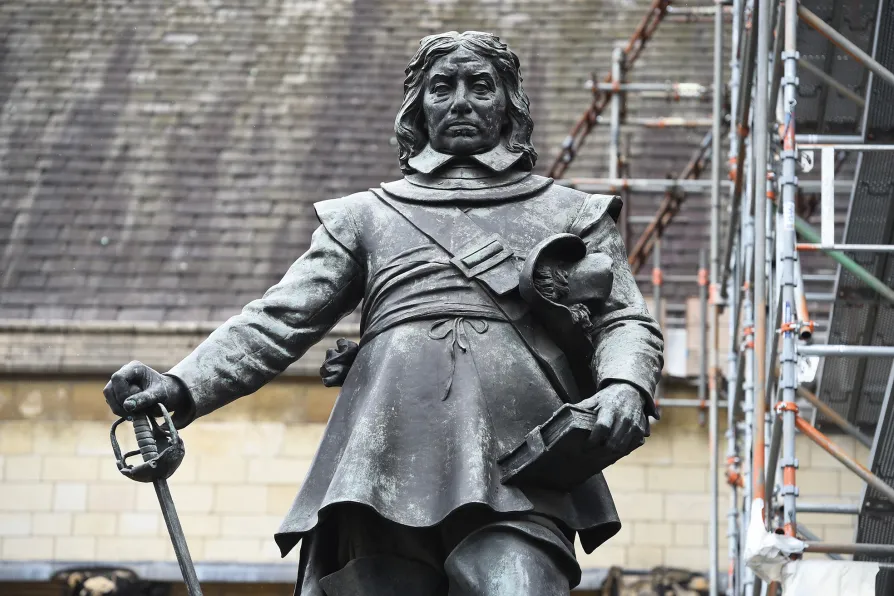
The selection, analysis and interpretation of historical ‘facts’ always takes place within a paradigm, a model of how the world works. That’s why history is always a battleground, declares the Marx Memorial Library