
The UK Prime Minister may have the regal touch in northern England, but he’s been wrong-footed on the constitutional challenges posed by the Celtic Alliance of first ministers from Scotland, Wales and Northern Ireland, argues KENNY MacASKILL

Can history be neutral? Do historical ‘facts’ exist independently of their interpretation?
The selection, analysis and interpretation of historical ‘facts’ always takes place within a paradigm, a model of how the world works. That’s why history is always a battleground, declares the Marx Memorial Library
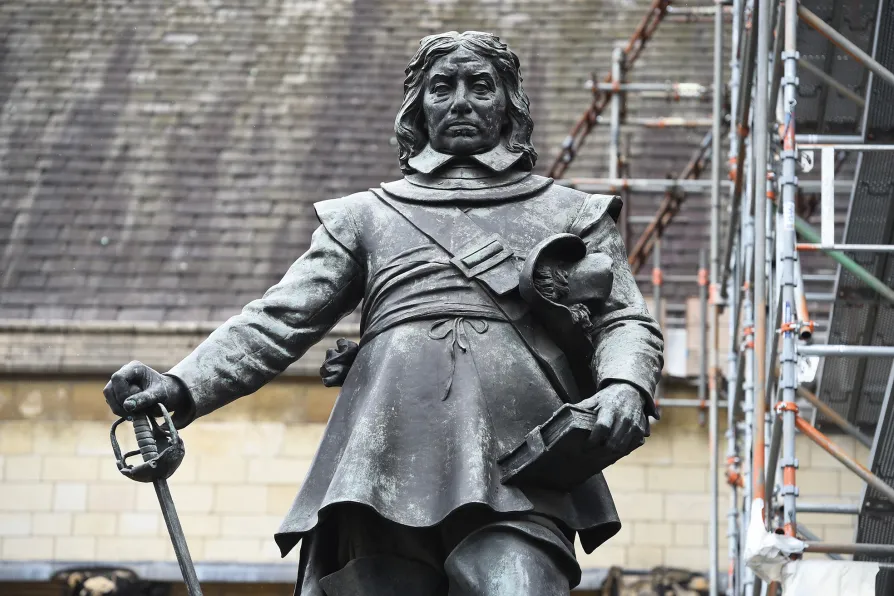
 A statue of Oliver Cromwell in Parliament Square, London
NEIRLAY ANDRADE, a member of the Communist Party of Venezuela’s political committee, outlines her party’s position on the crisis facing the country
A look at Taylor Wimpey’s accounts shows why Labour’s market-led housing strategy won’t deliver more, cheaper homes, as promised, says SOLOMON HUGHES
DAVID HORSLEY remembers the remarkable life and death of US black revolutionary George Jackson, whose politically passionate prison letters were published as Soledad Brother
Cuban trade union federation CTC leader OSNAY MIGUEL COLINA speaks to Ben Chacko about life and work under a crippling US siege
A part of the British empire’s network of slavery, today the Caribbean island of Nevis faces a new form of exploitation in the form of crypto-colonialism, CLAUDIA WEBBE writes
Challenges from the unscrupulous misuse of AI to steal actors’ voice and physical likenesses is being met with a firm union response, writes LYNDA ROOKE





PART of the answer to this depends on what you mean by “history” and “historical facts.” Does a tree falling in the forest make a sound if nobody is there to hear it? Is history simply “the past” irrespective of what we know about it? If that’s the case, then “what happened, happened” irrespective of its later interpretation.
But history is not just “the past”; a list of dates. It’s what we think we know (more usually what other people tell us) about the past.
That then raises the questions of which facts, who decides and how are the facts distributed, consumed? What happens to them afterwards?
The selection of which “facts” to include in an historical narrative is inevitably a matter of choice and the interpretation that is put upon them depends on the framework within which they are analysed. If that’s correct then all historical facts are open to interpretation; their analysis is always retrospective.
For example the causes of the first world war all existed before 1914, but they didn’t exist as “historical events” until the outbreak of the war. Marx himself used the “Blue Books” in the British Library for statistical data (today he could have done his research from home on the internet) and pointed out that these historical “facts” included “fake news” (for example, regarding trade in steel between Britain and Belgium).
It’s said that history is usually “written by the victors.” That’s often true but we need to be careful; that’s what fascists (and other deniers) today say about the Holocaust.
Importantly, history is not just about static “facts” (however defined) — “what existed” at any moment in time. It’s also about dynamics, how and why things changed (and whether they might have turned out differently) and they can only be properly analysed in retrospect.
Marx himself declared that “human anatomy is a key to the anatomy of the ape. The potential of development in the lower species of animals can only be understood when the higher forms themselves are already known. The bourgeois economy thus supplies the key to the ancient, etc.”
We know that in terms of evolution, a variety of hominids have existed of which only one — us — remain, and we now dominate the Earth and threaten its, and our own, future.
Issues of selection and interpretation are critical: what historians perceive as important, worth researching, noting, depends on their perspective. Kings, queens, religion, wars, but little about movements “from below,” about class and class struggle until Marxist historians including Rodney Hilton, Dona Torr, Christopher Hill, Geoffrey de Ste Croix, AL Morton, Dorothy and Edward Thompson, Eric Hobsbawm, John Saville (to name but a few British ones) got in on the game.
When you go beyond events, dates and (famous) people to explanations, the “facts” always depend on your perspective.
Even today the English civil war is often taught as simply a battle of ideas — between an absolute monarchy and incipient parliamentary “democracy.”
Oliver Cromwell’s statue stands today outside the House of Commons in Westminster — a hero. In Ireland he is despised as a cruel oppressor. The “fact” that this “English revolution” represented a rising new class of property owners (and was pivotal in the transition from feudalism to capitalism in Britain) receives less attention. Movements “from below” — the Levellers, the Diggers, the Putney Debates, are often largely ignored or treated as an aberration.
Of course, there are also differences and debates also among Marxist historians. What they have in common, though, is a “materialist” approach, in which issues relating to production and consumption — how people “live” — are central.
Overall most Marxists would argue that beyond the basics — who, what, where and when — the answer to both parts of the question is “no.” Historical “facts” are always contextualised by some kind of framework, even if this is limited to the selection of what “facts” are significant.
Beyond this, the key elements of historical research — the “why’s” — the paradigms or mental models of how society functions are always present, even if unconsciously. In fact this is probably the most significant similarity between “history” (as a social science) and the natural sciences.
As illustrated by Soviet physicist-historian Boris Hessen’s account of Newton’s “discovery” of gravity (and some pretty fundamental laws of physics) and by Marx’s own comments about Darwin’s theory of evolution, we need to acknowledge the historical context of all knowledge — in Newton’s case the need for better navigational and military aids.
As to the first part of this question, we should strive for objectivity, but having established our “facts” we should analyse their significance, always being aware that we are doing so within a paradigm and always test our interpretation against other explanations.
At the same time we need to confront “relativism” — the notion that “all history is subjective, there are just versions, and no-one version is more legitimate than any other.”
When asked if he thought that the French Revolution had been a good thing, Zhou Enlai (the first premier of the People’s Republic of China, probably confusing it with the Paris Commune or the 1968 unrest in Paris) is reputed to have answered that it was “too early to tell.”
Historian EH Carr, the author of What is History? declared that “Objectivity does not exist.” He advised readers to “study the historian before you begin to study the facts.” “The facts,” he declared, “are like fish on the fishmonger’s slab. The historian collects them, takes them home, and cooks and serves them.”
The selection of which facts to include in an historical narrative is inevitably a matter of choice and the interpretation that is put upon them depends on the framework within which they are analysed.
History (as what we know or say about the past) is always contested, always a battleground, and it is a critical area in the struggle for socialism.
What is important is to keep questioning, keep testing that paradigm against reality as far as we can ascertain it. In addition to all the above, there’s also “historiography” — the history of history, how accounts of “what happened and why” have changed over time.
Part of the mission of the Marx Memorial Library is to keep history “alive” — especially history “from below.”
Its collections and ongoing research include (to take just a few examples) Chartism, the Tolpuddle Martyrs, colonialism and anti-colonial struggles, the Spanish civil war and the International Brigades, anti-racism, the printworkers’ industrial action of 1986, the fight for women’s liberation — and much, much more.
This answer was collectively edited by students on the Marx Memorial Library and Workers’ School online course “Introduction to Marxism.” Other courses include “Marxism and History: Introducing Historical Materialism,” taught by Jonathan White the author of Making Our Own History: a User’s Guide to Marx’s Historical Materialism, And recently published is What History Is For, celebrating the work of John Foster, one of today’s leading Marxist historians. Both publications are available from www.marx-memorial-library.org.uk where you can find details of a rich programme of online and onsite events including “Women, Work and Trade Unions” (starts tomorrow, February 3), the 1933-43 Artists International Association movement against fascism on February 12 and an examination of the 1918 equal pay strike on February 26.

Similar stories

MML director MEIRIAN JUMP outlines the recently refreshed library’s busy autumn schedule that ranges from book sales, archival exploration, community work with online education and the ever popular site tours
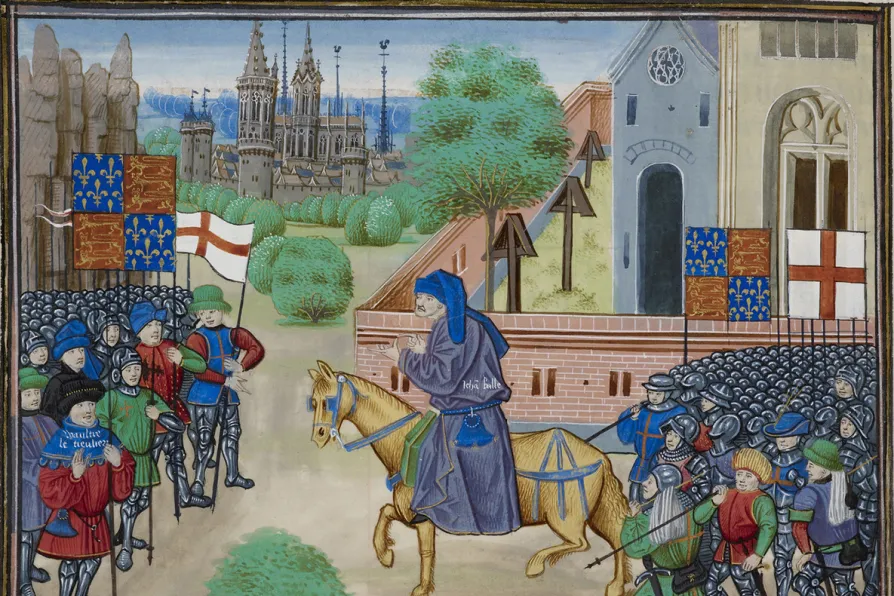
Class struggle is the motor of history but the direction and detail of change at any time and place is the outcome of many factors, suggests the Marx Memorial Library and Workers’ School
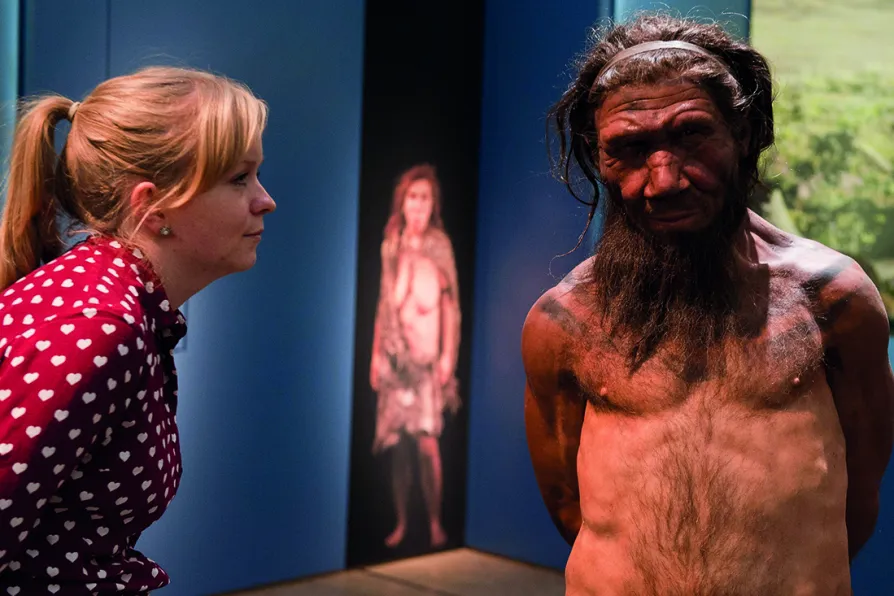
Humans are part of the ‘animal kingdom’ – and of nature in general – but also distinct from it and labour (work) is part of what makes us unique, declared Engels. His insights 150 years ago into how our species came to be and how we differ from the rest of nature, are as important today as they were then, says the MARX MEMORIAL LIBRARY

Nature as well as society works dialectically, asserts the Marx Memorial Library and Workers’ School