MAYER WAKEFIELD is entertained but let down by an audacious production that, sadly, doesn't ring true


 Latest editorial
Is this everything?
JOHN GREEN’s palate is tickled by useful information leavened by amusing and unusual anecdotes, incidental gossip and scare stories
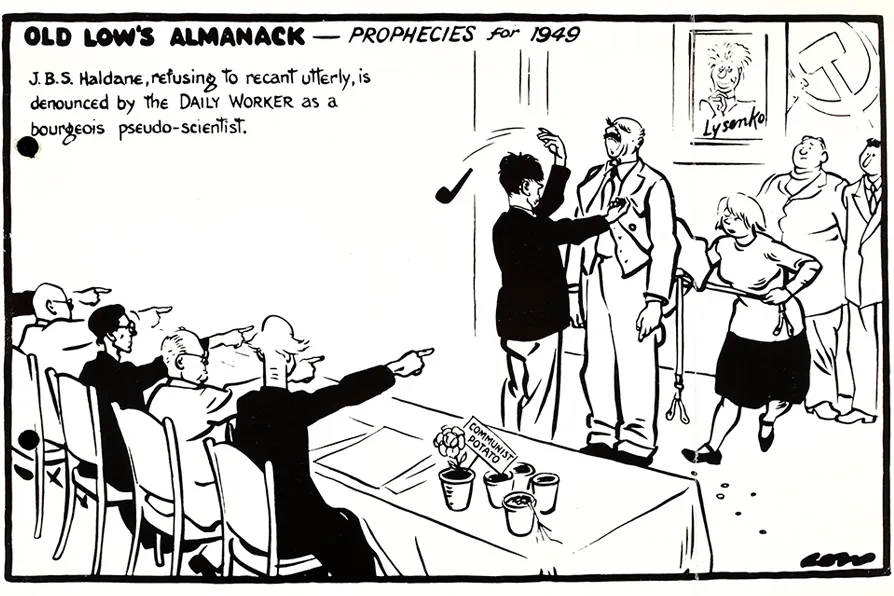 JBS Haldane introduced many to science through his columns in the Daily Worker and, a colourful figure in 20th century genetics, was renouned as much for his political as by his scientific opinions [Pic: David Low/Wellcome Collection/CC]

MARY CONWAY is disappointed by drama that, despite accomplished performances, cannot overcome an unfocused script
New releases from Sam Carter, Spell Songs and Les Thomas
KEN COCKBURN traces the one original language – that of the Yamnaya pastoral nomads – from which all European and Indian languages derive
PAUL DONOVAN is fascinated by the debunking of the iconic British war hero
ALEX HALL recommends a searing panorama of our global predicament





A Short History of Nearly Everything (fully revised and updated)
Bill Bryson, Doubleday, £25
Image
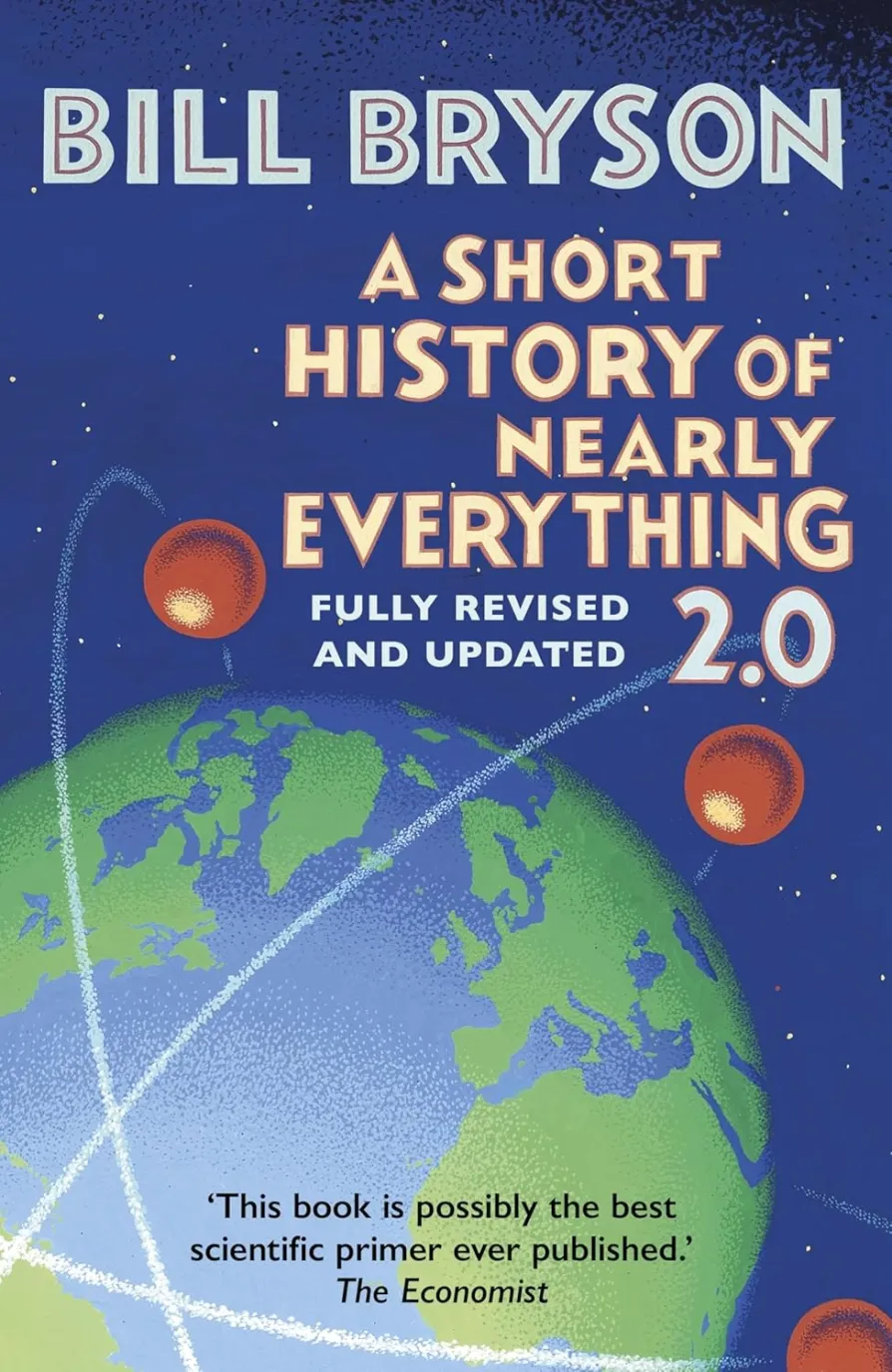
FIRST published in 2003, Bryson’s popular science book became an instant bestseller. This revised version incorporates the latest scientific knowledge from a number of fields. Chapters 28 and 29, for instance, have been largely rewritten to reflect the advances made in DNA research and the complexity of human origins. His book is packed full of astounding and revelatory facts and he explains things we’ve never fully understood and tells us things we have never even reflected about.
Bryson is, as anyone who has read any of his previous books will know, an engaging writer of immense curiosity, and a wry sense of humour to leaven the density of the scientific dough. He also has that enviable ability to explain complex ideas in ways that most readers will grasp, often utilising metaphors or comparisons that enable us to comprehend the seemingly incomprehensible.
The first half of the book takes us on a historical journey through the discoveries that have helped us understand how our universe began, how planet Earth came to be, and how life evolved. He describes the many key moments of scientific advance in an easily digestible form. These include the daredevil experiments that seem to confirm the “mad boffin” cliche that the Marxist scientist JBS Haldane carried out during the war years, often on himself and colleagues, in order to help make working conditions for submariners and undersea divers safer.
All scientific knowledge is based on the ideas and discoveries of those adventurous, researchers who went before. Although many seminal ideas like Newton’s explanation of gravity, Darwin’s theory of evolution or Einstein’s theory of relativity are associated with those big names, many scientific breakthroughs have been made and phenomena explained by others, who history has been marginalised and often forgotten. Bryson here gives some of these the credit mainstream history has denied them.
As most readers will know, even trying to achieve a basic comprehension of the concepts underlying the creation of the universe and life on Earth are often almost impossible for the layperson to come to grips with. Even at the atomic and sub-atomic levels, the mathematics involved are beyond the imagination of most of us. Can you for instance conceive of the dot on the top of this ‘i’ holding 6 x 10 million protons? Or that our universe is roughly 13.77 billion years old?
While we have accumulated a huge amount of knowledge about our universe, we still know relatively little about the make-up of our own planet. “It is fairly remarkable,” Bryson notes, “that Ford has been building cars and Nobel committees awarding prizes for longer than we have known that the earth has a core.”
And he quotes Richard Feynman, who adds: “Strange as it may seem, we understand the distribution of matter in the interior of the sun far better than we understand the interior of the Earth.”
It makes one realise that despite the enormous reservoir of knowledge that humanity has amassed during its short sojourn on this planet, in some areas we are still stumbling around in the kindergarten.
Bryson is a master in combining the communication of useful information with amusing or unusual anecdotes, incidental gossip and scare stories, to tickle the palate of those who might find a straightforward scientific tome rather dry.

Similar stories
GORDON PARSONS enjoys Kant’s ‘mind-boggling’ theory of human reality: that we create the reality we experience
Before Greek myths reached the multiplex, they were weapons of political satire. CALLUM SMITH explores the evidence

The selection, analysis and interpretation of historical ‘facts’ always takes place within a paradigm, a model of how the world works. That’s why history is always a battleground, declares the Marx Memorial Library
Star cartoonist MALC MCGOOKIN finds lessons for today in the punch, and the economy of line, of an extraordinary generation of illustrators