TUC president and POA leader STEVE GILLAN speaks to Ben Chacko on the eve of Congress 2026


 Latest editorial
Meet the new boss, same as the old boss
The new Scottish Parliament looks set to continue a cycle of managerial tinkering while public services face the axe, writes STEPHEN LOW
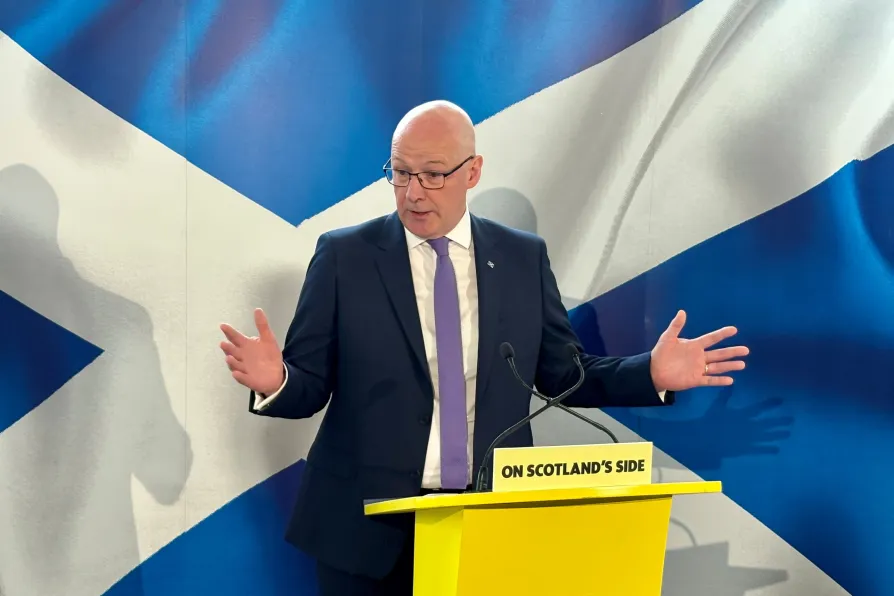 First Minister and SNP leader John Swinney speaking during a press conference at Grassmarket Apex Hotel, Edinburgh, following the 2026 Holyrood elections, May 9, 2026

DOUG NICHOLLS welcomes a turning point at this year’s Congress, where many motions call for a co-ordinated plan to revive British industry, a perspective outlined in his new book
HOPE VIRGO of campaign Dump the Scales warns MPs voting today they should be alert to the threat legalised assisted death poses to people with eating disorders
The Together Alliance is hosting two summits, North and South, to build power and plan action against the scourge of racism peddled by the right. DANIEL KEBEDE urges mass participation
The drift toward militarisation in Europe is not inevitable, left-wing and peace movements can preserve sovereignty and prevent war, says DÁIRE HUGHES MP
Whatever differences exist among international sympathisers of the Bolivarian revolution about its current trajectory, they should unite against the imperialist power that is the source of an enforced retreat, argues ROGER D HARRIS
Trade unions need to step up and force a turn in the policies of the labour movement to effectively confront the far-right threat, argues NICK WRIGHT





AS FAR as I’m aware, no-one has called the SNP “Scotland’s natural party of government,” yet. The day can’t be far off though. John Swinney will moving back into Bute House as his party moves into its third decade in power.
This despite failures in health, in education, ferries, the environment, a string of unworkable laws and squandering huge sums of money on unwinnable legal battles. In addition their intention is to take billions out of public spending over the next three years, with targets to cut at least 15,000 public service jobs. It is quite the achievement.
On Thursday the SNP won a record number of constituency seats, but failed to obtain an outright majority. This seems unlikely to bother them terribly much. With 58 seats out of 129, to pass any measure at all they only need the support of one other party.
Circumstances where this isn’t possible would require the 17 Labour, 17 Reform, 15 Green, 12 Conservative and 10 Lib Dem members to be of a single mind. This won’t happen often. Possibly ever.
Despite their commanding lead over a splintering opposition, the night didn’t go entirely as the SNP would wish. They are six seats down on their 2021 total — dropping 414,127 votes (9.5 per cent) in the constituencies and 665,255 votes (13.2 per cent) on the list.
The SNP campaign glossed over the austerity plans the Scottish government has published in its Medium Term Financial Strategy, and Fiscal Sustainability Delivery Plan. The plans to centralise, automate and outsource public services as part of their “reform strategy” were glossed over as making services “excellent” and “agile.”
Instead the campaign majored on gimmicks which seemed either overhyped, ill-thought-through or both.
Private renters are to be given first refusal if the landlord sells the property. They will be allowed to buy the property at “a fair market price” — how this works in a system where properties are sold in an “offers over” system wasn’t explained.
Basic food prices are to be capped — again, the legal mechanism for this isn’t clear as it looks beyond Scottish Parliament powers.
Promises on reducing energy bills were similarly vague. As is now standard, proposals for other parties that appear to be getting traction are adopted; so mobile phones are to be banned in schools and the party that has cut council road spending by 12 per cent is to create a pot-hole fund.
Independence became a greater feature of SNP rhetoric as the campaign went on. The parliament has had, with a combination of Green and SNP MSPs, a pro-independence majority since 2011. Swinney maintained during the campaign that only an SNP majority would provide a mandate for another Independence referendum. This condition has been the subject of much creative interpretation from party spokespeople since Friday.
Meanwhile the man who will be first minister promises to make demands of the UK government. Who can blame him? It’s much less uncomfortable territory than a discussion of ambulance waiting times.
The justification now is the highest ever number of indy-supporting MSPs. Left unsaid is that was managed despite support for indy-supporting parties dropping from 49 per cent to 42 per cent. This drop in part at least is down to the bursting onto the parliamentary scene of Reform.
Reform were much talked up by the SNP during the campaign, to some effect. In eight of the constituencies the SNP won the SNP total was less than the combined Tory and Reform vote. Reform had a very good night, going from having one Tory defector in Holyrood to being tied with Labour as second-biggest party. (Procedural fetishists are already getting excited about the vital issue of which party leader gets the top spot at First Minister’s Questions).
Reform went from having one Tory defector in Holyrood to joint second place with Labour on 17. These were all on the regional lists and mainly at Tory expense. Reform, however, can’t simply be seen merely as a split on the right. It is clear, particularly in the central belt, that Reform were taking considerable numbers of votes from both the SNP and Labour.
The other big advance was made by the Greens who may go into this parliament with a more combative attitude than before. Until now Green MSPs have been elected on the regional list with the party seldom standing in local contests. This time round though they won two constituencies (both held by SNP ministers). Further expansion will need more constituency seats, thus bringing them into direct contest with the SNP. This is new territory for the party who have in the past been caustically but not really unfairly called “the SNP’s Waitrose wing.”
As for Labour, they went from third to second place, despite losing four seats. Keir Starmer will doubtless be blamed, and he is hardly guiltless, but really this was a defeat made in Scotland. Anas Sarwar and Jackie Baillie have complete control of the party’s policy, strategy and messaging, and have had for years.
The manifesto wasn’t a coherent and radical alternative to the current system. It was at best “managerial tinkering” and in places almost as gimmick-ridden as the SNP offering. Being unable to attract significant numbers of voters away from the SNP has been a consistent failing of their time at the top. Their departure won’t solve Scottish Labour’s problems but it’s an essential first step.
The election was conducted by a quite studious avoidance of big issues on the part of most parties, and an absence of serious thinking on the part of the others. There is little prospect that the new parliament will be more likely to address the multitude of problems facing working people in Scotland than the last one. Change if it is to be delivered will have to be driven from outside.

Similar stories

The evolution of the Scottish nationalist leadership into cheerleaders for Nato has led the party to betray its pledges on Palestine and social spending, writes COLL McCAIL
Is the Scottish government in favour of drilling or not? Evasiveness and incoherence are the order of the day, argues KENNY MacASKILL
Morning Star Wales reporter DAVID NICHOLSON analyses polling for the Senedd election — and it’s bad news for Welsh Labour