APURBA CHATTERJEE explains how British artists in India used the “picturesque” to reshape colonial landscapes and celebrate imperial power


 Latest editorial

How the struggle for money deforms human lives
MARY CONWAY applauds the timely revival of Miller’s study of people fatally deformed by the economics of survival
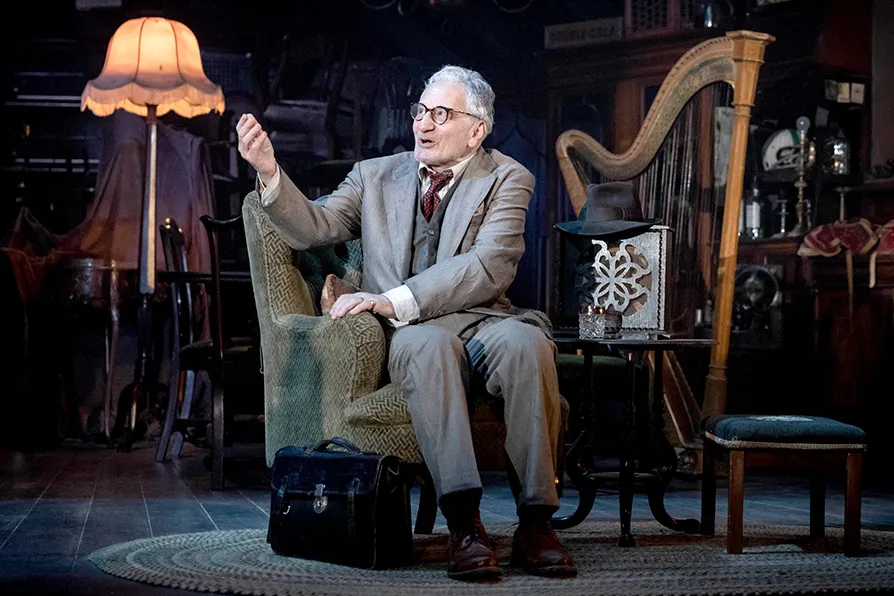 DIABOLICAL DEAL-MAKER: Henry Goodman as Solomon in Arthur Miller's The Price [Pic: Tristram Kenton]
PAUL DONOVAN welcomes a revival of Reginald Rose’s classic play that reminds us of the fundamental need for trials with juries
SIMON PARSONS applauds an exceptional performance of Wesker’s little-known play, by the same actor for whom it was written 45 years ago
ANDY HEDGECOCK and MARIA DUARTE review Late Fame, The Death of Robin Hood, Leviticus, and Gail Daughtry and the Celebrity Sex Pass
ANGUS REID recommends a uniquely accomplished documentary collage that contemplates our relation to the natural world
GORDON PARSONS enjoys Kant’s ‘mind-boggling’ theory of human reality: that we create the reality we experience





The Price
Marylebone Theatre, London
★★★★☆
ARTHUR MILLER’s reputation as a world-class dramatist precedes every production of his work. And when Henry Goodman is starring, you expect – and get – an unquestionable classic.
That Miller’s work has been significantly prevalent on the London stage recently is no surprise. He’s a genius at placing ordinary Americans centre stage for intimate perusal, as seen in the recent excellent London productions of All My Sons and Broken Glass, preceded by major revivals of A View from the Bridge and The Crucible. And at a time when power and profit personify the States, Miller’s exploration of moral questions – and of the honest progress of the American dream – couldn’t be better timed.
The Price, written in 1967, explores the Franz family: brothers Victor and Walter and Victor’s wife Esther. For all three, the struggle for money and/or the loss or lack of it has shaped their lives. As the play opens, Victor prepares to meet house clearance assessor Gregory Solomon to agree a price on the family furniture and artefacts. Hard cash is the driver; sentiment and family nostalgia mere distractions. And when Solomon arrives, striking the deal is all.
But this is a play of two halves. And when brother Walter suddenly arrives at the end of Act 1, the price is no longer about the bric-a-brac and the seedy negotiations, but about the cost of the brothers’ actions in their lives, and indeed the unexpected complexity of those actions. It’s about people so fatally shaped by the mechanics of living, that all other precious gifts are lost.
Jon Bauser’s set is a glorious clutter of family treasures – all stored here for 30 years since the family were hit by the Great Depression. Every item has its story: the wardrobes, the clothes, the fencing equipment and, especially, the huge evocative harp: a silent yet eloquent symbol of all that a family shares beyond the dictates of hard, cold money.
And director Jonathan Munby approaches the work with such commitment and attention to detail that the over-long first half is redeemed in the light of the whole.
Henry Goodman is of course second to none in his encapsulation of the wily, ageing, world-weary, grotesquely skilled Solomon. That the character has the stereotypical qualities of a Fagin or a Shylock is manifest but riveting nevertheless in this performance. Elliott Cowan’s Victor – a jobbing police officer – displays all the acquired fragility of a man who has lived a sacrificial life, while John Hopkins as Walter physically portrays the self-satisfied demeanour of the one who got away.
As Esther, Faye Castelow has a harder job IN her role as a woman seen through the skewed lens of the time and objectified. It’s the brothers who bring the dramatic – if overstated – confrontation.
The Marylebone Theatre – now a significant London venue – has scored well with this play and its casting. And while the work is strangely – even bravely – unbalanced in structure, its scrutiny of all that compromises the American dream is even timelier today than in the 1960s.
Runs until June 7. Box office: 020 7723 7984, marylebonetheatre.com

Similar stories
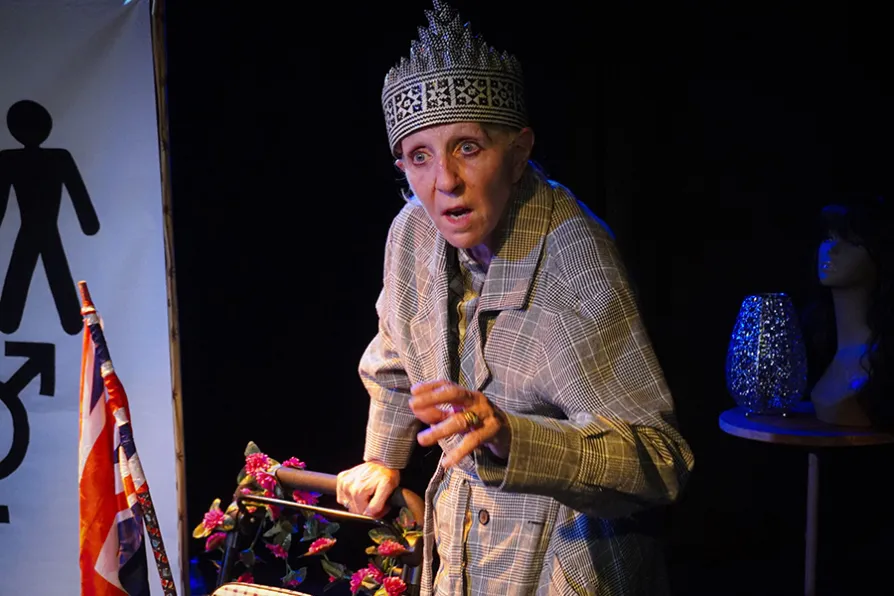
SIMON PARSONS applauds an exceptional performance of Wesker’s little-known play, by the same actor for whom it was written 45 years ago
The climate debate has focused on tournaments and fan travel, but the sport’s relationship with fossil fuels stretches back to the Industrial Revolution
MARY CONWAY is spellbound by superb performances in Arthur Miller’s study of the social and personal stress brought about by Nazi Germany’s Kristallnacht
Although this production was in rehearsal before the playwright’s death, it allows us to pay homage to his life, suggests MARY CONWAY