EWAN CAMERON picks out two fascinating music shows, fusing the Korean, and the Celtic, with the modern


 Latest editorial

Dirty Rembrandt
SCOTT ALSWORTH assesses the follow up to Disco Elysium, the first-ever genuinely Marxist videogame
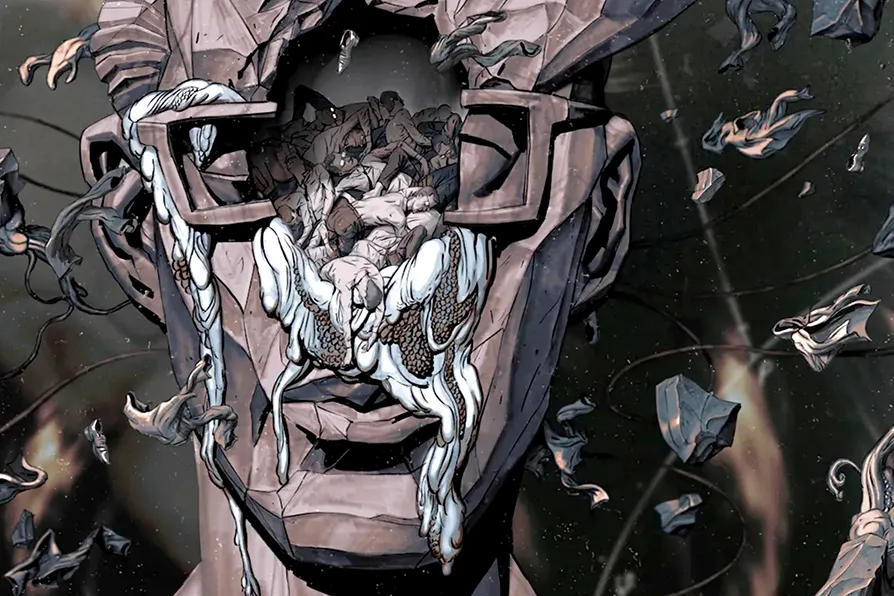 [Pic: Courtesy of ZA/UM]
BENJAMIN POTHIER suggests that Palaeolithic cave paintings in Spain point to the ceremonial use of hallucinogenic flora
The bard confirms that the right has a humour bypass, and replays the English Revolution on period instruments
MARIA DUARTE and ANDY HEDGECOCK review Sunny Dancer, Tony, Songs of Forgotten Trees, and The End of Oak Street
JOHN GREEN relishes a powerful and moving drama that explores the lived realities of west London’s Punjabi community
MARTIN HALL welcomes a plea for greater compassion between believer and non-believer via the framework of philosophical enquiry





Zero Parades
(ZA/UM)
★★★★☆
THERE’s a spectre haunting Zero Parades. It’s not the apparition Marx once wrote of, but the unexorcisable spirit of the first-ever genuinely Marxist videogame, released by the “same” studio — minus many, although allegedly not all, of its revolutionary creatives.
Suffice to say, the legacy of Disco Elysium presents something of a problem.
On one hand, it’s a disservice to the talented team at ZA/UM, who gained union recognition while pouring their hearts into this release, to dwell on past achievements. They deserve a win. But on the other hand, Zero Parades is reluctant to let its predecessor die.
Throughout, it’s impossible to ignore the ethereal voice, echoing down the winding streets of the game’s impressionistic, painterly locale, Portofiro, possessing, here and there, the city’s speakers, their familiar portraits, their weighted registers. Murmuring faintly: Disco’s dead. Long live Disco.
This is both a blessing and a curse. And also, not entirely fair. Zero Parades is an espionage RPG that exchanges Disco Elysium’s alcoholic detective tropes for those of a spy coming in from the cold. Indeed, the sordidness and literary restraint of John le Carre are captured brilliantly.
They are accompanied, too, by well-thought-out aesthetic choices; a murky palette, an unobtrusive soundtrack, labyrinthine level design, and a form-from-content monospace font that reflects a “life endowed to its barest elements” — that of the protagonist, Hershel Wilk, a disgraced “operant,” redeployed for one last assignment.
Obvious from the get-go is ZA/UM can work a vision. Take the main menu art: Wilk, silhouetted, inscrutable. Sitting inside an abandoned transit car, going nowhere, listening to the ebb and flow of the sea, lost in thought, rendered in muddied hues like some dirty Rembrandt. The only movement, a plume from her cigarette, curlicuing endlessly. A shapeless and unshakeable thought; hypnotic, aimless, toxic. Existential.
The implication that everything everywhere is just smoke without mirrors. This, in its moments of multivalency and self-reflection, is Zero Parades at its best. Artistically, powerful cogs are turning. But I can’t overlook the reverential hand in the mangle.
To start, there is the decision to repeat the messy, expressive brushstrokes of Disco Elysium’s signature art style. This was the correct visual language for a reality seen through the fractured lens of a self-destructive drunk, yet, one wonders, does it make sense for Wilk? Similarly, her direction feels off. The drawled vowels and inflections, reminiscent of performances in Disco Elysium, sound wrong and far too indiscreet for her role.
Sure, such overlaps can be chalked up to a deliberate celebration of ZA/UM’s identity, though others will inevitably see an attempt to rebottle lighting. And they may be right. However, an in-game conversation with Petre, a record vendor crushed by the downfall of culture, reassures me there’s writers in the mix who know how to throw a counter-hegemonic punch.
Is Zero Parades a Marxist videogame? Not explicitly.
The all-cap dialogues of Wilk’s internalised idea of statehood are a distortion of communist ideals, and references to “post-historical materialism” seem forced and superficial. But like the weather in Portofiro, there’s showers and spells of sunlight.
But despite awkward holdovers, it’s a game that towers above most others. I would recommend it. Going forwards, I just wish we could leave the lightning rod alone. Disco’s dead. Let Disco lie. After all, it was never the formula that inspired us, it was the message.
Zero Parades is released on May 21, £34.99; PC (Windows) PS5 due later.
