Committee for the Defence of the Iranian People’s Rights general secretary GAWAIN LITTLE discusses the impact of the US-Israeli war on the Iranian people and economy


 Latest editorial

Gerry Gable: 60 years on the front line against fascism
As the anti-fascist movement mourns the death of Gerry Gable, his long-time comrade and former Searchlight editor STEVE SILVER reflects on the life of an indispensable activist who spent six decades infiltrating, exposing and undermining fascism
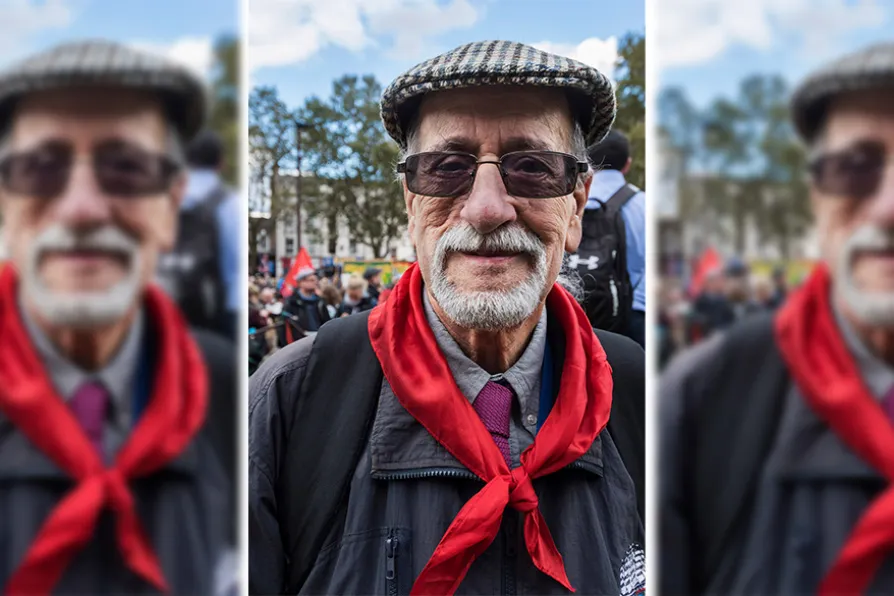 Pic: David Hoffman
Capitalism has extracted itself from crisis before, argues PRABHAT PATNAIK – but through methods no longer available. So it is turning to authoritarianism, militarism and neocolonialism
The five young men killed in the A66 crash were responsible for a devastating tragedy — but the crash should force us to ask difficult questions about wider society, argues RENATA MEDEIROS MIRRA
Britain funds the policing of black culture 16 times better than the culture itself. The Diamond Jubilee is the moment to end that, argues CLAUDIA WEBBE
Despite Andy Burnham’s declaration defending the continued partition of the island, all major international and internal trends are converging to make Irish reunification inevitable
Humans are part of the ‘animal kingdom’ – and of nature in general – but also distinct from it and labour (work) is part of what makes us unique, declared Engels. His insights 150 years ago into how our species came to be and how we differ from the rest of nature, are as important today as they were then, says the MARX MEMORIAL LIBRARY





GERRY GABLE, the most tenacious post-war anti-fascist Britain ever produced, passed away on Saturday January 3 2026, aged 88.
For over half a century, Gerry was the pulse of Searchlight. In the world of British anti-fascism, the man and the magazine were indistinguishable.
In February last year, after 50 years and nearly 500 issues, the final print run of Searchlight rolled off the presses as the magazine transitioned online with Gerry’s blessing. Though ill by then, he knew this was simply the next phase in taking on the enemy.
‘We’ve come to fix the phone line’
Long before he was an editor, Gerry was a man of action. He was active in the defence of the black community during the 1958 Notting Hill riots and defended early CND Aldermaston marches alongside another Searchlight founder, Mike Cohen, who later became a Morning Star photographer.
His commitment to the “tradecraft” of anti-fascist intelligence-gathering was forged in the early 1960s. Most famously, in 1963, Gerry and fellow 62 Group activists posed as GPO engineers to gain entry to Holocaust denier David Irving’s flat. They sought Irving’s private papers to expose his fascist connections.
Gerry ended up in court but never regretted it; for him, the law was secondary to defending the Jewish community. This uncompromising spirit led to his departure from the Communist Party, where he had been an industrial organiser.
The apprenticeship
I met Gerry as a teenage activist. Being mentored by him was an education in gathering intelligence. From his background in the militant 62 Group, Gerry wasn’t afraid of physical confrontation, but he knew real damage was done through information.
He taught me to trace PO boxes, raid bins and build dossiers.
Gerry also introduced me to the classics of socialist literature, understanding that a lifelong struggle required a culture to anchor it.
Seeking justice
Gerry’s fight also concerned the unfinished business of the Holocaust. Throughout the 1980s, he led a relentless campaign — supported by the Morning Star — to bring Nazi war criminals living in Britain to justice.
This wasn’t just desk work. Gerry and his wife Sonia travelled through the Soviet Union to gather evidence, which they passed to the all-party parliamentary war crimes group. During this period, I served as anti-racism officer for the Union of Jewish Students (UJS).
We mobilised the grassroots while Gerry provided the hard evidence that forced the government’s hand, leading to the War Crimes Act 1991.
Moles and tradecraft
Gerry was a master at running “moles” inside the enemy camp — whether they were fascists who had a change of heart or anti-fascists planted inside. He knew how to manage the psychological pressure of those living double lives inside the National Front or the BNP. It was dangerous work, but Gerry knew one well-placed asset could do more damage than a hundred marches.
He lived a life of high security, checking under his car for bombs and keeping a shotgun at the top of his stairs with the pragmatic instruction: “Aim low, you don’t want to end up on a murder charge.”
He was capable of putting fascist groups in a state of paranoid frenzy and he revelled in it.
The courtroom battlefield
Gerry fought many legal battles. We were involved together in one significant case when two BNP members sued us for libel following a piece on their internal civil war. We fought on “neutral reportage” — the right to report on the internal wranglings of extremist groups without being liable for their lies. Our victory in the Court of Appeal was a landmark for investigative journalism.
Gerry could be a difficult man; it was often his way or no way. This led to tensions and eventually my own departure, and later the split with Hope Not Hate, although the fallouts never lasted. However, his “difficulty” was his armour — a survival mechanism. He was also completely non-partisan, happy to work with anyone from a Tory to an anarchist, judging them on their actions alone.
The necessary man
Gerry Gable didn’t just witness the history of post-war British anti-fascism; he wrote, edited, and defended it. Britain is a significantly less hospitable place for fascists today because Gerry spent 60 years undermining them.
As Bertolt Brecht wrote: “There are those who struggle all their lives: these are the indispensable ones.”
Gerry was one of the indispensable ones. His legacy lives on. No pasaran!
This is an abridged version of an article that can be found at leadenskies.substack.com.

Similar stories
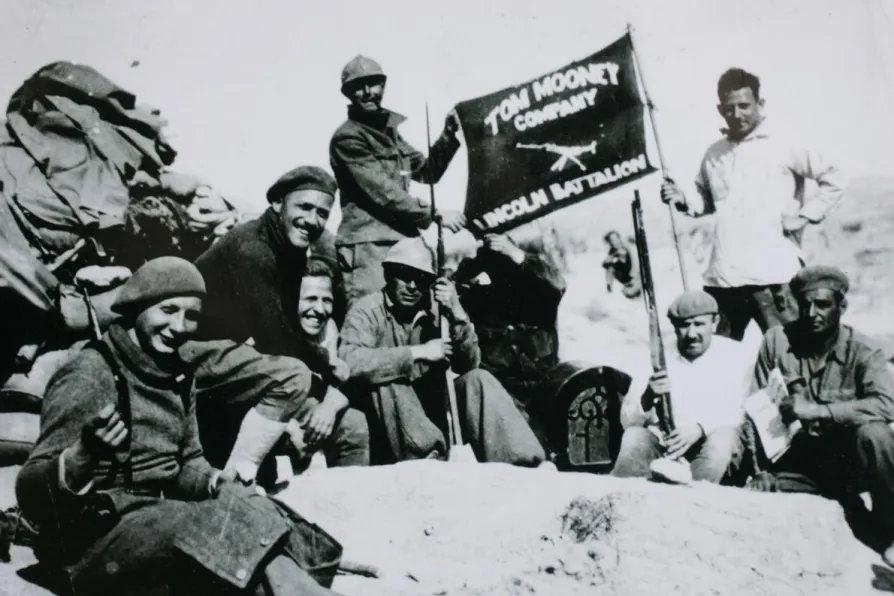
CJ ATKINS commemorates one of the most dramatic moments in working-class history
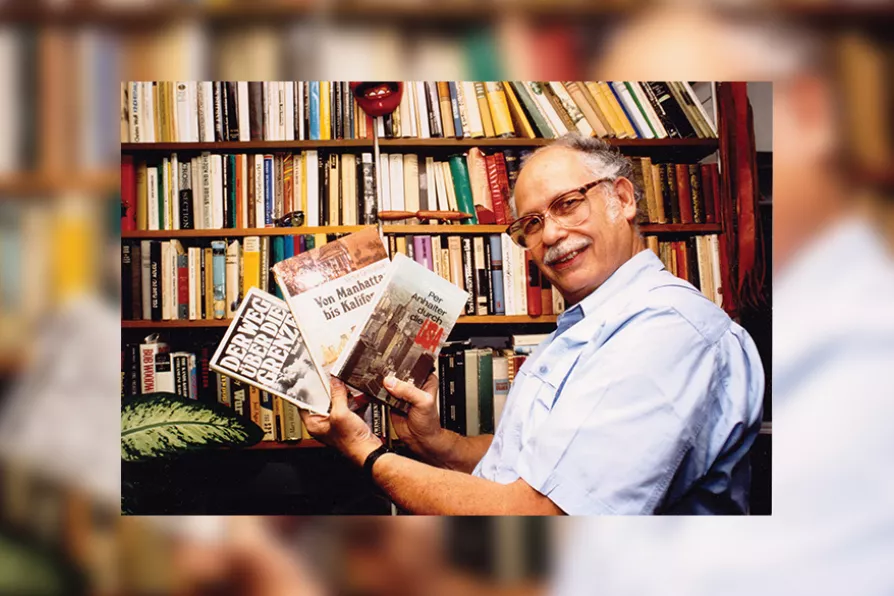
Hundreds in Berlin gathered on January 15 to honour the US-born socialist who made East Germany his home. Florentine Morales Sandoval reports
1943-2025: How one man’s unfinished work reveals the lethal lie of ‘colour-blind’ medicine
Charles Lubselski pays tribute to a lifelong communist and supporter of the Daily Worker and Morning Star