Growing instability in the US economy and financial markets could have serious consequences worldwide because of the central role of the US dollar and financial system, argues MICHAEL BURKE


 Latest editorial

Banking on Burnham: How Labour must ride the crisis
The real welfare dependency is at the top of our society, says ALAN SIMPSON
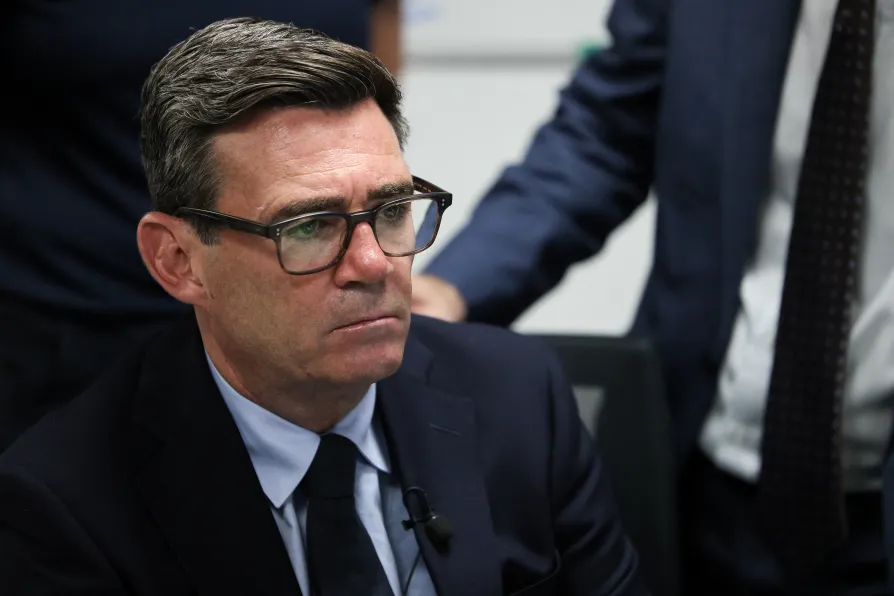 Andy Burnham

Despite Andy Burnham’s declaration defending the continued partition of the island, all major international and internal trends are converging to make Irish reunification inevitable
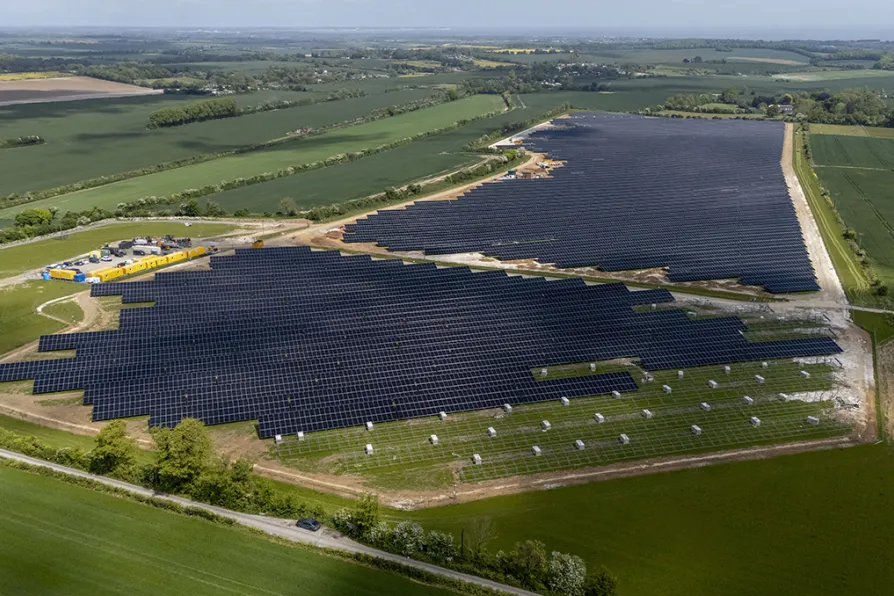
The left needs a bold energy vision – because if it fails to provide one, others will shape the future in their own interests, argues ALAN SIMPSON
From Margate to Deal, mining memories are being kept alive. National co-ordinator for General Strike 100, HENRY FOWLER continued his nationwide tour of partner organisations in the Garden of England
Humans are part of the ‘animal kingdom’ – and of nature in general – but also distinct from it and labour (work) is part of what makes us unique, declared Engels. His insights 150 years ago into how our species came to be and how we differ from the rest of nature, are as important today as they were then, says the MARX MEMORIAL LIBRARY
Boxes of books, family photos and heirlooms, labour movement anniversaries, along with nostalgic memories of glorious childhood days on the Ayrshire coast still leave room for a wistful MATT KERR to hope for a better future





BARELY a week into his premiership, Andy Burnham had to navigate an avalanche of political interviews, all expecting answers to issues we’ve ducked for decades. He did so with remarkable good grace and openness. So far, Burnham has come out well; his interviewers much less so.
I tire of so-called political interviewers throwing a series of trip-up questions at him on issues they too have ducked for decades. The shallowness of their questions and the disconnect from the enormous global crisis we are in, drives me to distraction.
So the first point I’d like you to think about is something thrown at me by German economists many years ago, when I was campaigning to get renewable energy “feed-in-tarrifs” (FITs) included in Britain’s Energy Act 2008.
Asking the wrong question
Conventional advisers to the Labour shadow chancellor were worried about how much this might cost. The German response was robust.
“That’s the trouble with you Brits,” they said. “You always begin with the wrong question.” For the Germans, the key issue was “where does the money go?”
You can easily cut short-term costs by ditching domestic investment and buying cheaper goods abroad. This effectively dumps British production in favour of imports; a variation on throwing money out of a window. The bills still have to be paid but you no longer have workers (paying taxes) that keep the British money-go-round working. The Germans laughed at our stupidity; and so they should.
Burnham has been besieged by the same welter of “first-line cost” questions, with no reference to the jobs to be created or the social cohesion that might follow. Today’s overpaid political pundits do not serve the nation well — and that’s before you even get to the climate crisis.
In the same week that Burnham announced regions would get an additional slice of national taxation, wall-to-wall press coverage had been on the impact of drought on farming and food production. This also focused on Britain’s struggle to contain fires running amok across the nation’s heathlands and forests.
As climate scientists were quick to point out, this is not just “the new normal.” It is a forewarning that worse is to come if we don’t rethink what a sustainable economics might look like. Perhaps this is where the regions come in — and where the left has to reflect on its own approach to radicalism.
Obsessions with the centre
For far too long, British politics has been obsessed with centralised control. Sometimes this has been via the Tories and a Westminster elite running the Civil Service (and all else). Occasionally it has been via Labour and a centralised approach to mass production and trade union influence.
Rarely have we engaged with the politics of decentralised governance. These lessons were all being learnt elsewhere.
Today, as confidence in the centre hits new lows, and social media sabotaging promotes cynicism, Burnham’s approach to radical localisms may offer the prospect of a new politics of survival. The question is “are we up to it?” Circularity is the key, but so too is accountability and sustainability.
Political prophets — Jonathan Porritt, Mariana Mazzucato, Kate Raworth, professors Tim Lang and Tim Jackson, et al — have long ago mapped out the landscape of sustainable alternatives. But the economics of crap choices and productivity obsessions always sidelined them. This may be our last chance to listen.
Restoring the roots
An inclusive economics of tomorrow needs to have strong regional roots, not just to link jobs to investment but also to put repair and inclusion at the centre of the conversation. It also needs a political leadership that is willing to engage in awkward conversations.
All the interviews with Labour ministers quickly skip into questions of “how will you pay for the investment you promise?” It’s a fair question, apart from the default presumption that the answer is welfare cuts. The avoidance gap is about the incompetence and corruption in Britain’s conventional spending.
It isn’t just the Ministry of Defence that has a long history of incompetent budgeting and spiralling costs. HS2, PPP and Covid contracts didn’t do us any favours either. Financial incompetence is more deeply rooted in British politics than most of us are willing to acknowledge.
Sadly, the Civil Service is knee-deep in this process, not least because of the revolving door between their own work and the subsequent jobs offered to them by outside lobbyists. No less a problem is the financial unaccountably of arms-length public bodies. This is a challenge that Labour ministers will have to confront.
Looked at from outside, Britain’s track record appears bizarre. Many programmes don’t even pass the government’s own anti-money-laundering tests. Christopher Collins recently produced a long analysis (published on Substack) that is breathtaking.
HS2 Phase 1 is projected to cost the country £275 million/km. Compare this with the European average of £32 million/km and there are at least a few questions to ask. HS2 will cost the equivalent of every high-speed train line ever built in France and Germany combined.
Yet this process of “overinvoicing” never seems to set off government alarm bells. Even allowing for Britain’s more complex planning procedures, to be four times more expensive than anywhere else in Europe takes some explaining.
And it isn’t confined to rail. One third of all government spending — £391 billion per year — passes through arms-length bodies that ministers cannot direct and voters cannot remove.
This is the welfare dependency Labour ministers must tackle first.
Fiddlers on the roof
In Europe, leaders of arms-length public bodies get sacked for mismanagement. Not so in Britain. There are over 300 senior managers paid more than the Prime Minister in this “state within a state,” but MPs have no effective means of sacking them for financial incompetence. Unlike France and Germany, Britain has no offence of “negligent mismanagement of public funds” — but oh how we need one!
Instead, ministers are sent in pursuit of the poorest caught in up a web of means-tested benefits, or chasing subpostmasters falsely criminalised by a cavalier Post Office executive and a defective IT system.
The stark message to Andy Burnham, his Chancellor and his ministers, is that Britain is not poor but we are poorly managed.
This is the moment to turn the focus of scrutiny on those milking the system at the top not the bottom. Arms-length public bodies must be made publicly accountable to Parliament, their executives made subject to prosecution for mismanagement of public funds and their accounting systems made more open to public scrutiny.
In the one foray made by the National Audit Office into the filing of some of their accounts, the NAO estimated that £51-81 billion/year was being lost by such bodies to fraud and error; more than enough to cover any increase in the defence budget.
This isn’t money being taken by those arriving in small boats. It is public money squandered by those living in sumptuous housing and partying on large yachts.
For the Chancellor, this is where a new era of public accountability needs to start. Burnham would love it. And so would the public.
If Britain wants to tackle waste and corruption it must start at the top. That’s where the real money saving is to be found. And with enough left for Labour then to genuinely tackle the climate emergency.
Alan Simpson was Labour MP for Nottingham South from 1992-2010.

Similar stories
The left needs a bold energy vision – because if it fails to provide one, others will shape the future in their own interests, argues ALAN SIMPSON
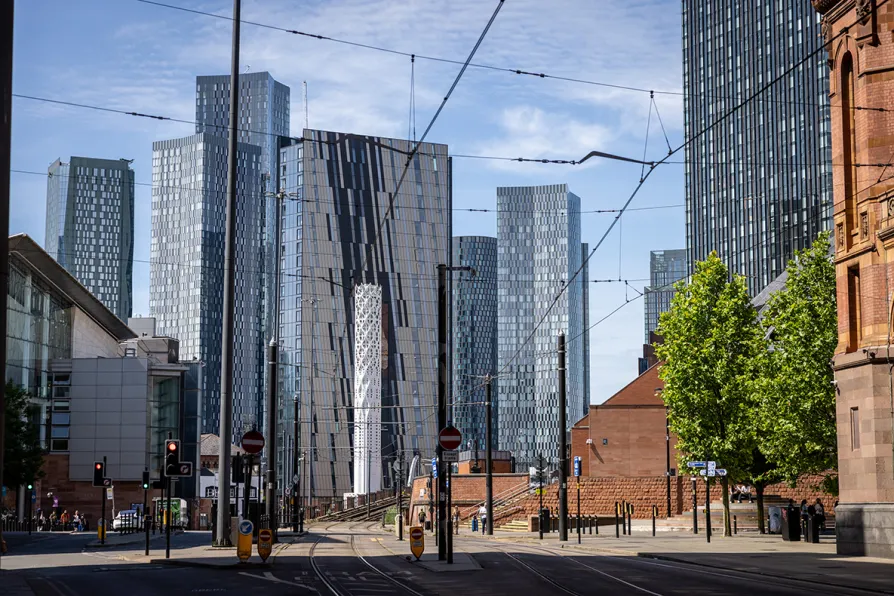
Can Andy Burnham’s programme deliver a productive economy – or merely a softer version of capitalism, asks VINCE MILLS

While politicians fixate on defence budgets, the real answers lie in peace-building and economic justice, says ALAN SIMPSON
The collapse of the Atlantic Meridional Overturning Circulation poses an existential threat — but do today’s politicians have the capacity to deliver the more resilient and sustainable economics of tomorrow, wonders ALAN SIMPSON