
The UK Prime Minister may have the regal touch in northern England, but he’s been wrong-footed on the constitutional challenges posed by the Celtic Alliance of first ministers from Scotland, Wales and Northern Ireland, argues KENNY MacASKILL

As the sun sets, somewhere it is rising
Boxes of books, family photos and heirlooms, labour movement anniversaries, along with nostalgic memories of glorious childhood days on the Ayrshire coast still leave room for a wistful MATT KERR to hope for a better future
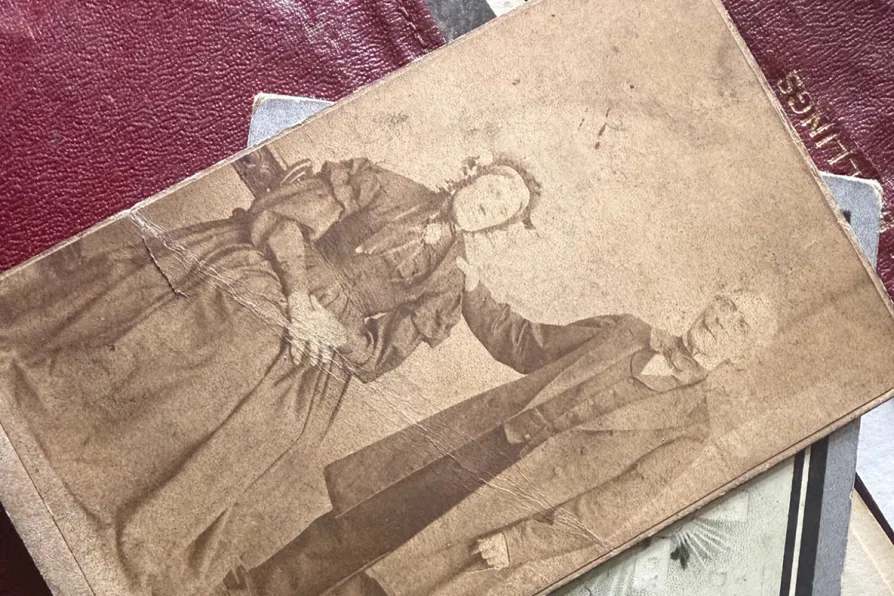
 Memories from around the 1880s
NEIRLAY ANDRADE, a member of the Communist Party of Venezuela’s political committee, outlines her party’s position on the crisis facing the country
A look at Taylor Wimpey’s accounts shows why Labour’s market-led housing strategy won’t deliver more, cheaper homes, as promised, says SOLOMON HUGHES
DAVID HORSLEY remembers the remarkable life and death of US black revolutionary George Jackson, whose politically passionate prison letters were published as Soledad Brother
Cuban trade union federation CTC leader OSNAY MIGUEL COLINA speaks to Ben Chacko about life and work under a crippling US siege
A part of the British empire’s network of slavery, today the Caribbean island of Nevis faces a new form of exploitation in the form of crypto-colonialism, CLAUDIA WEBBE writes
Challenges from the unscrupulous misuse of AI to steal actors’ voice and physical likenesses is being met with a firm union response, writes LYNDA ROOKE





THE month of grandeur is drawing to a close and there’s a change in the air.
The latter is what I was always told lay behind my annual August cold. This never seemed the most scientific of explanations, but even as another heatwave sweeps through us something has shifted.
Heatwaves are no match for time, the little patterns we search for to prop ourselves up, sunrise counts to tie ourselves into some thing or other. I share a birthday with Alex Salmond and Donna Summer, while my daughter was born on the 81st anniversary of the TUC choosing to collapse the general strike. Make of these omens what you will.
Best not to though.
Mathematics was co-opted by superstition before it even had a name, and well before the Americans stole its “s” to give an extra one to “sport,” a foretaste of a world of TV sportscasting where screens and commentary alike are littered with endless, pointless, statistics, sponsored to the hilt and destined to milk every last drop of relief out of the experience.
Still, there’s comfort to be had.
The 90th anniversary of the battle of Cable Street will soon be upon us, a span of time that few around us can truly comprehend. The parallels drawn with the sheer scale of the forces ranged against basic decency we face today are obvious, the causes just as clear to anyone paying attention as they were then. It was undoubtedly a great and inspiring victory that deserves its immortality.
This weekend in Glasgow we’ll remember the 1787 Calton Weavers strike. Six were killed in volleys of musket fire from 39th Regiment directed by gentlefolk distressed at the idea of working people rejecting serfdom. The public flogging meted out to one of the strike leaders, James Granger, was about as effective as any act against our long battle for industrial democracy — he went on strike again in 1811 at the age of 61.
We can gaze back at their heroics and reflect on how far we have come, wave a banner, attend a rally in their honour and all of that, but let’s not get too misty-eyed about this. Those who would fire those muskets still walk amongst us.
At home they argue for working people to vote against their own material interest, to encourage folk with the least to make the case for billionaires who are either too cowardly or just too lazy to bother doing it for themselves. An avalanche of nudges and winks on social media about “strangers,” and screens bombarded with invitations to join the ranks of the regiments to learn the trades they’ve spent decades decimating, tell us how far there is to go.
There are no such qualms about firing muskets abroad though. Everyday technologies which have almost infinite possibilities to build a better world are deployed in ever more creative ways to terrorise, maim and kill in the name of governments and in the name of the capital that owns them: lock, stock and barrel. Sir Keir Starmer’s talk a few years back of building a war economy was nothing new, he was just incompetent enough to say it out loud – his dream and our nightmare continuing to live on after his demise.
Other dreams are available.
They are hard to come by if you’ve had no sleep, though, and harder still to bring to life without the time to build a plan. It is no coincidence that the world as it is has become accepted by so many as education, work, and housing have become such precarious commodities; rarefied and to be gifted to us from on high by the self-styled “wealth creators.”
They create nothing; their lives and abilities wasted in the obscene challenge to see who can be this year’s champion hoarder — a pastime that would be designated an illness in any other walk of life.
It’s an ailment I know well. If the HMRC are reading, I’d like to declare that I have little inclination and absolutely no means to hoard billions of pounds, but I do have a bit of a thing for bikes and books. Grossly overengineered and six months late, I have now finished a bookcase, which in all probability is stronger than the wall it’s bolted to. Its shelves already overflowing.
Gazing upon my works, I spot “Dr Strangelove, I presume”, author Michael Foot’s baffled countenance staring back at me from the spine and I wonder if this structure will offer us a precious few extra seconds of life should Mr Trump get overexcited one evening and, with a flap of his tiny hand, strike the big red button rather than “send” on some absurdist social media post or other.
What a way to go, a shadow of our former selves.
Snapping out of it, I return to glory in the defeat of the boxes. The books are freed and able to breathe once more. The house feeling a little bit more like a home after a mere six years. It’s flown by.
Two boxes remain, liberated several decades ago from a large telecommunications concern that we used to own. Sturdy, grey and in the corner. What’s to be done here? I don’t know.
Inside are the artefacts of life. Certificates of birth, attainment and achievement, clippings, photographs, letters and even Boys’ Brigade badges. None of them belong to anyone here.
“In memory of Matthew Kerr, of 5 Kirk Gate, Saltcoats, who died suddenly on Thursday morning 5th January 1893.”
There’s an accompanying photograph I remember being shown by my papa (Matt Kerr) when I was a boy. Matthew looks pretty grumpy, but so did everyone in photos back then. Matt’s NHS card, from February 26 1970, lies next to his ancestor’s picture and his christening lines.
Scattergun filing arrangements and a lack of creativity on the naming front are a bit of a family trait, if you believe in that sort of thing.
Some photographs are a mystery, filled with unknowable faces, others are unknown but familiar. Sandcastles being built on Ardrossan beach while O’Connor Court, a high-rise residential block, is being built in the background, a hint at promises still yet to be fulfilled 59 years on. Two skinny lads, brothers, in knitted trunks, standing awkwardly proud with their spades.
The photograph was still an event then, not the constant intrusion on every emotion and every moment it has become.
There’s another, taken on the same day. My dad, kneeling in exactly the way he would years later when I watched him rewire the house, this time digging a hole in the sand — a picture of concentration.
Sunset song
I’ve dug in the same spot, managing to get myself the same sunburn on my shoulders two decades later as I lost myself in the determination to find water down there. I wonder what he was digging for? Water, gold, or just because he could?
He had probably long forgotten, but it became unknowable when the sun set on August 27 2024.
As I write, there have been 731 sunrises since.
Traditions like naming everyone Matthew may weigh like a nightmare on the brains of the living, but history should not.
Not superstitions, but patterns give us the tools to conquer disease, famine, and want in our lifetimes, should we commit ourselves into directing both imagination and science toward the fulfilment of dreams instead of nightmares.
Understanding the little ripples, the ebbs and flows, the sweeping tides, and an overwhelming need to know the unknowable in past present and future is what keeps the fires burning long after darkness descends.
With that kind of faith, our life is elevated in collective endeavour and death holds no fear, merely disappointment you won’t get to read the next chapter.
But when the sun dips behind Goat Fell on the Isle of Arran tonight, somewhere on this earth we know it is rising.
There’s a comfort in that.

Similar stories
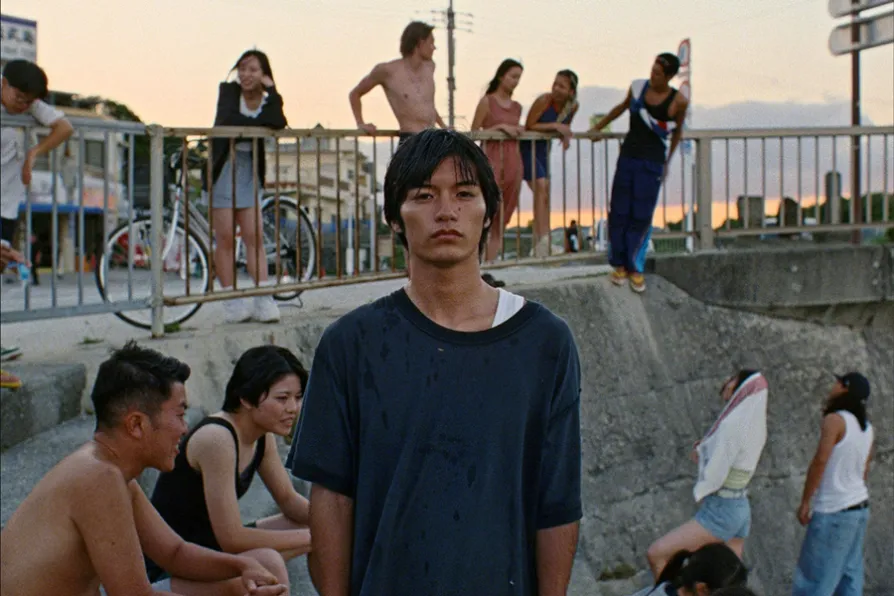
RITA DI SANTO speaks to XAVIER TERA about his Fipresci-winning film The Colour of the Sun, a critique of US imperialism set in the Japanese archipelago
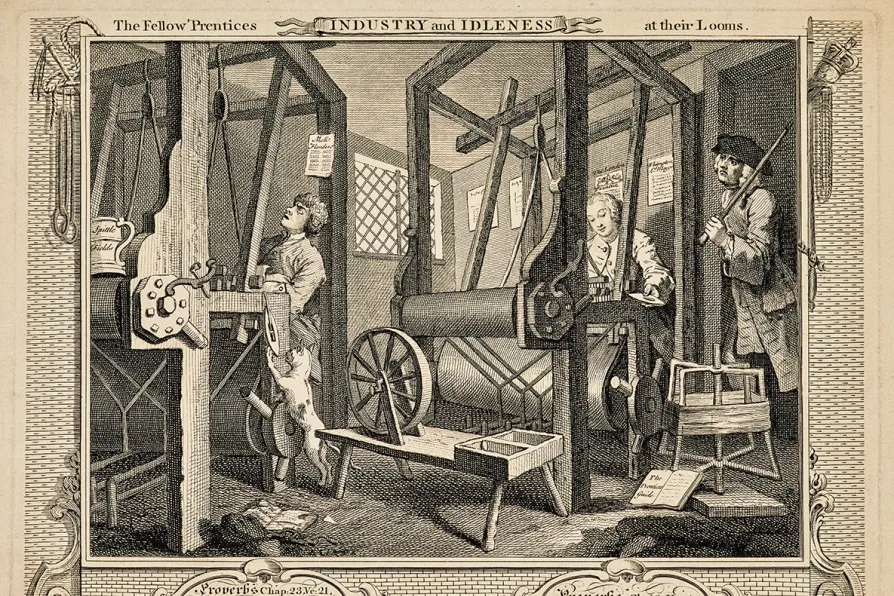
Glasgow will remember the martyrs of the 1787 strike this weekend in speech and song, their spirit is sorely needed today, writes JIM LISTER

While riding the No 3 bus in Glasgow MATT KERR has ample time to dissect the moribund Scottish Labour decline into near oblivion and watch intriguing bus passenger dynamics
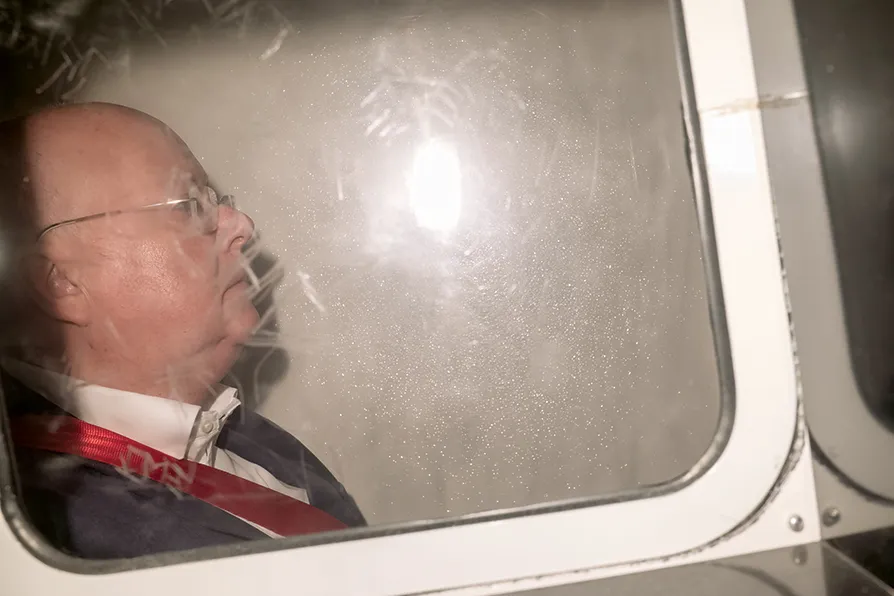
Peter Murrell’s weakness for the allure of prestige goods is symptomatic of modern consumer culture, says MATT KERR