
The UK Prime Minister may have the regal touch in northern England, but he’s been wrong-footed on the constitutional challenges posed by the Celtic Alliance of first ministers from Scotland, Wales and Northern Ireland, argues KENNY MacASKILL

Kent, crabs and communities: museums celebrate the spirit of 1926
From Margate to Deal, mining memories are being kept alive. National co-ordinator for General Strike 100, HENRY FOWLER continued his nationwide tour of partner organisations in the Garden of England
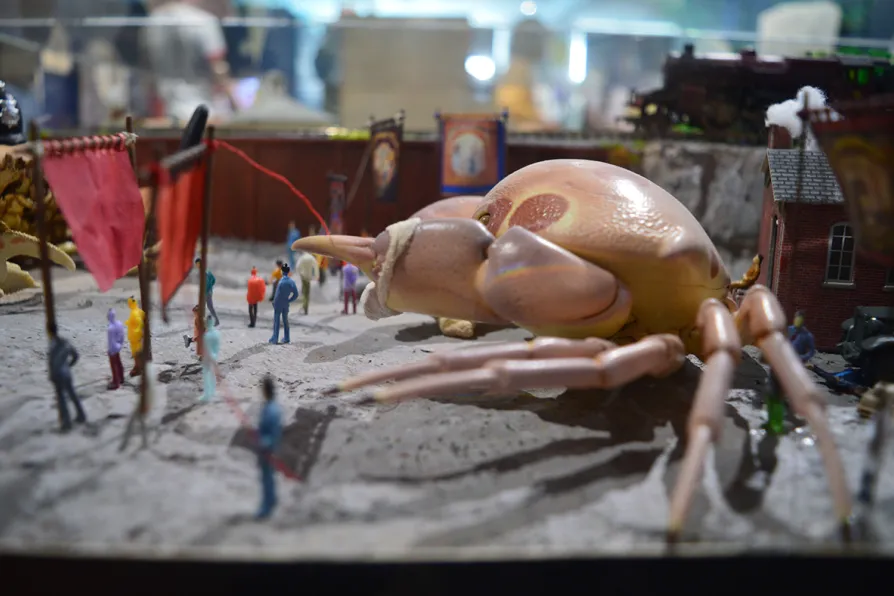
 The Crab Museum's crab diorama (Pic: Henry Fowler)
NEIRLAY ANDRADE, a member of the Communist Party of Venezuela’s political committee, outlines her party’s position on the crisis facing the country
A look at Taylor Wimpey’s accounts shows why Labour’s market-led housing strategy won’t deliver more, cheaper homes, as promised, says SOLOMON HUGHES
DAVID HORSLEY remembers the remarkable life and death of US black revolutionary George Jackson, whose politically passionate prison letters were published as Soledad Brother
Cuban trade union federation CTC leader OSNAY MIGUEL COLINA speaks to Ben Chacko about life and work under a crippling US siege
A part of the British empire’s network of slavery, today the Caribbean island of Nevis faces a new form of exploitation in the form of crypto-colonialism, CLAUDIA WEBBE writes
Challenges from the unscrupulous misuse of AI to steal actors’ voice and physical likenesses is being met with a firm union response, writes LYNDA ROOKE





THIS important centenary year is coming to an end. With the incredible weather, we headed to the Kent seaside to visit two of our partners: the Crab Museum and Kent Mining Museum (KMM).
Kent became an important destination for miners affected by the General Strike and subsequent lockout. After so many miners were blacklisted in pits across the north of England and Wales, Kent became a place to seek work and rebuild their lives.
We started our special Kent General Strike Weekender in Margate.
We approached the pink, purple, almost psychedelic door of the Crab Museum. Arriving a little before opening time, we were met by a queue of families already eager to get inside. When the doors opened, we were greeted by Ned, a self-described “crab enthusiast” and director of the museum.
Founded in 2021, the museum is the brainchild of Ned Suesat-Williams, and his brother Bertie. It has become a cult venue for those interested in crabs, politics, the environment and, importantly, having fun. We first approached the Crab Museum many months ago about becoming part of the anniversary partnership.
Their enthusiastic reply began: “Of course we would like to join this partnership. We have our diorama of the General Strike 1926 as part of our main exhibition.”
With that response, we knew a visit to the museum was essential.
Gliding past a giant crab model on the wall, we head upstairs into the main exhibition space. Today is a little more frantic than normal. The summer holidays have brought many families through the doors, while a documentary film crew is working alongside the museum’s first-ever outdoor puppet show in its new rooftop garden.
What strikes you about this museum is just how accessible it is to everyone. Learning and engagement are woven together with discussions about capitalism, its role in causing climate change, and critiques of institutions of the state, including the monarchy.
As Ned goes to prepare the puppet show and speak with the film crew, we spend time with his brother Bertie and another other museum director, who guides us through the main exhibition.
We head straight for his favourite part of the museum: the famous General Strike diorama we have been itching to see.
Bertie explains that the depiction includes a variety of crabs that would never encounter each other in their natural habitats. Deep-sea crabs meet land crabs, co-existing in Crabton-on-Tyne. This playful commentary on social history is divided by a railway track.
Bertie explains that “one side includes the history we like to remember.” This includes a crab depicting the struggles of the suffragettes, what Bertie emphasises as “history we are proud of.”
The other side of the track depicts aspects of British history from the 1920s that are often forgotten. The British Union of Fascists is represented by a “Moon Crab,” assisting the police in breaking up a trade union strike. The strike itself is led by a “red-spotted reef crab,” representing workers on strike, while a smaller “boss” crab cowers behind them.
The point of the display, using crabs, is to showcase the spectre haunting Europe: communism. It highlights how history is made from below, often through violent struggle.
Class commentary
The display sums up the feeling you get throughout the museum. For children, it is a funny-looking collection of crabs wearing hats, interspersed with people and strange scenarios. For adults, it is a clear social commentary and a depiction of class struggle.
History and culture are made accessible to everyone who walks through the doors.
We catch up with Ned in the garden ahead of the puppet show. He explains the development of the museum and how everything is connected.
“You cannot talk about science and the history of science without talking about language, colonialism and histories we are deeply entangled with. Talking about social history in the same breath as ecology makes sense to us. Our struggles are connected.”
Ned describes why being political is important to the museum. With no major funders, its independence is a source of power when it comes to its editorial line, even if that means relying on a small team, donations and support from the surrounding community.
He explains further why the museum joined the partnership: “It was really important for us to honour the centenary of the General Strike as a history that is forgotten, deliberately forgotten. It is up to all organisations that are part of this partnership to remember it.”
The ethos of the museum is perfectly captured as we finish filming: “You cannot be serious without being silly. They are two sides of the same coin.”
With that, we leave Ned to begin the puppet show.
The next day, we drive to the Betteshanger Park, home to another one of our partners, the Kent Mining Museum. The museum sits on top of the former colliery spoil tip.
This is no normal weekend for the museum or the wider park. It is the annual Kent Miners’ Festival: a family fun day combining all things mining with children’s activities, including “splat the rat,” welly tossing and making your own button badges.
Opened in April 2022, like the Crab Museum, KMM is a recently founded museum that combines serious social, political and cultural history, in this case, the history of the mining industry, with accessible oral histories, family activities and the stories of miners from the local area.
We arrive early to find a parking space, but it is already packed with families arriving in anticipation of the festival. Children head towards the impressive coal-themed playground while, inside reception, the large “Kent Mining Museum” sign sits above the entrance.
As you walk into the permanent exhibition space, screens featuring ex-miners and their families tell stories of everyday life underground. What mining meant to the people of Kent, and the role it played in the fabric of society, flows throughout the museum and spills out into the festival celebrations taking place outside.
Lidia Letkiewicz-Rush, the museum manager and curator, kindly gives up some of her time between festival duties to guide us through the whole museum, including the “Migrating Miner” exhibition.
Lidia explains that her favourite part of the permanent collection is the “chandelier.” Hanging above you as you enter the museum, it is made up of miners’ lamps, pickaxes, hard hats and other objects from the industry.
The main exhibition space includes incredible items from the 1984-85 strike, including commemorative plates and T-shirts from Kent Women Against Pit Closures. There are also areas where adults and children can put on overalls and hard hats and get ready for a shift they will never start.
We head downstairs and even the lift is acting the part. Complete with silhouettes of miners descending a shaft, it makes the same noise that a real mine-shaft lift would have made.
Walking into the downstairs gallery space, we see two exhibitions brought together by a large screen projecting photographs and key information about mining in the local area.
Lidia leads us through the Migrating Miner exhibition, this is a story about how miners left their local areas, some even travelling internationally, to come and mine in Kent.
From different traditions and customs around clothing, food and upholstery to sport, the exhibition shows how mining created communities. We see the pit’s baseball, football and rugby teams, all part of the social world built around the coal industry.
The other side of the room is dedicated to one of the local pits, Chislet Colliery at Hersden. An ex-miner’s collection fills each cabinet, detailing the experience of everyday life for mining families connected to the pit.
The ex-miner explains to us that this is just part of his personal archive.
It highlights something fundamental about mining: it is a way of life that stays with you forever.
Emerging from the bottom of the museum, we head outside into the sunshine and festivities.
Friends and comrades meet, embrace and celebrate together. Local miners carry their pit banners as brass bands fill the air with music. The sense of camaraderie, unbroken through the fights they have fought together in the past, sits alongside families enjoying the park, stalls and activities.
A steel-drum band plays alongside the traditional brass bands. Everywhere, there is a sense of community.
At the welly-tossing contest, another ex-miner proudly shows us his phone background: a black-and-white photograph of himself covered in coal dust, helmet on, standing proudly after a shift.
He tells us about everyday life underground, including the challenges of eating sandwiches while fighting off rodents.
What you take away from this festival, and from all the people who make up the community around the museum, is pride.
Pride in the work they did. Pride in the communities they built. Pride in the belonging and networks of solidarity that endured, even after the destruction of the industry.
The pits may have been closed, but the communities they created did not disappear.
That is the lesson that both museums leave us, “The Spirit of 1926,” the history of struggles live in people, in communities, in memories and in struggles that continue to shape us.
To explore the wider centenary programme and plan your own visit, head to GeneralStrike100.com.

Similar stories
Welsh wanderings showcase fiery destruction, alternative water ways and revive memories of a local mining legend, writes MARK SEDDON
In the second part of LAYTH YOUSIF’S history of the New York Cosmos, he reflects on their stunning reboot
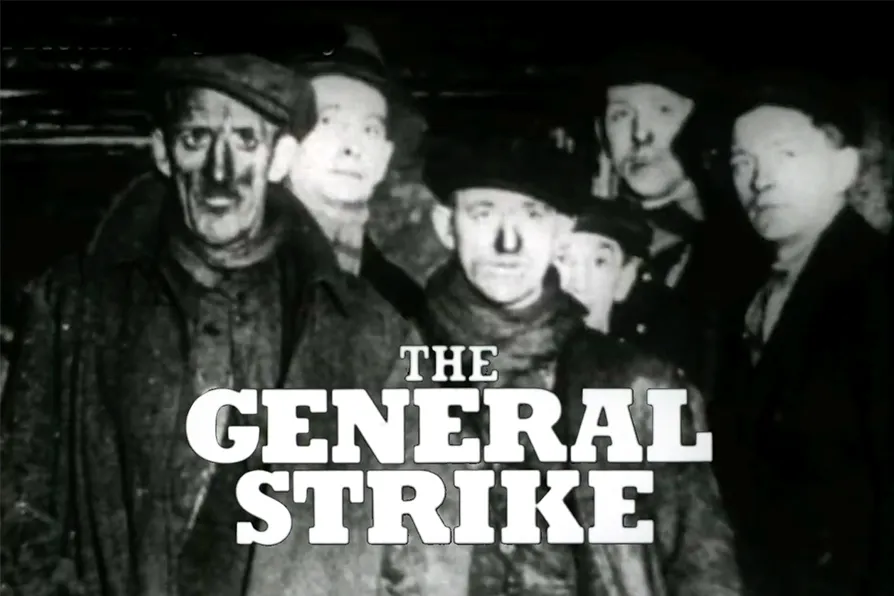
MARY DAVIS welcomes a remarkable documentary about the general strike — politically spot on, and featuring accounts from the strikers themselves — that is available for screenings
by Henry Fowler, General Strike 100 project co-ordinator