Cuban trade union federation CTC leader OSNAY MIGUEL COLINA speaks to Ben Chacko about life and work under a crippling US siege


 Latest editorial
If the US is catching a financial cold, we should all worry
Growing instability in the US economy and financial markets could have serious consequences worldwide because of the central role of the US dollar and financial system, argues MICHAEL BURKE
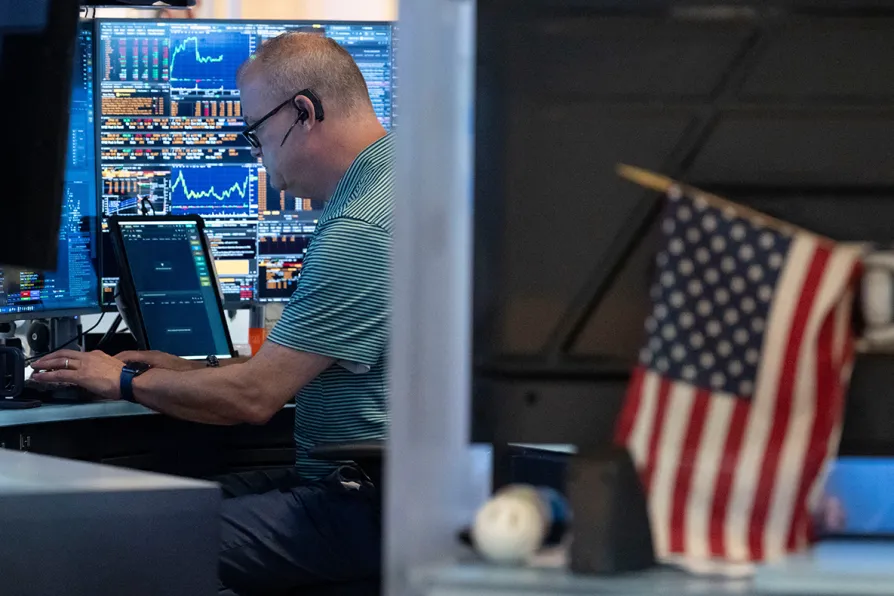 A trader works on the floor of the New York Stock Exchange in New York, Friday, Aug. 21, 2026. (AP Photo/Yuki Iwamura)

A part of the British empire’s network of slavery, today the Caribbean island of Nevis faces a new form of exploitation in the form of crypto-colonialism, CLAUDIA WEBBE writes
A new book by Victoria Holmes illuminates the many hidden histories of the oppression experienced by Gypsy/Roma/Traveller community, writes ROGER McKENZIE
Even the oligarchs of the artificial intelligence industries are warning that their creations have the capacity for the ultimate destruction of the planet and its population. ANDREW MURRAY suggests that there might just be other solutions
The Labour government must deliver on its commitment to bring back privatised services into the public sector. This not only saves money but also creates accountability and generates wider social benefits, argues ANDY MCDONALD MP
Public ownership of Great British Railways has enormous potential to improve our railway network, but that can’t happen unless jobs, employee rights and union recognition is at the heart of the transition, argues MARYAM ESLAMDOUST
Challenges from the unscrupulous misuse of AI to steal actors’ voice and physical likenesses is being met with a firm union response, writes LYNDA ROOKE





AMID mounting evidence of the effects of the climate crisis and a series of lengthening US-led wars, there has also been a degree of turbulence in US financial markets. If that turmoil persists, or even deepens, the major effects may not be felt in the US alone, but across the globe. Unfortunately, we are all affected by the structural problems of the US economy and their domestic mismanagement.
The impact of rising oil prices has been widely discussed, even if the cause is frequently misstated. Oil prices began to fall about three months after Russian forces entered Ukraine in early 2022. They have only risen sharply from the beginning of this year because of the US war on Iran, abetted by Israel in particular.
Russia can carry on selling its oil despite the conflict. The same has not been true of the Gulf states. So, this is Trump’s oil-price inflation.
This upward pressure on prices is a key contributor to the widening dislocation in US and global financial markets. Across the world, consumer prices have risen because of the increasing cost of energy.
Bond pressure
But energy is not the only area where serious difficulties are apparent. Global bond markets have also been under severe strain, beginning in the United States, but affecting borrowers across the world.
The interest rates payable on bonds (called yields by investors) rise as the bonds fall in price. Recently, US government bonds have slumped, so the interest rate payable has increased. Earlier this year, the interest rate on the US government benchmark 10-year bond rose from 4 per cent to 4.7 per cent currently.
This seemingly modest rise is important. The latest data, up to the first quarter of this year, shows that outstanding US federal government debt was over $39 trillion (just under £29trn). It will have risen close to $40trn (£29.5trn) since.
Because the level of debt is so large, small changes in interest rates can have disproportionate impacts. Every 0.7 per cent rise in government interest rates overall adds roughly $280 billion (£206bn) to US federal government annual interest rate payments. This is more than the combined federal spending on training, justice and transportation.
There are three main factors behind the recent rise in yields. The first is the inflationary consequences of the war against Iran. The second is the rise in the federal deficit itself (and some commentators argue this has been exacerbated by the recent rise in company debt to finance the AI craze). Third, the Trump administration has shown an unusual degree of incompetence, where its interference in the bond market has only increased inflation concerns.
But these are simply the current, conjunctural factors. The US has a structural problem of government debt, or rather, a structural economic problem that periodically causes crises in the government bond market.
This structural problem first became apparent in during of the Vietnam war. The US massively increased its debt, both openly and covertly, to finance the war. In the process, it wrecked the post-World War II economic architecture of Bretton Woods, because it could not meet its debt obligations.
Even after the Vietnam war ended, the US trade and interest payments deficit with the rest of the world (the “current account deficit”) persisted. That persistence meant that the US rapidly transformed from the world’s largest creditor nation to the world’s largest net debtor. The US currently owes the rest of the world over $30trn (£22trn), and must pay interest on that to overseas investors.
Essentially, the US lives beyond its means. Its imports far exceed its exports. It has built up an enormous stock of overseas debt, which incurs substantial financing costs. It also maintains enormous military budgets, to fund a military which is stationed in innumerable countries totalling 170,000 personnel. With some temporary variations, this situation has persisted for 50 years.
The global dominance of the US dollar, established just before the end of World War II, partly insulates the US from the most extreme effects of its own structural problems. Many countries have a long history of balance of payments crises (inability to pay for imports, and/or inability to sell government debt to investors) even when their structural problems were not so great as the US. Britain was one of those countries, although the era of major currencies floating on the foreign exchanges means these crises are now much frequent in the Global South.
In this type of balance of payments crisis, one of the most common responses is a currency devaluation. Simultaneously, this makes imports more expensive, exports cheaper and government debt more attractive to overseas investors. The main risk is rising inflation because of those more expensive imports.
The US is generally reluctant to adopt this tactic. Overseas holding of US government bonds and US stock market combined are also valued at around $40trn (£29.5trn). Devaluing the currency could lead to the outright collapse of key US financial markets, or their permanent relegation to minor status, as has happened to Britain.
The US can only safely use this manoeuvre when it is certain of the financial support of a large creditor nation, who will continue to buy its financial assets. This is what Japan was forced to do in the 1990s and which has permanently damaged the Japanese economy.
These are the dilemmas currently facing the Trump administration. Leaving aside his bombast, self-contradictions and attacks on “allies,” some of his efforts are logical. He has tried to reduce the current account deficit through tariffs and sanctions. This has largely backfired because of pushback by China. He has sought to force the Nato countries to buy extremely large amounts US military hardware, with some success. He has cut welfare programmes in the US, causing popular opposition, but little resistance from the Democrats.
But none of this has been enough. The federal government deficit continues to climb steadily higher, along with consumer prices and the interest rates on US government debt. The risks to US financial stability are not declining.
Surprisingly, the fallout for the rest of the world has been limited. Global government bond interest rates have tended to track US rates higher, but generally only to the same degree. A limited US crisis has not led to severe outcomes globally. That may not last.

Similar stories
US financial instability is exposing the limits of a dollar-dominated global economy — and giving the Global South a historic chance to build an alternative, says MURAD QURESHI
DOUG NICHOLLS says the parasitic finance markets must be challenged or another British government could be toppled
Only an ambitious programme of state-led investment can restore growth and improve living standards, argues MICHAEL BURKE