Michael Burke
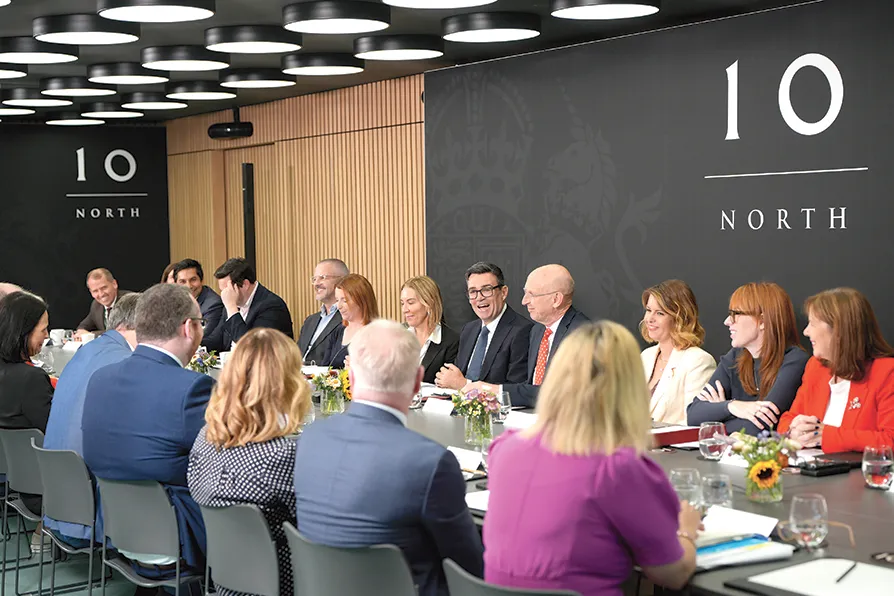
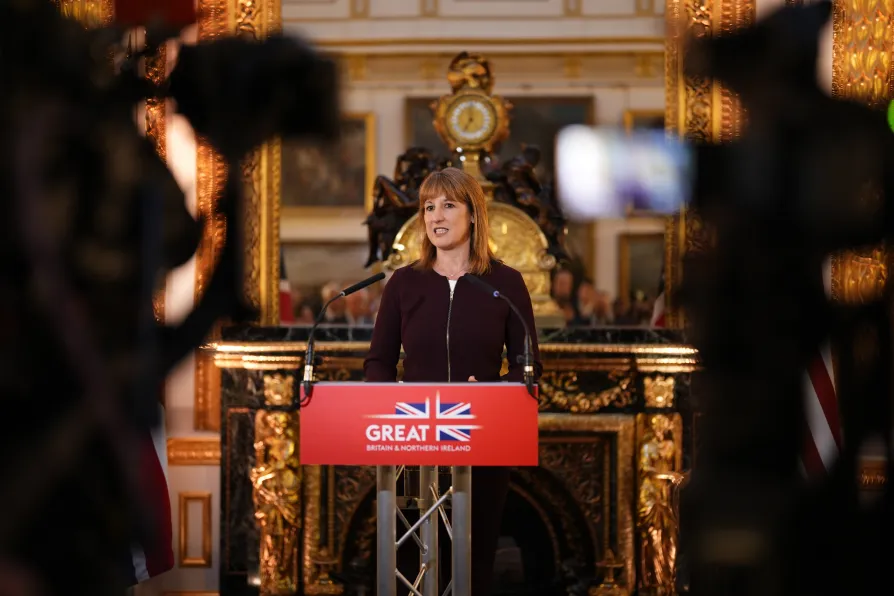
Chancellor of the Exchequer Rachel Reeves with Second Permanent Secretary of the Treasury Jim O'Neil (left), and Scottish Secretary Douglas Alexander as she hosts a roundtable with gas and oil bosses at 11 Downing Street, central London, March 4, 2026
Economics / 5 March 2026
5 March 2026

With private investment weak and public infrastructure crumbling, the Spring Statement offered little to revive a stagnating economy, writes MICHAEL BURKE

INVESTMENT WITHELD: Paternoster Square, City of London, on the right with the columns is the new home of the London Stock Exchange / Pic: gren/CC
Features / 31 January 2026
31 January 2026

If the government really wanted to address public finances, improve living standards and begin economic recovery, it would increase its borrowing for investment, argues MICHAEL BURKE

Chancellor of the Exchequer Rachel Reeves takes part in a townhall session at the Calthorpe Community Gardens in London, December 18, 2025
Economy / 6 January 2026
6 January 2026

After 15 years of spending cuts and regressive redistribution, the British economy is weaker, investment is still anaemic and living standards are stalled – yet all major parties remain committed to a policy that has repeatedly failed to deliver recovery, says MICHAEL BURKE

WARFARE NOT WELFARE: Defence Secretary John Healey (red tie) is shown the Tekever AR5 drone during a visit to Tekever's new military drone production facility, part of an expansion of the country's defence manufacturing capabilities, in Swindon, Wiltshire in September 2025
Features / 31 October 2025
31 October 2025

There is a popular way out of the British economic crisis, suggests MICHAEL BURKE

WEDDED TO AUSTERITY ECONOMICS: Chancellor of the Exchequer Rachel Reeves speaks at a business reception in central London as part of US President Donald Trump’s state visit, September 18 2025
Economics / 27 September 2025
27 September 2025

It is the private sector’s failure of investment that is driving the economic crisis – Labour needs to realise that it’s the public sector that holds the key to getting the country back on track, argues MICHAEL BURKE

Rachel Reeves at a coal tip
Features / 30 August 2025
30 August 2025

More cuts, higher taxes or stronger growth – these are options for Labour economic policy, suggests MICHAEL BURKE

Cargo containers line a shipping terminal at the Port of Oakland on July 31, 2025, in Oakland, Calif.
Features / 2 August 2025
2 August 2025

It’s the dramatic rise of China with its burgeoning economy that has put the Trump administration into a frenzy – with major implications both at home and abroad, argues MICHAEL BURKE

CRINGING SERVILITY: Sir Keir Starmer picks up UK US trade deal papers dropped by Donald Trump at the G7 summit in Kananaskis, Alberta, Canada, June 16 2025
Features / 5 July 2025
5 July 2025

Under current policy, welfare cuts are just a small downpayment on future austerity, argues MICHAEL BURKE

Chancellor of the Exchequer Rachel Reeves speaks at a reception for British and EU businesses in Downing Street, London, May 19, 2025
Austerity / 31 May 2025
31 May 2025

Exempting military expenditure from austerity while slashing welfare represents a fundamental misallocation of resources that guarantees continued decline, argues MICHAEL BURKE

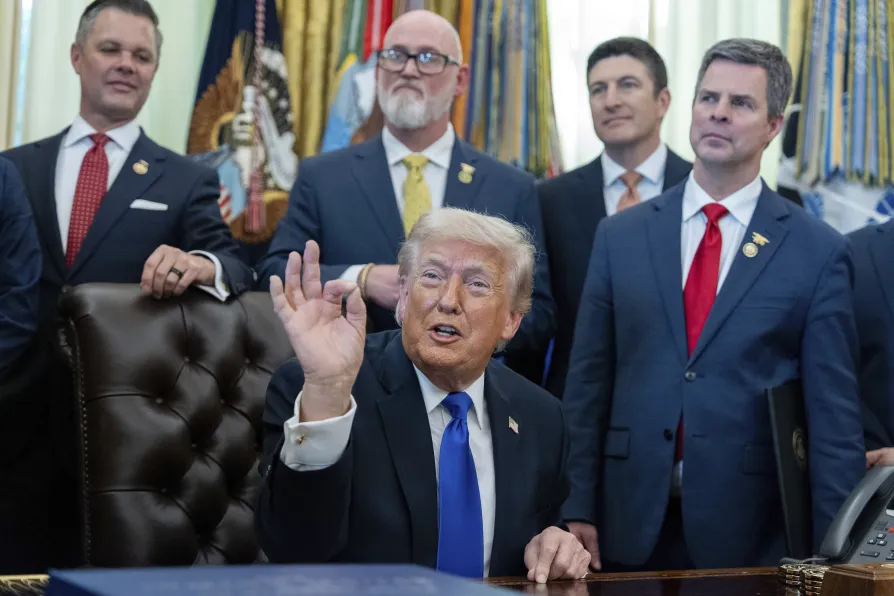
President Donald Trump talks about transgender weightlifters as gives a commencement address at the University of Alabama, May 1, 2025
Trade / 3 May 2025
3 May 2025

Washington’s tariff policies become explicable in light of the US economy’s relative decline and the astonishing rise of China, argues MICHAEL BURKE

Protesters show placards as Chancellor Rachel Reeves is abou
Features / 29 March 2025
29 March 2025
While slashing welfare and public services, Labour’s spring statement delivers a bonanza for death-dealing bomb merchants. We now see the true and terrible face of austerity 2.0, writes MICHAEL BURKE
Rachel Reeves and her Treasury team prepare to leave 11 Down
Features / 22 February 2025
22 February 2025
In his first of a new monthly economics column MICHAEL BURKE argues that public-sector investment is more effective, more productive than private-sector investment