A California union’s decision to host a meeting about US policy towards Cuba has prompted a congressional probe and renewed attacks on international solidarity, writes CAMERON HARRISON



Much more austerity or major upheavals ahead – that is the choice
After 15 years of spending cuts and regressive redistribution, the British economy is weaker, investment is still anaemic and living standards are stalled – yet all major parties remain committed to a policy that has repeatedly failed to deliver recovery, says MICHAEL BURKE
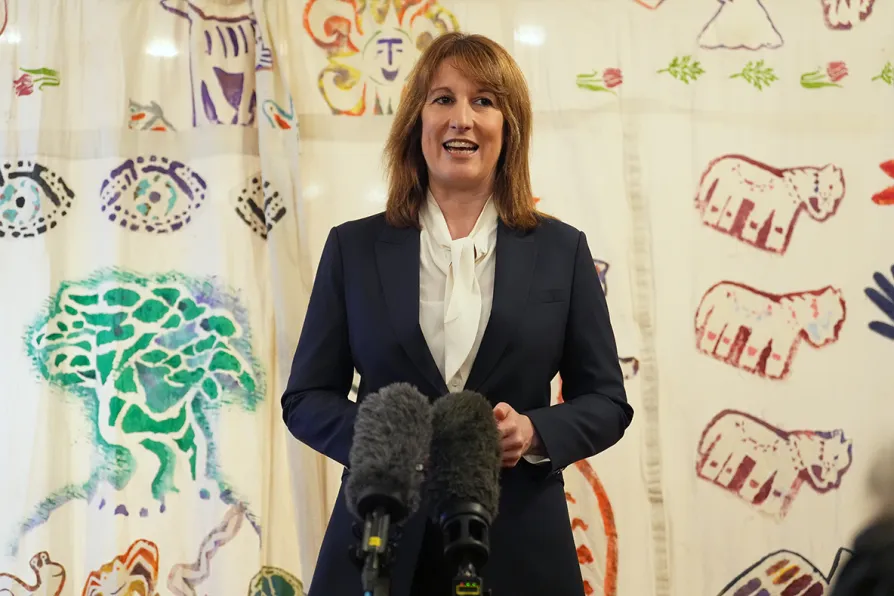
 Chancellor of the Exchequer Rachel Reeves takes part in a townhall session at the Calthorpe Community Gardens in London, December 18, 2025

The Baltic state is set to reverse its constitutional prohibition on nuclear weapons and foreign bases as part of accelerated Nato war preparations, warns TOM UNTERRAINER
Long-term underfunding and state neglect, while simultaneously probation services have been undermined, have intensified the prison crises, argues SOLOMON HUGHES
Holyrood incompetence has cost jobs and put the future of Clydeside’s Ferguson Marine shipyard into jeopardy. Its future should have been assured, argues KENNY MACASKILL
With the agitated debate now raging in the media about the early release schemes, Prison Officers Association general secretary STEVE GILLAN gives the view of those who work in the sector
The hounding of the late Jason Arday is an all too familiar experience for many black people. ROGER McKENZIE calls for collective action to combat what can feel like personal isolation





AUSTERITY has been imposed now for over 15 years and with no sign of economic recovery. On the contrary, the economy is weaker because of austerity and there are some signs that it is deteriorating further.
The head of the Confederation of British Industry recently declared that the economy was heading into 2026 with a private-sector downturn.
The stated aim for austerity, that it is needed to restore public finances can be easily dismissed. Government finances are now worse off. Supporters of the latest two austerity Budgets from the Labour government have taken to justifying them on the grounds of the fragility of government finances once more. The medicine has poisoned the patient, so we will increase the dose.
Austerity is properly understood as the transfer of wealth and incomes from poor to rich and from labour to capital. The founding document of British austerity, the 2011 Budget from David Cameron and George Osborne, increased VAT (which overwhelmingly hits the mass of the population) to raise £13 billion, while cutting taxes on business profits to give away exactly the same amount. This was not designed to reduce the deficit or the debt, but was a regressive measure of income redistribution. It set the trajectory for austerity ever since.
This regressive redistribution has a purpose, beyond the feather-bedding of natural Tory constituencies. The undeclared aim was that a state-induced rise in incomes of the rich and the profits of firms in Britain would lead to a greater propensity to privately invest.
Rachel Reeves correctly reminds us that the economy, living standards and public services cannot improve without economic growth. Furthermore, growth requires investment. On these points, she is correct.
Yet cutting useful public spending on services to fund increased military spending, raising income tax on average earners and cutting public-sector investment (except in the military) is no way to promote a policy for growth. They are the opposite. But this is what two Budgets, a Spring Statement and a Spending Review have done in just 18 months in office.
Supporters of austerity are above all supporters of private-sector “solutions” to the crisis, including private investment. Yet private investment has been exceptionally weak. For most of the last 15 years private investment has been the weakest part of the economy. For a prolonged period, the fall in private investment (GFCF, gross fixed capital formation) accounted for the whole of the decline in GDP in Britain after the 2008 crash.
For an even longer period, it remained the weakest component of GDP. This has a been a decisive negative contribution, as investment in the means of production is the key determinant of economic growth over the medium-term. But for a prolonged period, austerity failed to promote private-sector investment, no matter how lavishly private capital was treated (the subsidies to banks and Big Oil companies included) and how harshly workers and the poor were treated.
There were also some secondary but important targets that were missed. Clearly, benefiting private owners at the expense of workers was designed to reduce labour’s share of national income, or least provide a measure that austerity was working as designed.
But the labour share has barely shifted since 2008. When investment is so low, output can only be increased by increased labour. So, until very recently (and leaving the pandemic aside) unemployment has remained relatively low throughout the austerity era. Consequently, apart from the Biden/Trump bout of global inflation, it has been very difficult for capital to suppress real wages.
In addition, austerity was supposed to “shrink the state” as part of the programme to boost the private sector. But this has also not gone to plan. The government is now a larger part of the economy than before the 2008 crash, whether its role in the economy is measured either as government consumption as a proportion of GDP, or whether government investment is also included.
However, there is one straw in the wind which suggests that an important, if subtle change is taking place. There has been a very moderate but persistent rise in private-sector investment over the last three years (not including the rebound from the depths of the pandemic). It is approximately three times the general growth of the whole economy. It is still below an annual average growth rate of 4 per cent, which simply underlines the dire state of the economy in aggregate.
How should this new development be interpreted? This is not a dynamic recovery in business investment, more like a return to the tepid growth rate of the period prior to the crash in 2008.
Paradoxically, it may have the terrible effect of encouraging the supporters of austerity that bleeding the patient is finally seeing some positive results. The risk is that this will encourage the supporters of austerity — which covers Reform UK, the Tories, Labour and the Lib Dems — to persist with their enormously damaging policy.
But there is a simple arithmetic which means there is no prospect that current trends could lead to a strong and sustainable recovery, with all the improvement in living standards and public services that could entail.
This is because the long structural decline of business investment in Britain leaves it too weak to lead a broad-based recovery. Business investment now accounts for almost exactly 11 per cent of GDP. If business investment grows at an annual average rate of 3.9 per cent, as it has done over the last three years, it can only add 0.4 per cent to GDP each year. When the economy is growing by only 1 per cent a year, even this fractional improvement would be welcome. But it would still be far from ensuring any sustained rise in living standards.
For that to take place, one of two options must be pursued. The first is that business investment growth continues to outstrip the rest of the economy at the same modest pace as the last three years, until it becomes a much bigger factor in the economy. But that would take another generation or more.
The other option is that a much more aggressive political force is in office, slashing welfare and public services, rolling back minimum wages and rights at work, axing environmental and other business regulations, cutting business taxes and accelerating privatisation, beginning with the NHS. This is how the media clamour for Reform UK should be understood, as well as its derision for Keir Starmer’s difficulties in pursuing welfare cuts.
Naturally, workers and the poor have nothing to gain from either of these scenarios. But the gravity of the British economic crisis is such that our rulers are committed to one version of austerity or another.
Huge battles and upheavals would be needed to force on them a change of economic direction.
