
After months of uncertainty over printing and distribution, the first Scottish-printed edition of the Morning Star is soon to roll off the presses


Against silence and exploitation: a survivor’s call to stand together
Gisele Pelicot said ‘shame must change sides.’ We may think we agree, but, argues LOUISE RAW, society still has some way to go
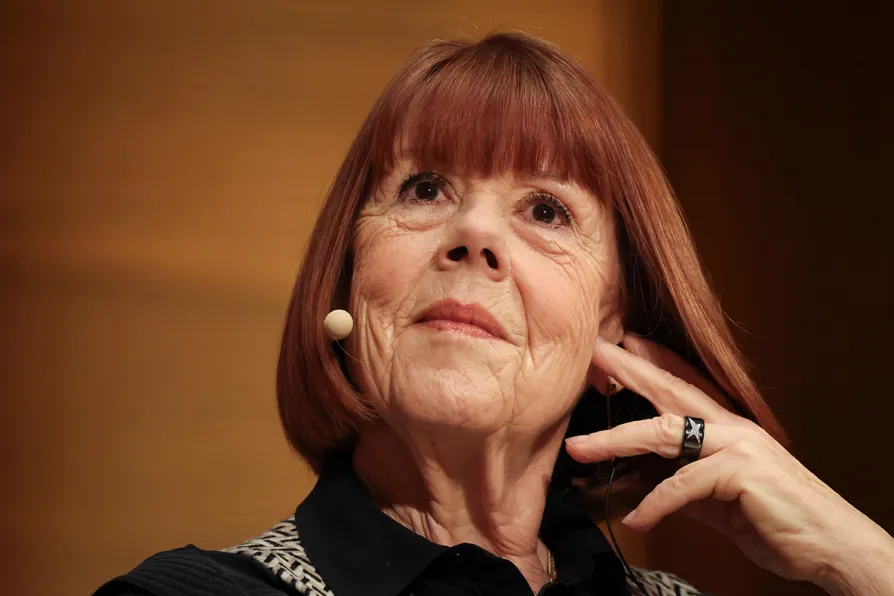
 Gisele Pelicot presents the German edition of her memoir, 'A Hymn for Life', in Hamburg, Germany, February 24, 2026


Some thinkers and authors on the right are openly discussing the possibility that the historically successful party of the British ruling class may be exhausted
Class struggle is the motor of history but the direction and detail of change at any time and place is the outcome of many factors, suggests the Marx Memorial Library and Workers’ School
Merseyside’s proud tradition of internationalism is being kept alive through events organised by trade unionists and allies in the region, writes ROBERT MACDONALD
JOHNNIE HUNTER reports from the German Communist Party’s (DKP) weekly Unsere Zeit (Our Newspaper)-organised Peace Days festival in Berlin last weekend
Les Preger was one of Manchester’s first volunteers to volunteer in support of republican Spain, writes his daughter JANEY PREGER
TONY BURKE surveys the shifting political landscape and the challenges Labour needs to address if it is to prevail in the 2028 federal elections





I WAS thinking the other day about a particularly ugly blanket.
It was that kind of thin synthetic fleece that gives you static shocks if you’re not careful; emblazoned front and back with a roaring lion, picked out in garish reds and oranges.
He told me his sister had bought it for him. He put it over me, at some point during a very long night when he must have seen me shaking, and assumed it was from cold.
I still see the blanket from time to time on market stalls: I always think “Yes, just as ugly as I remember — though it’s clearly still selling after a couple of decades, so what do I know?”
I hate, too, that it still has the power to take me backwards.
It might seem strange that I told him at the time that I liked the blanket; but most women have had, to an extent, to flatter or cajole a man for our safety; to try to talk our way out of trouble.
Just part of being a woman, we might think — and sometimes, say.
My friend did, when I finally got back the next morning. I’d persuaded him, at last, to unlock the five (I counted them) locks on the front door (which also had the first machete I’d ever seen in real life beside it), and walked through that door quite slowly, carefully not showing any relief, just in case.
It seemed like forever, and I don’t remember much about the journey, but eventually I got home. I threw up for about an hour; then I called one friend, an older woman I’d only known a while — I was new in town.
She told me: “Oh well — it was just ‘date rape,’ it happened to everyone; just get on with it, no point making a fuss.”
This casual acceptance — that we as women are naturally prey, and might have to fight for our lives at any moment in any place — street, park, school, workplace, home — was not at all uncommon.
It didn’t seem that hard to “just get on with it.” Sexual abuse from the age of four had already taught me to quarantine some experiences in my mind, and watch what I said.
The family “friend” had told me I would break his heart if I didn’t return his “love,” and would break my mother’s if I told her. I can still remember that feeling or responsibility: of accepting, at that ridiculously young age, that I held these two grown-ups’ happiness in my hands.
Again, I can’t stress enough that a vast number of women know exactly what I mean, even if the ages and circumstances are different.
I’d like to say these were my only experiences of sexual abuse or male violence. I worry that it’s venturing into the absurd to admit they weren’t, that it undercuts my credibility: as Lady Bracknell might have said, to be the victim of one abuser may be regarded as a misfortune; several, looks like carelessness.
We learn to keep it in — and if we don’t, there are social consequences.
I once let something slip about that blanket and that night, when off my guard, a few years ago. I was having dinner with two women I used to work with, and a couple of glasses of wine to the good.
They were horrified. I can still remember the way they shushed me, and looked stricken and annoyed for the rest of the meal. I never heard from either of them again: one of them to this day glares at me if she happens to see me in the street, as if I was something particularly nasty on her shoe. She would call herself left wing: her very nice husband was a senior union official for many years.
My feelings about this at the time were a combination of embarrassment and a sense of unfairness. The shame died hard, but the more I thought about it, the more I realised I hadn’t really “got on with it” as much as been working to guard against slips like these — to shut myself up.
I began to stop hiding it: not bringing it up, like you might with something like a major car accident, say, that wasn’t your fault. But if the topic came up, I wouldn’t shy away from saying (I almost typed “admitting”) that I was a victim.
Some people responded by telling their own stories, which is always an honour.
Others were clearly uncomfortable. Some told me it was better not to talk about “these things”; a few told me I ought to think about what it was about me that attracted such “bad energy.” One offered me homeopathy, to help me “let go of it” and “not need to talk about it.”
Lately survivors have had little choice but to think about sexual abuse. The far right’s relentless exploitation of CSA as a recruitment tool and rallying cry; the Pelicot trial, the Epstein revelations, the shocking death of Virginia Giuffre, have all kept these issues in the foreground.
Of all the Epstein revelations the one that shocked me the most wasn’t even a description of abuse, by Soon Yi Previn, Woody Allen’s wife, castigating the 15-year-old that 52-year-old congressman Anthony Weiner had sent sexual messages to as “despicable and disgusting.” It’s probably a measure of denial that made her attack so vicious, but the injustice still took my breath away.
Throughout the rape trial in France, Gisele Pelicot repeatedly said “Shame must change sides” (La honte doit changer de camp). She repeated it because she wanted to get it into all our heads, and make us think about the absurdity of that shame.
She wanted us to confront how prevalent victim blaming still remains.
The Victorians used to argue that a virtuous woman could not be raped — her very body would reject the attempt.
This was powerful. Some girls who were kidnapped and trafficked from London’s impoverished East End into West End brothels, where wealthy men paid a premium to rape virgins in special soundproofed rooms, were too ashamed to try to escape back home after the first time.
We might think such cruel shaming went out with crinolines and antimacassars: but in the US, Senate candidate Todd Akin argued as recently as 2012 that women’s bodies would somehow naturally prevent pregnancy in the case of “legitimate rape.”
Mme Pelicot’s case brought a new horror into many people’s consciousnesses: that men who appeared to love their wives would not only drug-rape them, but encourage strangers to do the same.
I already knew this wasn’t an aberration, because of the case of Saskia Inwood, who woke one night in 2018 in her Maryland home to find husband Mike Levengood not only assaulting her, but live-streaming every moment.
Like Dominique Pelicot, Levengood knew he was part of an entire community of men.
M Pelicot had used a specific chat room, “Without her knowing,” to find men to rape his wife. He filmed everything, saving it to a file labelled “Abuses.” That’s how the police know there were around 83 offenders: only 50 were ever traced.
Equally testing for survivors is the far right’s exploitation of CSA.
Being a political football means you get kicked; and it hurts.
I knew the reality behind the “protecting women and girls” rhetoric — one of my friends, a “grooming gang” survivor, was threatened by Tommy Robinson’s team when she pushed back against their attempt to racialise her horrific experiences.
We founded Survivors against Fascism to expose this hypocrisy: as I expected, I get targeted for this; but I didn’t expect one attack, from a former Class War activist, who now appears on GB News. She opined on social media that I shouldn’t have started SaF because I personally hadn’t been raped by a Muslim gang; and went on to make the bizarre claim that I was jealous of those who had.
My grooming gang survivor friends go through hell on a daily basis; and despite everything they’ve been through, they still suffer negativity when they act “like victims” rather than what we call Shiny Survivors.
Victim should not be a dirty word.
It’s not a status people have to progress beyond. They don’t have to feel like survivors every day, or at all.
They don’t owe the world that.
We have to love and support victims as they are, even when they seem difficult or get on our nerves. Those are simply the days when their scars are visible: it isn’t their fault the scars exist, and we have to really believe that.
The alternative is social isolation: punishment, albeit unintentional, they do not deserve.
On March 28 I will be on the Together Alliance March against the Far Right; and for the first time ever, will have a Survivors against Fascism banner.
Please come and say hello, and help me to walk with the banner if you can: some survivors aren’t able to identify themselves and, in a fitting analogy, I am relying on you — because I can’t carry it on my own!
For more information go to www.togetheralliance.org.uk. Survivors against Fascism can be reached at survivorsAF@proton.me.

Similar stories
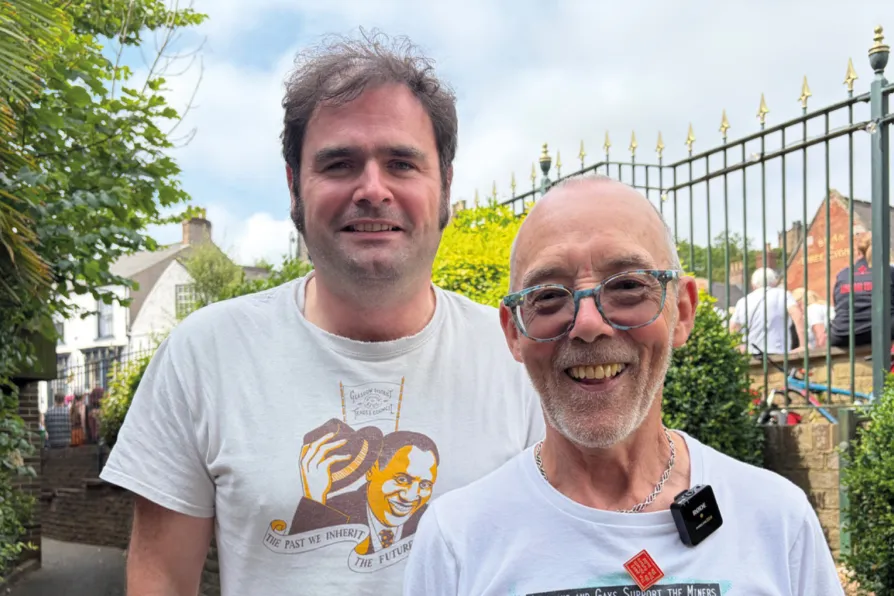
Lesbians and Gays Support the Miners co-founder MIKE JACKSON talks to Matt Kerr about the enduring power of Pride, protest and trade unionism

Ron's rages are sincere and — according to his wife — healthily cathartic. But can these splenetic outbursts loosen the grip of capitalism at its most monstrous?
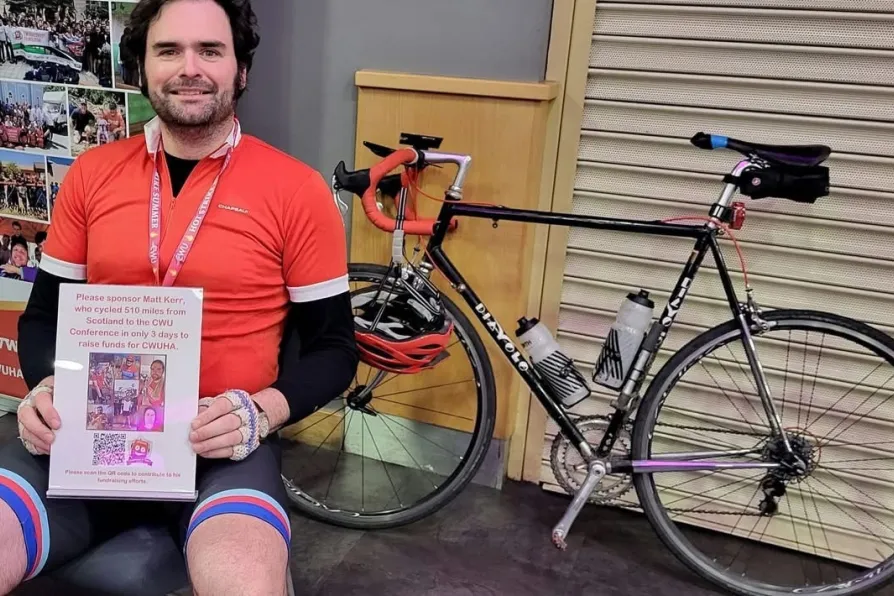
After battling hills, rain and injury in a three-day cycle ride ending at the CWU conference, MATT KERR reflects on why class unity remains the answer to injustice

Sexual harassment on Britain’s railways is rising sharply, according to the British Transport Police, yet too many women still feel reporting is futile. LYNNE WALSH asks why the burden of safety all too often remains on women themselves