ROB WARZYNIAK wades knee deep through a pile of ‘dead canaries’ of Trumpist policies which exacerbated the horrors of US capitalism domestically


 Latest editorial

Labour faces populist resurgence in Australia
TONY BURKE surveys the shifting political landscape and the challenges Labour needs to address if it is to prevail in the 2028 federal elections
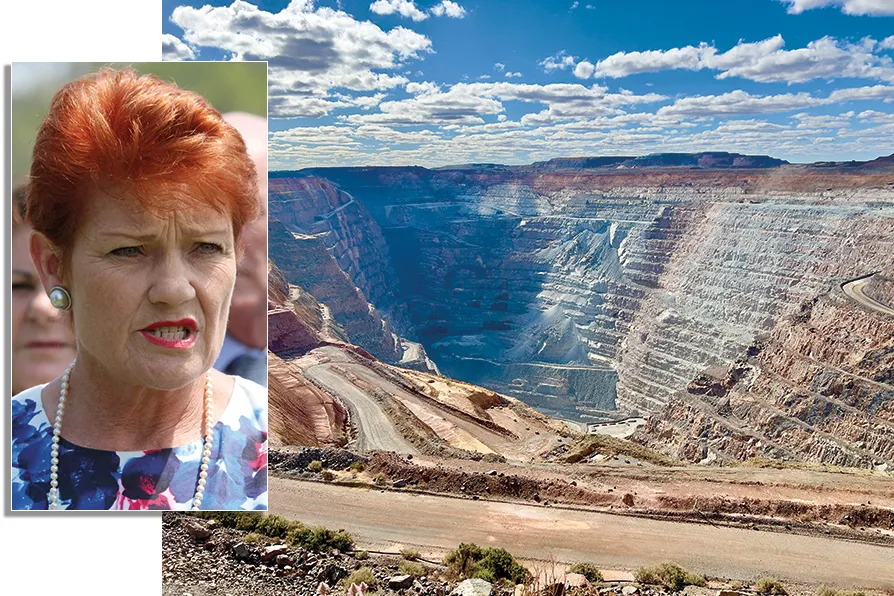 ATTACK ON WORKERS: (Right) The Super Pit of gold mine at Kalgoorlie (Labour seat) in Western Australia which employs up to 1,500; (inset) One Nation’s Pauline Hanson / Pics (L to R) jfish92/CC, Chris Olszewski/CC
Without evidence or Nato consultations Berlin’s answer to the Leipzig incident is a rupture of relations. SEVIM DAGDELEN examines why
FRANCISCO DOMINGUEZ introduces the background to a conference on defending Latin America’s sovereignty
The glacier collapse in Nepal is yet another warning that a warming planet is making Himalayan disasters more frequent and destructive – but the countries facing the greatest risks are often those least responsible, says LI YANG
Nick Blair is set to benefit from a hugely lucrative contract to ‘virtually’ train the British army for its next war. Like father, like son, writes SOLOMON HUGHES
Even when tragedy strikes, Western media cannot resist the opportunity to turn it into a sordid propaganda opportunity, as the Nepal-China border tragedy shows, writes CARLOS MARTINEZ
Trade unions should be at the heart of the anti-racist push for reparations for the historic legacy and continuing impact of slavery, writes ROGER McKENZIE





THE AUSTRALIAN Labour government lead by PM Anthony Albanese is facing a surge in opinion polls of the far-right One Nation (ON) party — lead by Senator Pauline Hanson — following the loss of a by-election at Secret Harbour, in Western Australia, which was won by ON candidate Luke Herdegen with 57 per cent of the vote to Labour’s Georgia Tree on 42 per cent.
Secret Harbour, just over 30 miles south of Perth and a 37-year Labour stronghold, was lost to One Nation with a 37 per cent swing to the right-wing party.
The constituency is dominated by young families and “tradespeople” (skilled manual workers) who are facing cost-of-living problems. Hanson declared “there’s no such thing as a safe seat in Australian politics anymore.”
The defeat would have been worse for Albanese if he had not doled out tax breaks in the form of sales tax reductions. Western Australia is the richest state in the federation and voters felt they deserved the payment, because of the mining revenue the state generates.
Secret Harbour is also the sort of seat Labour must win at the 2028 federal elections.
Meanwhile Hanson is busy peddling her “working-class” background, citing that she ran a fish and chip shop (in Silkstone, Queensland) until she became an MP in 1996.
This year, according to the Mining and Energy Union (MEU), Hanson criticised pay rises for infant teachers; she told the National Press Club that “workers are on their phones, they don’t work, they don’t turn up, they actually are lazy, and businesses are tied to it. You can’t even sack anyone,” and has promised an “overhaul” of industrial relations because people “don’t want to work.”
But some media pundits argued that Hanson ran a “professional” campaign, with former deputy prime minister Barnaby Joyce joining her on the campaign trail. Hanson has had the use of a plane donated by Australia’s richest person Gina Rinehart, CEO of Hancock Prospecting, the mining and extraction company headquartered in Perth.
One Nation is now targeting hard-pressed working-class voters and trade unionists (dubbed “Red One Nation” voters) — with the next test in late November in Victoria’s state elections.
Melbourne in Victoria is Australia’s second-largest city and contains a dozen electorates with a similar profile to Secret Harbour, alongside vulnerable Labour seats in regional cities.
Pollsters predict One Nation will take control of the state’s upper chamber, the Legislative Council. Andrew Hastie, a western Australian from the Liberal Party’s right wing, says that voters “go to the strong horse” when they sense weakness. Secret Harbour shows how quickly One Nation is turning into that horse.”
But Labour and trade unions have begun targeting Hanson directly rather than the opposition leader Angus Taylor (Liberal Party), describing the party as one that offers anger and slogans with no solutions.
Labour highlights Hanson’s plans for wages, job security and employment rights but does not mentioning her anti-immigrant policies — seen as a sensitive topic.
Trade unions have also gone on the attack after the Australian Fair Work Commission awarded, in August, a 4.7 per cent increase to the minimum wage which Hanson criticised. The wage now stands at $26.44ph (£14.06) or $1,004.90pw (£534.53) for a full-time 38-hour work week.
The Australian Council of Trade Unions (ACTU) secretary Sally McManus opened up on Hansen: “These are Aussie battlers who’ve been doing it tough, struggling and just scraping through, and who stood up for them and their families? Not Pauline Hanson. She argued against these increases.”
But not everyone in Labour is worried about One Nation. Labour Trade Minister Don Farrell said: “Populist parties in this country come and go, they rise and they fall. I don’t think Labour has anything to fear from One Nation.”
Others were not so dismissive. The next federal election is not scheduled until 2028, giving Labour time to develop the policies and the messages to counter One Nation’s rise and pointing out the last federal election, where Labour won 94 seats just months after trailing to the then ruling coalition in the polls.
Luke Hilakari, the secretary of the militant Victoria Trades Hall (the local union umbrella organisation) is more realistic when he pointed out that “Labour’s working-class base was shifting to One Nation due to cost-of-living pressures, the surge of social media and political disenfranchisement — a trend emerging across the globe.”
“Trade unionism is the way we fix it. We are at a hard moment, and if we f**k it up in Victoria, what we call the most progressive state in Australia, good luck everywhere else.
“How do we beat them? There is a kryptonite. There is a fatal flaw that they have, because the truth is that billionaire backers like Gina Reinhart will do nothing to improve the lives of working people. And as soon as that myth is busted through, the far right collapses, completely collapses.”
Tony Burke is the co-chair of the Campaign For Trade Union Freedom.

Similar stories
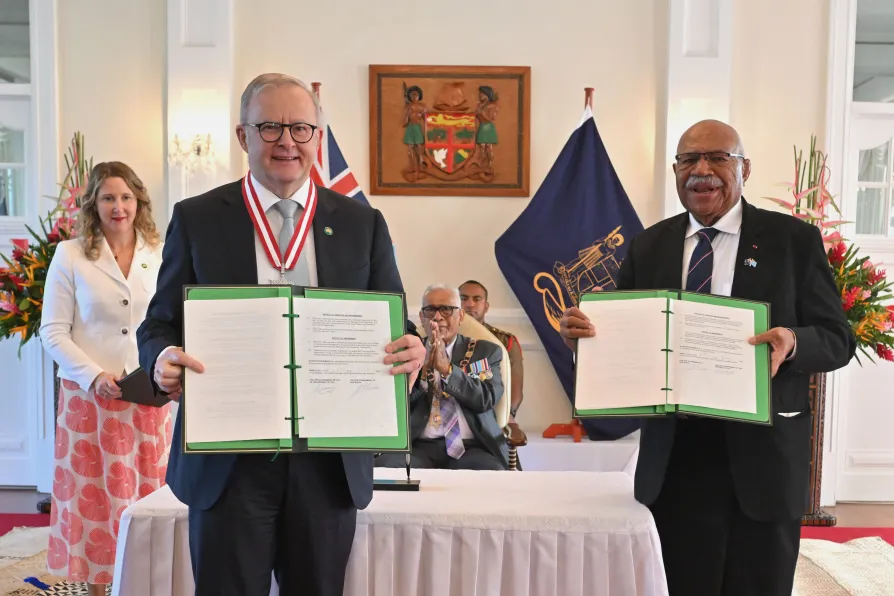
KENNY MacASKILL reminds us of the unprecedented political career of a Scottish miner’s militant son who stayed the course and true to his roots
May elections will soon be upon us and SABBY DHALU calls for a maximum mobilisation, across Britain, to defeat Reform UK and the right at the ballot box
Morning Star Wales reporter DAVID NICHOLSON analyses polling for the Senedd election — and it’s bad news for Welsh Labour