
Working people across Britain are fighting back against austerity, war, repression and exploitation. The challenge now is to unite those struggles, says Communist Party of Britain assistant general secretary JOHNNIE HUNTER

Remembering the first ever Labour PM anywhere
KENNY MacASKILL reminds us of the unprecedented political career of a Scottish miner’s militant son who stayed the course and true to his roots
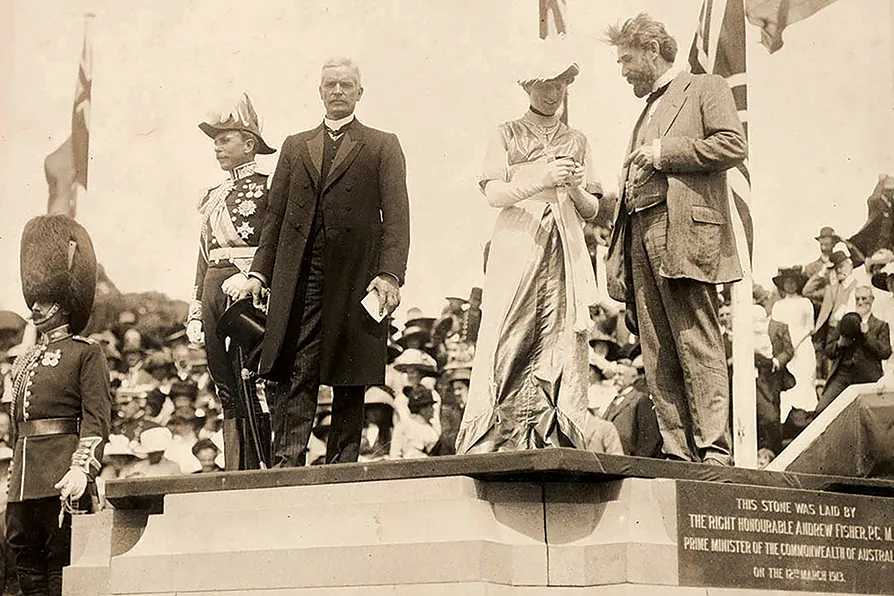
 Andrew Fisher and King O'Malley (bearded), minister for home affairs, at the naming of Canberra in 1913 / Pic: Public domain
Train drivers’ union Aslef general secretary DAVE CALFE speaks to Ben Chacko about his hopes that Burnham’s devolution agenda will include the importance of the railway
DIANE ABBOTT provides an analysis of the reasons for EU and British voters’ dramatic swing to the right
Some of the review’s proposals could make the benefits system less cruel and dehumanising. But its vague plans for services and non-cash support revive the threat that disabled people will lose control over the money we need to survive, writes DYLAN MURPHY
Believe it or not, there was a time when the US government built beautiful homes for working‑class Americans to deal with a housing shortage, writes ERAN BEN-JOSEPH
MAT COWARD has heaps of good advice on recycling garden and household waste over the winter





ASK who was the first Scottish Labour prime minister and many will name the disgraced Ramsay Macdonald. But the first Scot to serve as a Labour prime minister was Andrew Fisher from Crosshouse, near Kilmarnock, in Ayrshire — though he did so leading the Australian Labor Party into office on three occasions.
Indeed, on the second period forming the first Labour majority government elected anywhere. All periods served by him were before Macdonald came to power in 1922.
However, his life has in many ways much more in common with that of Keir Hardie, with whom he had worked closely prior to emigrating.
Born in 1862 in a village that was then the location for 12 pits. His father was a miner, and Fisher grew up one of eight children in a miners’ row with shared washrooms and a communal tap.
Life was hard which doubtless forged his political views, along with his father — a union activist, founder member of the local Co-operative Society, as well as being a committed Christian.
Fisher left school to go down the pits at a very early age, perhaps only 10, his father suffering ill health and dying young. Despite only having attended primary school Fisher continued his education at the Co-op reading rooms and night school and undoubtedly was a highly intelligent man.
In 1879, still aged only 17, he became the secretary of the local branch of the Ayrshire Miners Federation. Tall and handsome Fisher seems to have been a natural leader, and it was in that role his path crossed with Keir Hardie who led the Federation.
In 1881 a strike was defeated and unemployment followed. Further work was obtained but his political and union activities remained undiminished, and he was sacked once again following another strike in 1885.
This time Fisher was blacklisted and the future looked bleak. Accordingly with a younger brother he headed for the mines in Queensland which had been regaled by the States premier Sir Thomas McIlwraith, ironically another Ayrshire man but of a completely different political hue.
Arriving in the Burrum coalfields later that same year of 1885, Fisher and his brother found opportunities denied them in their native land and within two months he was a supervisor.
A few years later moving south to Gympie he became president of the branch of the Amalgamated Miners Association. However, some struggles repeated themselves in his adopted land with further strikes and turmoil as a result.
This seemed to be spur for Fisher to move his efforts into politics.
In Scotland he had supported trade union efforts to work with the Liberals for working men’s representation in Parliament. That mirrored Hardie whose first efforts in seeking election as an Independent Labour candidate and then formation of the Scottish Labour Party took place after Fisher had departed for Australia.
The Australian Labor Party had recently been established, and a branch was formed in Gympie with Fisher elected president in 1891.
His rise in politics would be speedy, reflecting his progress in the union. Doubtless testimony to his hard work, ability and the quiet conciliatory approach he adopted.
Elected to the Queensland Legislative Assembly for Gympie in 1893 he witnessed the scandals resulting in the collapse of the Queensland National Bank, as well as the right-wing administration’s efforts to fund private railways as opposed to using land grants and a not-for-profit operator.
At that stage reflecting in some ways his earlier views and similar to what was happening in the UK, efforts veered towards co-operation with the Liberals to remove the National Party administration.
Losing his seat in the 1896 election he returned to work as an engine driver but also along with others establishing a paper to counteract the one which had played a significant role in Labor’s defeat.
In 1899 he was returned for the seat he had previously held becoming minister for railways and public works in the first ever elected Labor or Labour government at provincial or state level, but which lasted only a week given its minority position and he returned to opposition.
Fisher and colleagues by then refusing to countenance any coalition in which they were not a majority.
A supporter of Australian Federation, Fisher was elected to the first federal parliament in 1901 for the Wide Bay constituency just north of Gympie, a seat he would retain until retiral.
But his political career was just beginning to take off as Labour moved towards power and he became minister for trade and customs in 1904 in the first ever federal Labour government, albeit a minority administration.
That government fell but the following year Fisher became deputy leader of the Labor Party and then leader in 1907.
The following year he become prime minister when a minority Labour administration took office. In 1909 his government fell but the year after he was returned to office for the second time and on this occasion with a comfortable majority, thus leading the first ever Labor majority government anywhere.
In that tenure overseeing the establishment of the Commonwealth Bank, the introduction of maternity allowances, improvements in age and invalid pensions and the approval of Canberra as the site of a new capital.
In the 1913 election his Labour Party was defeated by just one seat but a decisive victory in elections the following year saw him returned for a third time.
Premier at the onset of the first world war, he resigned due to ill health in October 1915 and was later appointed High Commissioner to the UK. Retiring in London, he died there in 1928.
Modern consideration of him requires to acknowledge that he supported the White Australia policy for immigration. In that though he was no different than most in the leadership or in prejudices held elsewhere including in the UK.
That requires to be condemned but it should not detract from his place in history as the first ever Labour PM and the contribution he made for the working people’s interests.

Similar stories
KEITH FLETT looks at geographical roots of working-class activism in Britain
Thousands of remarkable Britons left ordinary lives behind to join the struggle against Franco. Here is a snapshot of those who answered the call
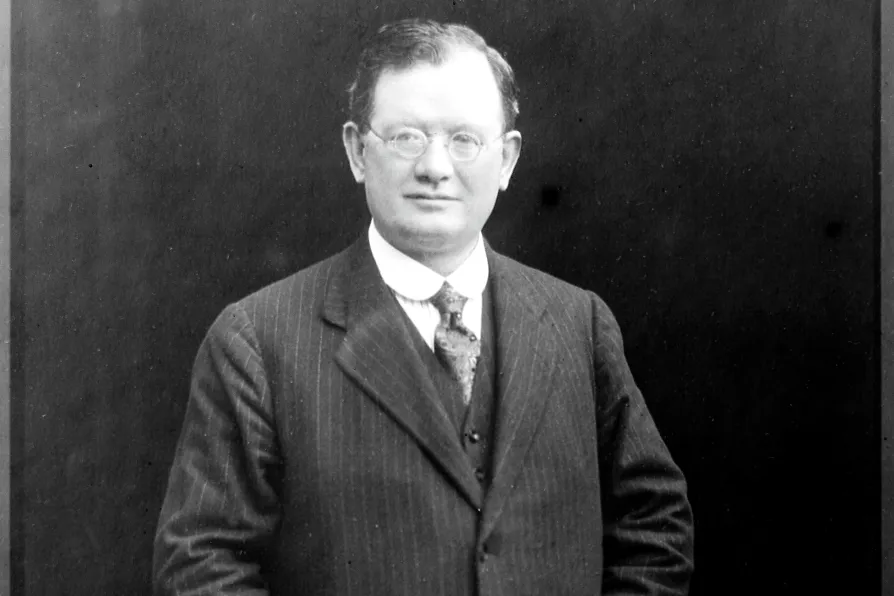
Building is the solution for much of our housing crisis – and will also help to address poverty, ill health, and even anti-social behaviour and alienation, writes KENNY MacASKILL
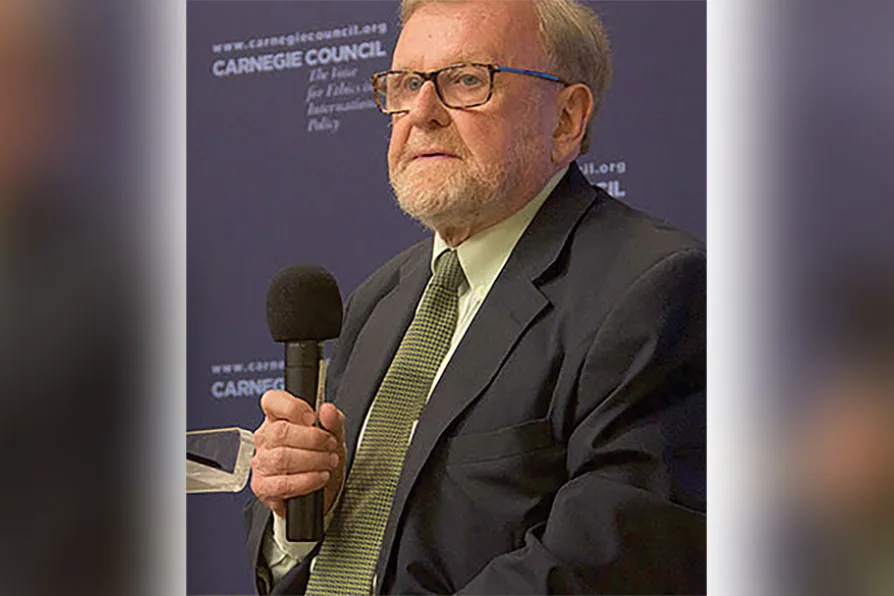
Kenny MacAskill remembers a ‘Sovietologist’ and voice for peace and reconciliation at the Carnegie Council for Ethics in International Affairs