The 25th anniversary meeting of the Shanghai Co-operation Organisation in the Kyrgyz capital may offer a glimmer of hope that international relations do not need to be defined by endless confrontation, writes KENNY COYLE


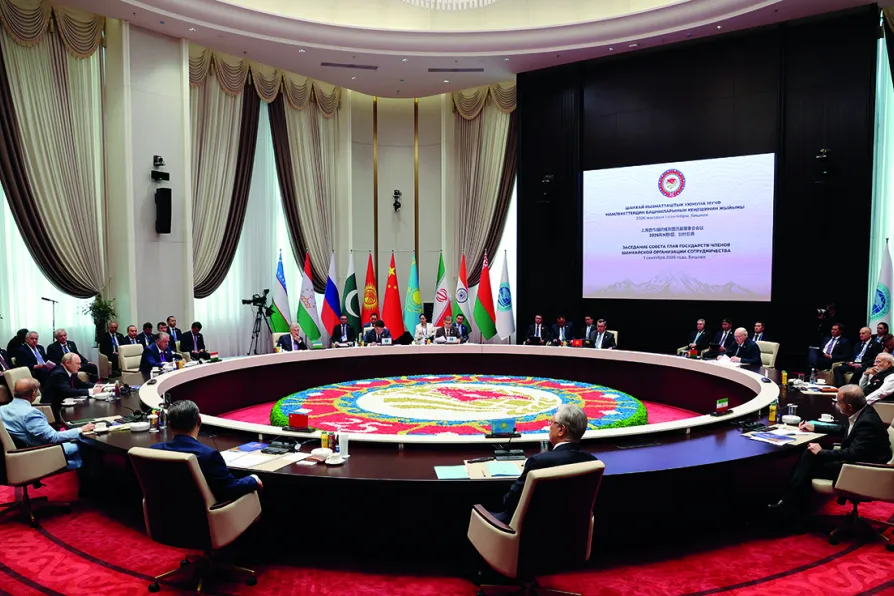
 Latest editorial

Blair’s fortunate son may profit from the fortunes of war
Nick Blair is set to benefit from a hugely lucrative contract to ‘virtually’ train the British army for its next war. Like father, like son, writes SOLOMON HUGHES
 A virtual reality headset [Pic: Remy Gieling / Creative Commons]
The artist, who has just died, is embedded in the subconscious of the Palestinian people
The five young men killed in the A66 crash were responsible for a devastating tragedy — but the crash should force us to ask difficult questions about wider society, argues RENATA MEDEIROS MIRRA
The unwillingness of the British political elite to acknowledge that we are on the edge of a direct conflict with Russia leaves the peace movement with an urgent and onerous task
Committee for the Defence of the Iranian People’s Rights general secretary GAWAIN LITTLE discusses the impact of the US-Israeli war on the Iranian people and economy
Capitalism has extracted itself from crisis before, argues PRABHAT PATNAIK – but through methods no longer available. So it is turning to authoritarianism, militarism and neocolonialism





NICK BLAIR, Tony Blair’s son, is a key part of a consortium which just won a £2 billion contract from the Westminster government to outsource a big slice of British army training, substituting “virtual reality” for physical drills.
Blair’s firm has teamed up with an “abysmal” British privatiser and a US arms giant to win the contract.
The deal shows that arms deals are being prioritised over welfare spending to go to favoured firms with close government links and histories of poor performance.
The Ministry of Defence (MoD) has planned the “Army Collective Training System” (Acts) since 2023, shifting significant training for 60,000 soldiers a year from physical exercises to virtual reality (VR) ones via headsets and screens.
The government announced that the Omnia Training consortium won the Acts contract this July. Under the deal, Omnia will be the army’s “strategic partner” for the next 15 years, organising new training schemes for soldiers using “digitisation and simulation” through a “different relationship with industry” that will be “changing how and where the military trains.”
Much of the VR training will be supplied by Skyral, a key member of the Omnia consortium. Skyral was “spun out” from a larger software company that focused on gaming software.
Skyral founder and co-chief executive Naomi Hulme told the Guardian that its military VR was developed out of gaming virtual worlds, saying: “If you swap, like, wizards for soldiers and dragons for tanks, it becomes really sort of defence applicable.”
She described her military training software as like “Fortnite on steroids.” Fortnite is a popular game and military chiefs like the idea of online training because it is cheaper than live combat drills. But there is limited evidence about the effectiveness of widescale VR troop training.
Skyral does have a name on board that reassures some people, although it may disturb others. Skyral was founded in 2023, a couple of months before the MoD started the bidding for the Acts contract.
Its co-founder and current executive chair is Nick Blair, one of former prime minister Tony Blair’s sons. Skyral describes Nick Blair as a “seasoned investor, adviser and entrepreneur.”
However, Blair’s qualifications for working in defence tech are not obvious. Formerly known as Nicky Blair, this Oxford history graduate previously had a lucrative career as a football agent, helping buy and sell top players, in a business which his mother, top lawyer Cherie Blair, helped him found.
I asked Skyral if Blair’s position wasn’t a “who you know rather than what you know” appointment, using his name to encourage investors and reassure government officials. I also asked Skyral if there was a moral question over Nick Blair’s role.
His father deployed British soldiers in a disastrous and deadly conflict in Iraq. Now, the son gets paid to train soldiers for the next war. The firm did not respond.
Skyral claimed Nick Blair had “worked at the intersection of technology and government policy for the last 10 years.”
I asked what this meant, but Skyral gave no explanation.
Skyral said its slice of the Acts contract is worth £88.6 million, so it is a key but smaller part of the consortium. It will be joined by Capita, a veteran British outsourcer, which says its part of the deal is worth around £54m.
Capita says it will be in charge of “strategic training needs analysis, training scheduling and management, and monitoring and evaluation of training effectiveness.”
Capita’s involvement is questionable, given its very bad record with public services generally, and the MoD specifically. Since 2012, Capita has run army recruitment, a role it will lose next year because of poor performance.
In 2019, the MPs’ public accounts committee said: “Capita’s performance has been abysmal since it started, and it has failed to meet the army’s recruitment targets every single year of the contract.”
As the Acts deal lasts for 15 years, the MoD has reattached itself to Capita for the long haul.
Virtual insanity
Dan Jarvis, who was defence secretary when the Acts deal was announced, claimed the Omnia consortium was made up of “UK-based companies.” This claim about his virtual reality deal stretches actual reality.
Arms firm Raytheon is the largest part of the Omnia consortium. Raytheon will do the work through its British subsidiary, but it is one of the US’s biggest arms firms.
The British MoD is handing over a key part of British military training to a foreign-owned company. The pattern of such privatisations means it is extremely unlikely the British army will ever regain this part of its training, although in 15 years it will be able to find a new contractor.
While Jarvis tried to claim this outsourcing is handing work to British companies, the MoD has been keen on a foreign contractor for the job from the start.
Raytheon-led Omnia won the bid in a contest with Israeli arms giant Elbit. There was a campaign (which I helped) against the British army going into a £2bn training partnership with Elbit, which led to questions in the House of Commons.
However, while it is good that the British army is not being trained by the firm that trained and armed Israel’s troops in Gaza, there has been no debate among MPs about the wisdom of the outsourcing plan itself.
Is this much VR training really useful? Under outsourcing, will the army become reliant on contractors and lose control of the “modern” part of military instruction?
Raytheon also has a record of corporate misbehaviour. In 2024, Raytheon agreed to pay the US government a huge, $950m (£703m) fine to settle charges of fraud and bribery.
Raytheon builds the famous Patriot missile. The charges related to the Patriot and other air defences. The US Justice Department said: “Raytheon engaged in criminal schemes to defraud the US government in connection with contracts for critical military systems and to win business through bribery in Qatar.”
Raytheon deliberately inflated prices charged to the US army by over $100m (£74m). In addition, the US said: “Raytheon employees bribed a high-level Qatari military official to obtain lucrative defence contracts and concealed the bribe payments by falsifying documents to the government.”
This firm is now a long-term “strategic partner” to the British army. I asked the MoD if it had confidence in all the Omnia consortium members. It also did not respond.

Similar stories

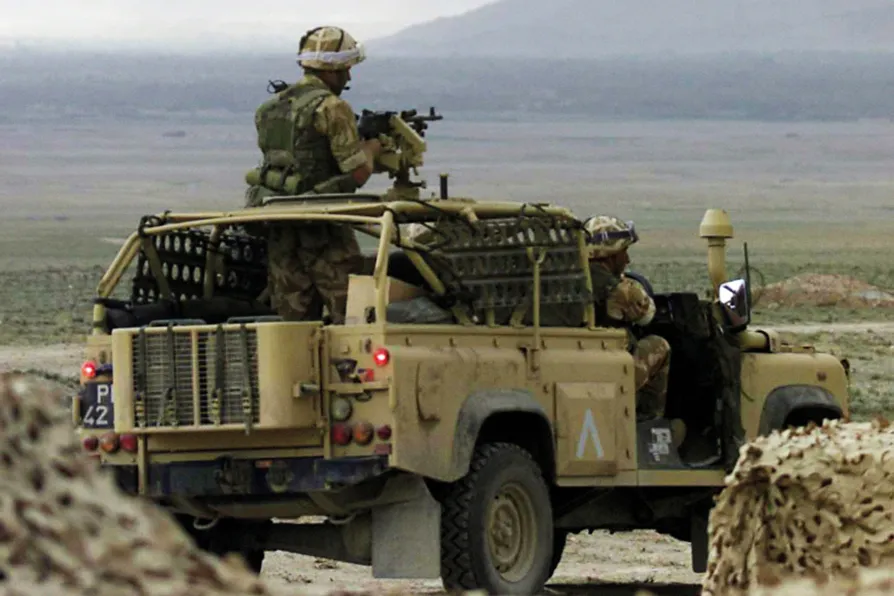
Outrage greeted Donald Trump’s suggestion earlier this year that Britain stayed off the front lines. But evidence suggests our forces were at times pulled from the most dangerous fighting — not by military failure, but by pressure at home, says IAN SINCLAIR
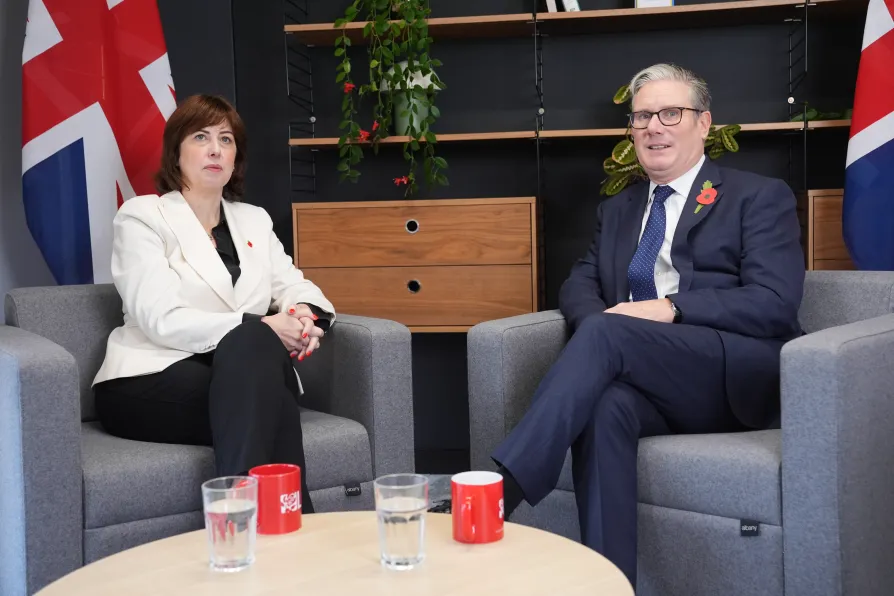
Martin Taylor, the hedge-fund multimillionaire who has poured millions into pushing Labour rightwards, helped finance Lucy Powell’s supposedly dissenting campaign — suggesting her victory was not the ‘soft-left’ rebellion some have claimed, says SOLOMON HUGHES