Trade unions need to step up and force a turn in the policies of the labour movement to effectively confront the far-right threat, argues NICK WRIGHT


 Latest editorial

Universal basic income and the technological revolution
Critics of UBI underestimate both its political significance and its economic potential, writes BERT SCHOUWENBURG
 A pensioner holding bank notes

As the 90th anniversary of the outbreak of the Spanish civil war is marked, Teesside campaigners will gather to remember the local men and women who stood against fascism, explains TONY FOX
Whatever differences exist among international sympathisers of the Bolivarian revolution about its current trajectory, they should unite against the imperialist power that is the source of an enforced retreat, argues ROGER D HARRIS
Washington’s inability to subjugate Iran is an example of how it is trying to preserve a regional order that no longer exists, argues RAMZY BAROUD
US financial instability is exposing the limits of a dollar-dominated global economy — and giving the Global South a historic chance to build an alternative, says MURAD QURESHI
Deprivation is a fundamental factor in criminal behaviour that must be addressed but, KENNY MacASKILL argues, there needs to a major rethink in sentencing to tackle overcrowding





ON JUNE 21, the Morning Star’s Full Marx column was devoted to attacking universal basic income (UBI) and was followed up by letters from readers who wanted to believe that it would not be necessary in some future socialist Valhalla.
In describing UBI as a red herring and writing it off as “snake oil,” the authors of the column illustrated that, while they might understand the basics of UBI, they had little understanding of its significance and its value as a campaigning tool against the worst excesses of neoliberal capitalism.
Moreover, asking whether socialists should support either UBI or universal basic services (UBS) is an erroneous dichotomy implying that we cannot have both.
In fact, the Full Marx team are merely regurgitating a discredited theory saying that putting more money into people’s pockets will merely act as a subsidy to landlords and corporations that will be absorbed by inflation in essential goods; an argument that is used by rogue employers to deny their workers a pay rise.
Universal basic income has five characteristics:
• It is periodic, ie paid regularly
• It is cash based
• It is paid to individuals, not households
• It is universal, ie given to everyone
• It is unconditional, regardless of other income
The payments would be issued by the state or the relevant local authority and are not to be confused with Milton Friedman’s negative income tax, a measure designed to ameliorate the worst effects of capitalism on poorly waged workers but not to free them from wage slavery.
The introduction of a UBI would go some way towards addressing the inherent inequalities of the capitalist system. It can be seen as a tool for liberation because by its very nature it acknowledges unpaid work, as opposed to employment, and provides a form of strike fund that empowers workers to refuse bad wages.
Capitalism inevitably errs towards monopoly and the gap between the 1 per cent super-rich who own some 50 per cent of the world’s resources and the rest of humanity is grotesque. The campaign for UBI only serves to highlight those glaring imbalances and, in essence, is a tool for the redistribution of resources rather than futile demands for economic growth.
What UBI is not is a panacea that will deliver us from the ills of capitalist society and there is no reason why calls for its introduction should have a bearing on the campaign for UBS. In fact, the two go hand in hand and should be seen as the building blocks for any civilised society.
Of course, the cost of introducing UBI at a reasonable level will be considerable though in Britain the colossal waste of public money spent on armaments, employer subsidies and private contractors, not to mention the revenue lost from outsourced services such as telecoms that could be reversed, would be more than adequate to fund it.
As could be expected, there is considerable resistance to UBI from the capitalist class who dismiss it as being little more than a handout that constitutes a threat to the traditional social contract trading labour for survival and ensuring a degree of control over the populace.
However, the meteoric growth of information technology and artificial intelligence is making millions of jobs redundant around the world.
Previously, the prevailing economic theory relied on what was referred to as the “Luddite fallacy” in that technology creates more jobs than it destroys by lowering costs and increasing demand.
AI poses a unique challenge to that paradigm because it automates both cognitive and physical labour, meaning that white-collar employment is as vulnerable as manual work.
The upshot of this is that UBI becomes necessary, not just for welfare but also for preventing the collapse of the consumer economy. If we take the automobile industry as an example, in cities such as Detroit in the US, to a large extent, it already has.
Back in the 1950s, trade union leader Walter Reuther was asked by a Ford company executive how he was going to get the new robots assembling cars to pay union dues to which he replied by asking how he was going to get the robots to buy his cars, thus conceptualising the problem.
In a more egalitarian society, the technological revolution would be for the benefit of humankind as a whole and not just for the handful of billionaire capitalists who control it.
Advocates for UBI are challenging the status quo by demanding that everyone should share the benefits of technological advances and be able to have money in their pocket, which takes nothing away from the UBS campaign.
Unlike tech billionaires and corporate entities that salt away their profits in offshore accounts, the recipients of UBI would spend it in the local economy for the benefit of the community.
The Full Marx team argue that “in a fully socialist society” where we all had access to what we needed, income would not be a prerequisite for consumption.
As Joe Hill wrote, this is pie in the sky as we are nowhere near a transformation to such a society and therefore is it not incumbent on us all to struggle for practical proposals that would at least move us along the way towards that goal?
Whether we like it or not, we live in a capitalist system and the introduction of UBI would give breathing space to those stuck in dead-end jobs or having to care for infirm relatives in return for a pittance from the state.
Were the trade unions to take up the call for UBI and actively recruit members from the army of mainly female carers, it might go some way towards arresting their gradual and increasingly inevitable decline in the face of the technological revolution.
UBI has the capacity to mobilise large numbers of activists in demanding not only UBS in the shape of access to healthcare, education, transport and a sustainable environment but also to a disposable income for rest and recreation.
Contrary to what the comrades at Full Marx maintain, there is no contradiction there.

Similar stories

A sharp rise in public-sector investment is required to kick-start the economy, argues MICHAEL BURKE

MIKE SCOTT assesses the AI threat to jobs in the first of a pair of articles on the problems it poses
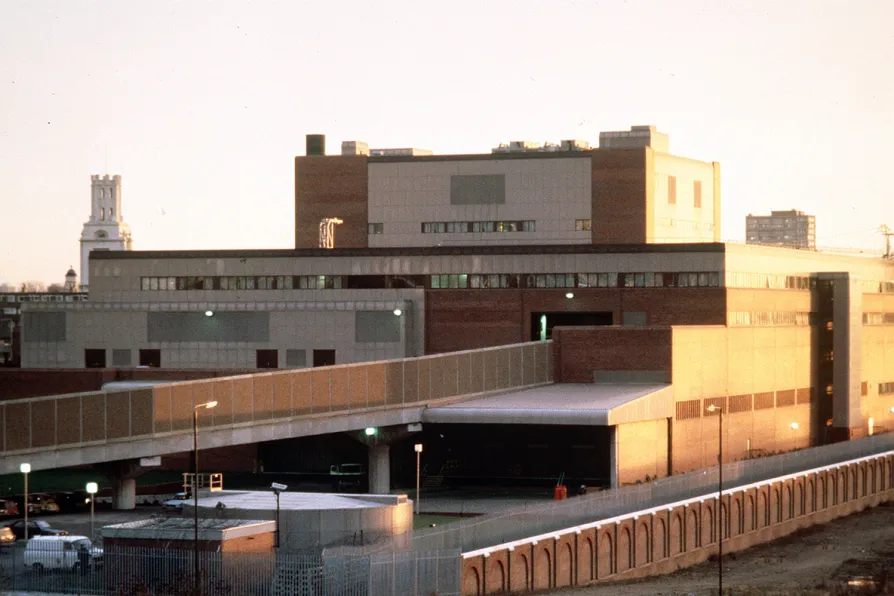
Forty years on, TONY DUBBINS revisits the Wapping dispute to argue that Murdoch’s real aim was union-busting – enabled by Thatcherite laws, police violence, compliant unions and a complicit media

BEN CHACKO welcomes a masterful analysis that puts class struggle back at the heart of our understanding of China’s revolution