
The UK Prime Minister may have the regal touch in northern England, but he’s been wrong-footed on the constitutional challenges posed by the Celtic Alliance of first ministers from Scotland, Wales and Northern Ireland, argues KENNY MacASKILL

Artificial Intelligence — a threat to jobs, or humanity itself?
MIKE SCOTT assesses the AI threat to jobs in the first of a pair of articles on the problems it poses

 A general view of The Chat GPT website
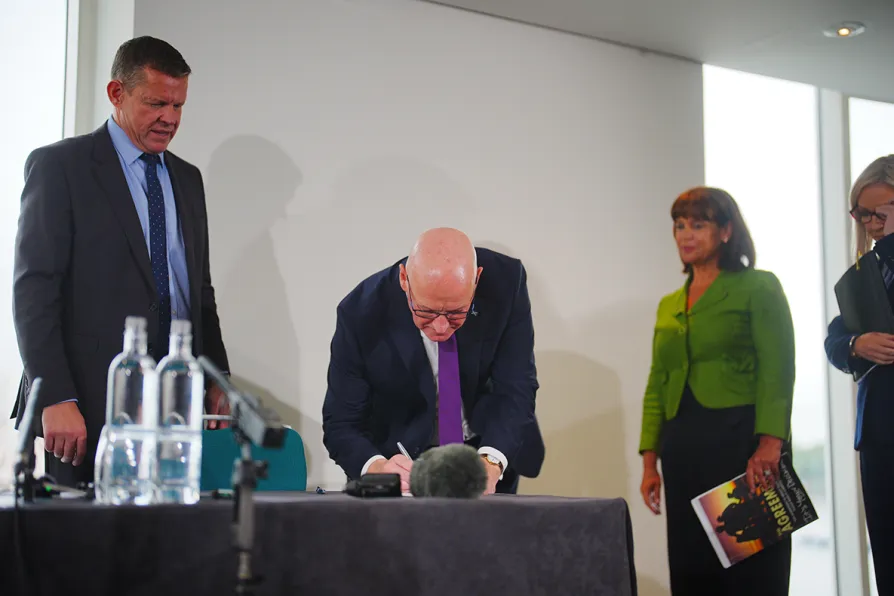
NEIRLAY ANDRADE, a member of the Communist Party of Venezuela’s political committee, outlines her party’s position on the crisis facing the country
A look at Taylor Wimpey’s accounts shows why Labour’s market-led housing strategy won’t deliver more, cheaper homes, as promised, says SOLOMON HUGHES
DAVID HORSLEY remembers the remarkable life and death of US black revolutionary George Jackson, whose politically passionate prison letters were published as Soledad Brother
Cuban trade union federation CTC leader OSNAY MIGUEL COLINA speaks to Ben Chacko about life and work under a crippling US siege
A part of the British empire’s network of slavery, today the Caribbean island of Nevis faces a new form of exploitation in the form of crypto-colonialism, CLAUDIA WEBBE writes
Challenges from the unscrupulous misuse of AI to steal actors’ voice and physical likenesses is being met with a firm union response, writes LYNDA ROOKE





AI HAS been around for a number of years, but wasn’t necessarily visible, hiding behind supposed “live” chats on websites, etc. Then, about three years ago, Chat GPT was announced and responses were divided: most people said “Ooh, look at that!” while a few worried about the potential effect on jobs.
Since then, AI has developed at an astonishing pace, appearing in all sorts of services, doubling its abilities every year and rapidly becoming a major factor in our lives, whether we like it or not.
It would be easy to focus entirely on the problems with AI, but it’s true to say that there are also positives: its ability to survey vast amounts of data to identify patterns will be invaluable in developing new drugs, for example.
In general terms, the biggest problem is the tendency of politicians and techies to think in the short term: how much money will this save, how much money will this make? Regulation is seen by both as unnecessary “red tape” getting in the way of progress rather than a way of protecting the public from harm.
Rather than change the tax system so that the rich pay their fair share, for example, Keir Starmer has talked of “mainlining AI into the veins of the economy” – what a horrible phrase — so that far fewer workers will be needed in public sectors as different as HMRC, the Benefits Agency and the NHS.
So, what will be the effect of AI on jobs, something that’s already under way? It can certainly do repetitive tasks, both admin and productive, more easily and more efficiently than humans and most large public and private organisations have already begun to reduce their workforces.
“Entry-level” jobs for young people have begun to dry up and stories of graduates sitting at home for months (or even years) firing off unsuccessful job applications – ironically, often with the assistance of AI – are common.
In the early days of AI, its impact was expected to gradually spread from routine roles to more complex ones over time, such as diagnosis of illness, legal work of various sorts and teaching, but it’s now clear that manual work is also in its sights: robots and self-driving cars will take over warehouse jobs, taxi and delivery jobs, even childcare. The Institute for Public Policy Research believes that as many as 8,000,000 jobs could be lost to AI in the next few years.
Look at these quotes:
(BT tech chief officer) “I don’t know how horses felt when the car was invented, but they didn’t complain that they were put out of a job; they didn’t go on strike. It’s [just] part of evolution.”
(UK government science minister) “The combination of AI and robotics [will] open up a whole new area, particularly in the sorts of things like humanoid robotics. And that will increase productivity. Activities that require movement around warehouses and factories will be made robotic…you do away with some of the things which are less interesting, repetitive things that can be done in another way.”
(Elon Musk) “Who wouldn’t want a robot to watch over your kids?”
It’s clear from these statements that AI is essentially about the replacement rather than enhancement of jobs. Alarm is spreading on the other side of the issue but, so far, largely to people the decision-makers can ignore:
(TUC assistant general secretary) “If AI is developed properly, workers can benefit from productivity gains [but] the alternative is bleak. Left unmanaged and in the wrong hands, the AI revolution could entrench rampant inequality as jobs are degraded or replaced and shareholders get richer.”
(National Education Union) “If AI is going to support a motivating and progressive vision for education, then educators and their unions must be in the driving seat, not big tech.”
But even though AI is powering ahead in the short-term, there’s a long-term sting in its tail – one that’s obvious once you think about it.
If the job market is going to be decimated, with millions more unemployed, this is going to have its own impact on society and the economy. The cost of state benefits will go through the roof, mental health will decline dramatically and increasing numbers of people will be forced into 19th-century poverty. All of which is more than likely to result in an even greater disillusionment with traditional politics and will probably lead to large-scale civil disorder as well.
In past eras, it has been easy for those in power to ignore or minimise the effects of economic inventions and new ways of working, because they’ve normally only affected working-class people, who could conveniently be blamed for their own misfortune.
This time, it will be different, as the middle-classes, with their ingrained sense of entitlement to a comfortable life, will be at the forefront of a concerted attack on the professions and white-collar jobs.
This has never happened before, so it’s difficult to predict how things will play out.
What we can be sure of, however, is that there will be a massive knock-on impact on the capitalist system: if so many people are impoverished, who will be able to buy what’s on offer? Companies across the economy will go bankrupt and society will be hollowed out, potentially to the benefit of the far right, as has often been the case in past eras when capitalism has faltered.
The utter failure of politicians and capitalists to consider all this – a combination of greed, cowardice and short-term thinking – is placing the future of ordinary people at enormous risk. The dangers foreseen by some have simply been ignored and the impact on jobs is already visible today.
But there are even more serious consequences awaiting us, which I’ll outline in Part Two: the threat to humanity.
Mike Scott is a retired trade union organiser and chair of Nottingham Socialist Club.

Similar stories
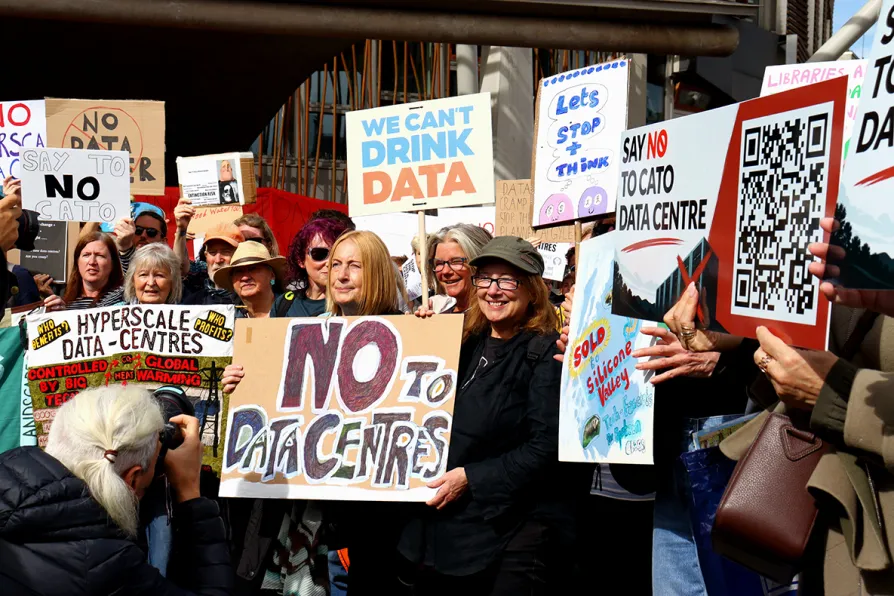
Even the oligarchs of the artificial intelligence industries are warning that their creations have the capacity for the ultimate destruction of the planet and its population. ANDREW MURRAY suggests that there might just be other solutions
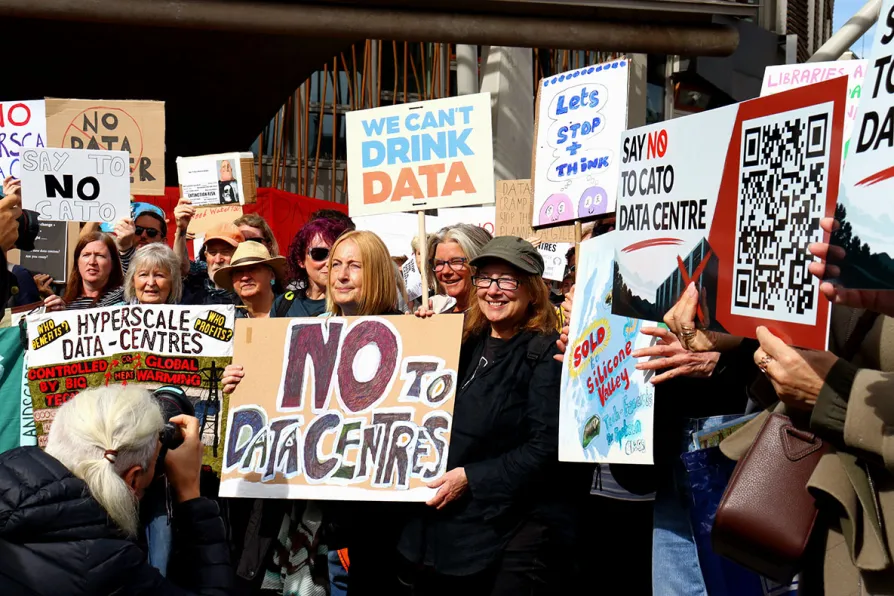

Elon Musk says AI will make work optional. The world of abundance he predicts actually spells the end of the capitalist system, argues FAWZI IBRAHIM
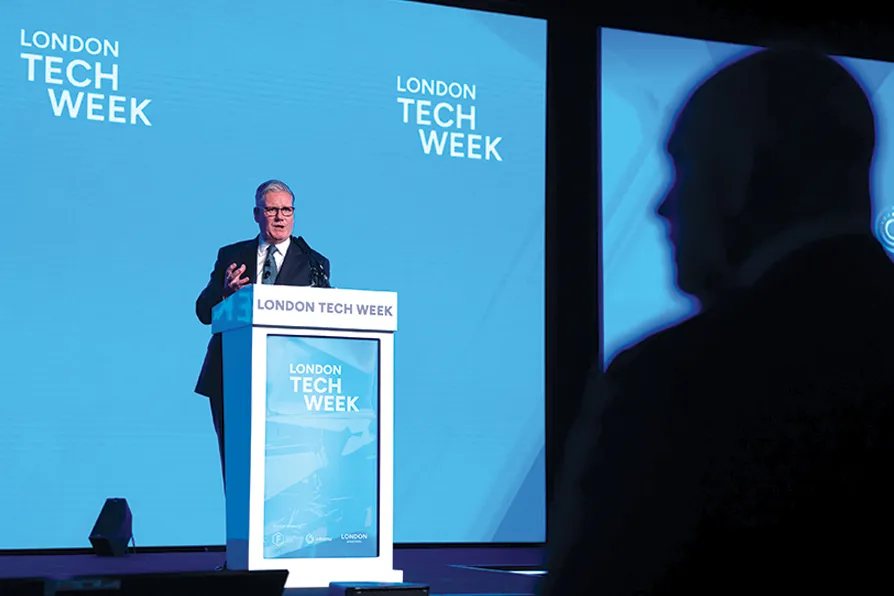
In the second and final part of his article MIKE SCOTT posits that if we don’t control AI while we’ve got the chance, we could be signing the death warrant for our children and grandchildren